
This archive is primarily a list of all Abbe Museum exhibits, though we have included additional content wherever possible. Exhibits are organized alphabetically by title, though you may also browse by the closing date or any associated keywords using the search tools below. Don't see something that you're looking for? Get in touch with us at info@abbemuseum.org.
A-C / D-F / G-J / K-M / N-P / Q-S / T-V / W-Z
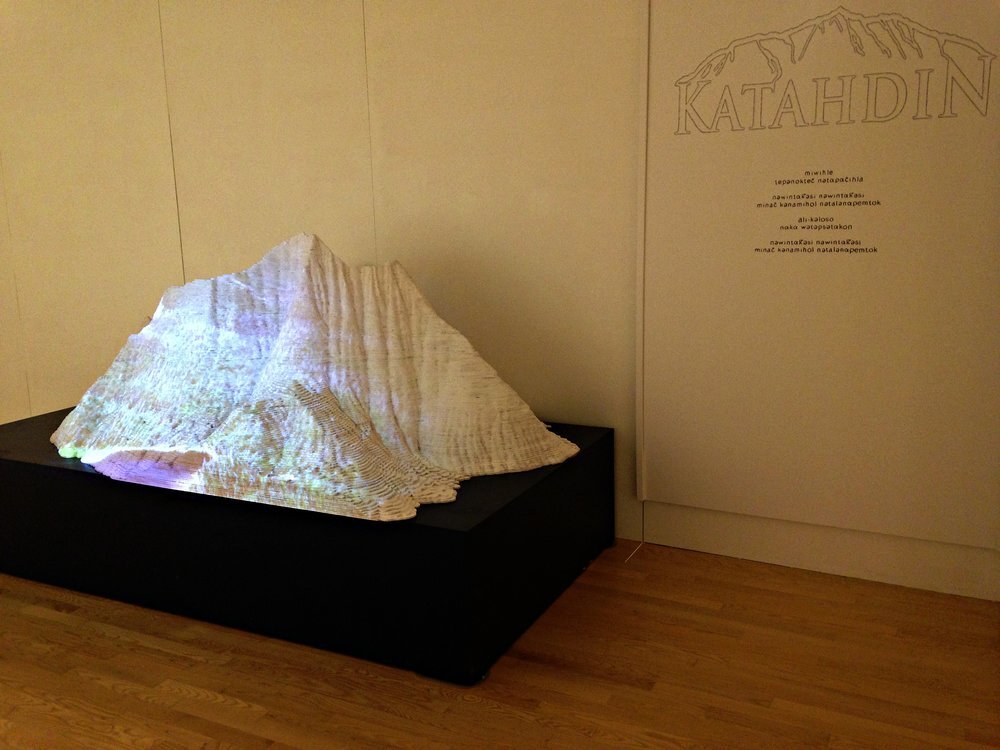
Greatest Mountain (2015)
A vision by Penobscot artist and historian James Francis. This tribute to Mount Katahdin, through Penobscot histories and accounts of non-Native travelers and writers, uses images, music, stories, and the…
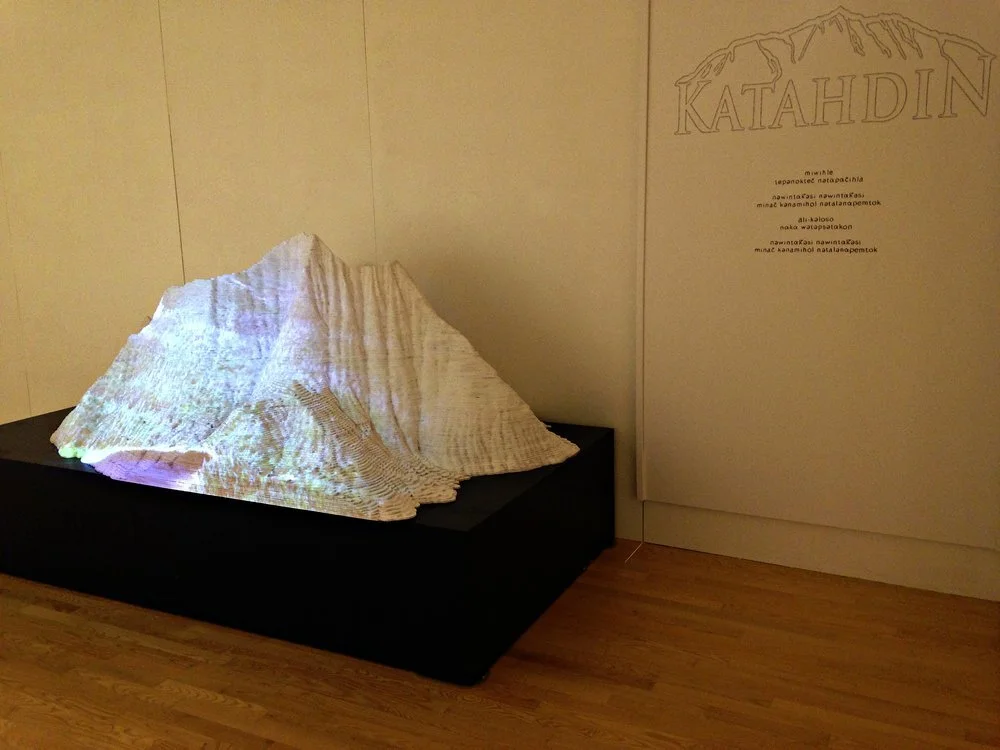
A vision by Penobscot artist and historian James Francis
This tribute to Mount Katahdin, through Penobscot histories and accounts of non-Native travelers and writers, uses images, music, stories, and the Penobscot language to bring this sacred mountain to life. Francis used a CNC machine to cut the layers to build the model of Katahdin, which translates from Penobscot to English as “Greatest Mountain.” Images moved and flickered across it, a compilation of time lapse photographs taken by Francis at night back in November 2014. Along with these time-lapse photographs, there was a song composed by Francis, various other video and still imagery, and spoken word pieces of Penobscot people sharing stories.
Learn More: The Greatest Mountain Context Statement
Headline News (2010)
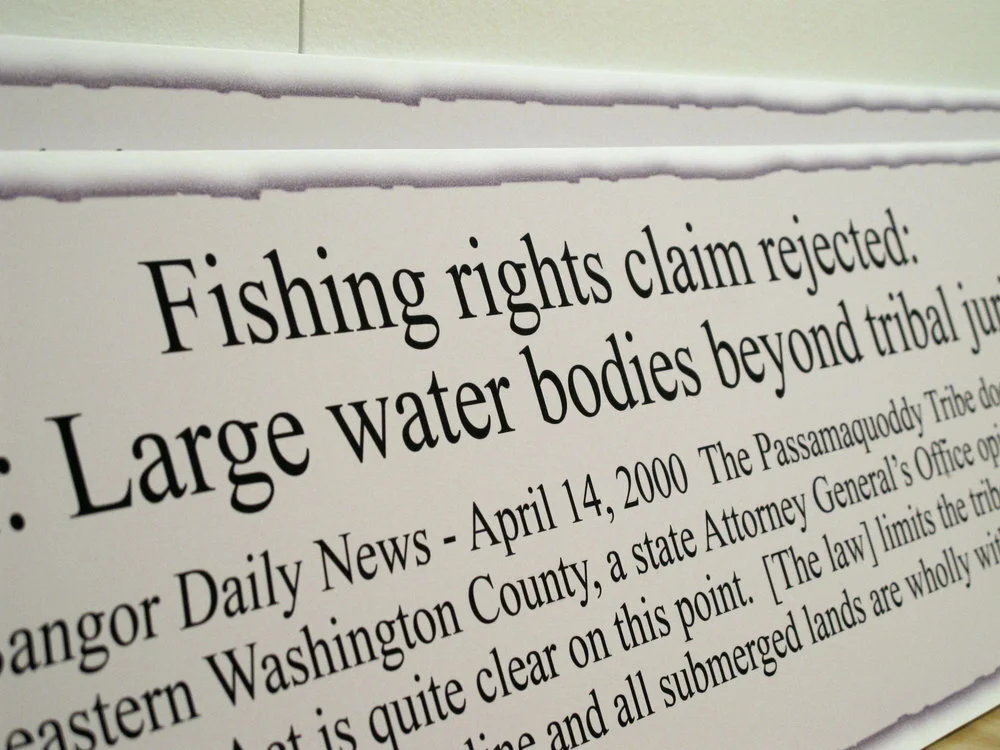
With the signing of the Maine Indian Claims Settlement Act in 1980, and later agreements, Maine distinguished itself from the rest of the Nation by establishing a unique relationship with the four…
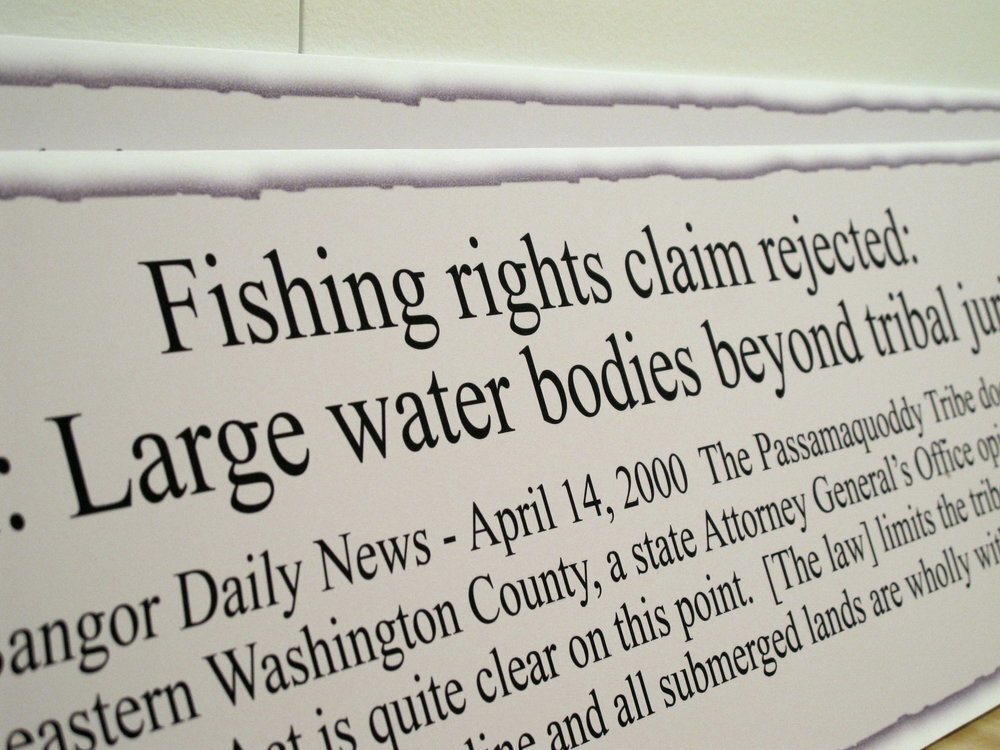
Additional information about Headline News: Wabanaki Sovereignty in the 21st Century is also available in the exhibit catalog, Headline News Exhibit Catalog.
At the Abbe's 2010 Annual Meeting, Penobscot Chief Kirk E. Francis, Sr., was the guest speaker and his remarks about sovereignty can be found here.
With the signing of the Maine Indian Claims Settlement Act in 1980, and later agreements, Maine distinguished itself from the
rest of the Nation by establishing a unique relationship with the four federally recognized Wabanaki tribes. The expression of these Acts creates a political arena much different than that of other states—federal statutes do not apply to American Indian communities in Maine unless explicitly noted within that federal legislation.
Maine has a direct relationship with the Wabanaki tribes, which in addition to federal recognition of their sovereignty, were granted municipal powers, and most concerns must be negotiated at the state level. The exhibit explores the ways in which the Micmac, Maliseet, Passamaquoddy, and Penobscot tribes are asserting their sovereignty in the areas of:
Recognition of Native veterans
Controversies regarding gaming
The retention of Native languages
The exercise of hunting and fishing rights
The fight against the invasive ash borer beetle
Environmental management of traditional territory
Concepts surrounding identity and positive and negative stereotypes
International border issues that has divided families and traditional lands.
Headline News seeks to engage the visitor and raise awareness of contemporary challenges to the Native peoples living in Maine. Visitors will have the opportunity to reflect on Native perspectives while exploring these topics through a variety of media. On display was an assortment of new and old artifacts including objects made of ash, birchbark, cedar, porcupine quills, and sweet grass, natural history specimens and faunal remains, hunting and trapping equipment, books and CDs illustrating the four languages, traditional games, maps, photographs, a full-sized birchbark canoe, and much more.
While the information presented was focused on the Wabanaki in Maine, the exhibit offered comparative information on federal Indian policy to highlight differences between the state and federal Indian policies. This ground breaking exhibit was curated by Raney Bench, former Curator of Education at the Abbe Museum, in conjunction with consultation from members of the Micmac, Maliseet, Passamaquoddy, and Penobscot tribes, and assistance from project team members Julia (Clark) Gray and Jason Brown.
The Headline News: Wabanaki Sovereignty in the 21st Century online exhibit introduces eight topics commonly covered in the media through first person voice of Wabanaki political and cultural leaders. Each topic is intimately connected to tribal sovereignty in Maine and continually evolving, allowing the exhibit to serve as a starting point for dialog and discussion in Maine communities and beyond. The content reflects the complex nature of these topics and the diverse opinions of Wabanaki people. The entire text of the show can be downloaded below by topic area.
CLICK ON A CATEGORY TO DOWNLOAD TEXT-ONLY CONTENT:
Indians & Rusticators (2012 - 2013)
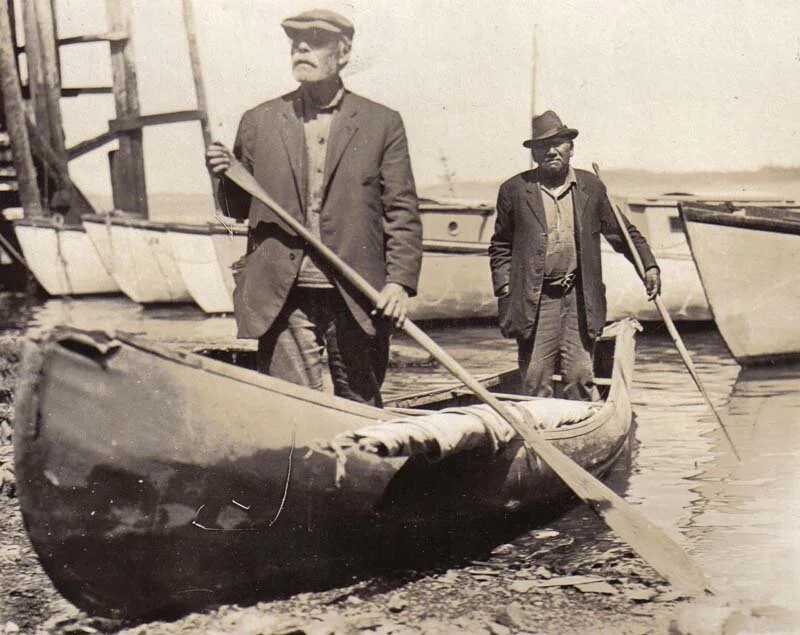
Winner of a 2012 Leadership in History Award. Indians and Rusticators: Wabanakis and Summer Visitors on Mount Desert Island 1840s-1920s highlighted the role that Mount Desert Island (MDI) played in…
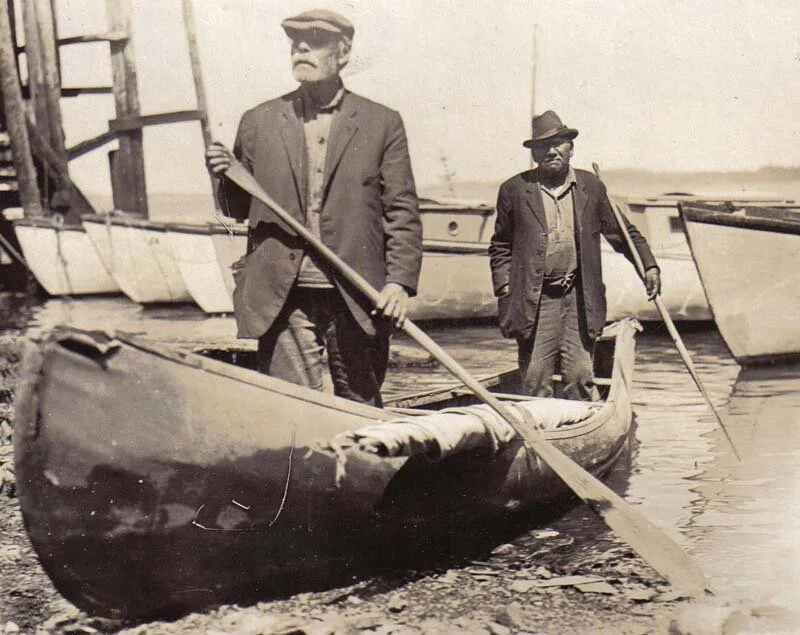
Winner of a 2012 Leadership in History Award
Indians and Rusticators: Wabanakis and Summer Visitors on Mount Desert Island 1840s-1920s highlighted the role that Mount Desert Island (MDI) played in the cultural and economic survival of Wabanaki people. Offering a focused look at the seasonal interactions of Wabanaki people and summer rusticators (summer residents from the large urban areas of the Northeast), it profiled various personalities, especially the iconic Penobscot Indian showman Frank “Big Thunder” Loring, whose unforgettable presence on MDI spanned 60 years of the Rusticator Era. The stories told and research presented was the work of guest curators Bunny McBride, MA, and Dr. Harald Prins, highly regarded scholars and authors of Wabanaki history.
Learn More: Indians & Rusticators Exhibit Adaptation for Maine Memory Network
IndiVisible (traveling)
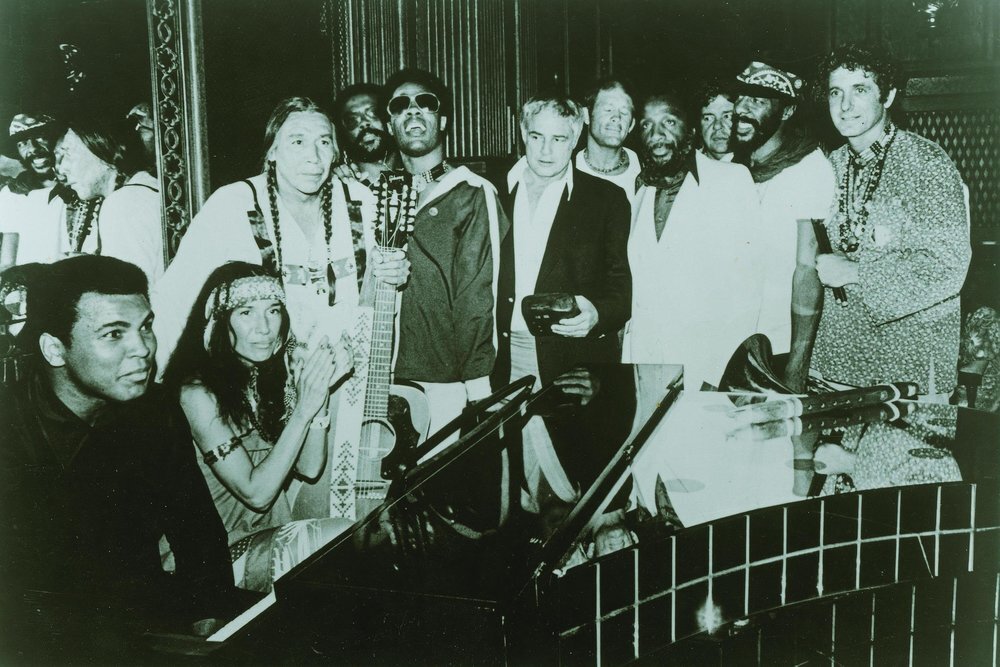
This important and enlightening exhibition from the Smithsonian Institution was about the intersection of American Indian and African American people and cultures. IndiVisible: African-Native American Lives in the Americas explored…
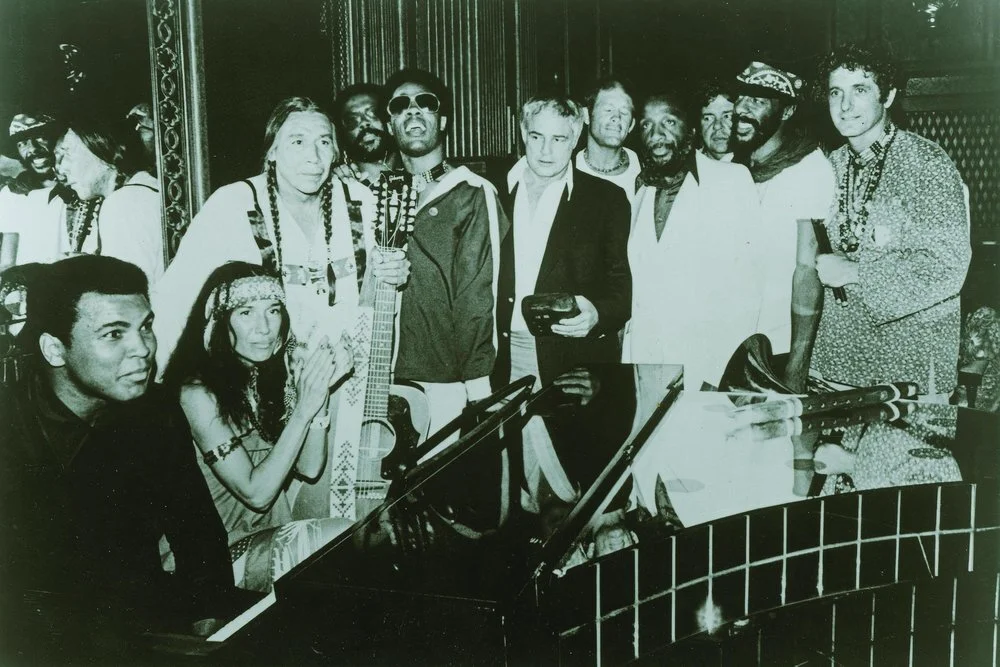
This important and enlightening exhibition from the Smithsonian Institution was about the intersection of American Indian and African American people and cultures. IndiVisible: African-Native American Lives in the Americas explored historical and contemporary stories of peoples and communities whose shared histories are woven into the fabric of American identity, but whose presence has long been invisible to many in the U.S. The exhibition shed light on the dynamics of race, community, culture, and creativity, and addresses the human desire to belong. With compelling text and powerful graphics, the exhibition included accounts of cultural integration and diffusion as well as the struggle to define and preserve identity. The Abbe Museum housed this exhibition in 2013. IndiVisible was developed by the National Museum of the American Indian with the National Museum of African American History and Culture, and organized for travel by the Smithsonian Institution Traveling Exhibition Service.
Learn More: IndiVisible Exhibit Website