
This archive is primarily a list of all Abbe Museum exhibits, though we have included additional content wherever possible. Exhibits are organized alphabetically by title, though you may also browse by the closing date or any associated keywords using the search tools below. Don't see something that you're looking for? Get in touch with us at info@abbemuseum.org.
A-C / D-F / G-J / K-M / N-P / Q-S / T-V / W-Z
Indians & Rusticators (2012 - 2013)
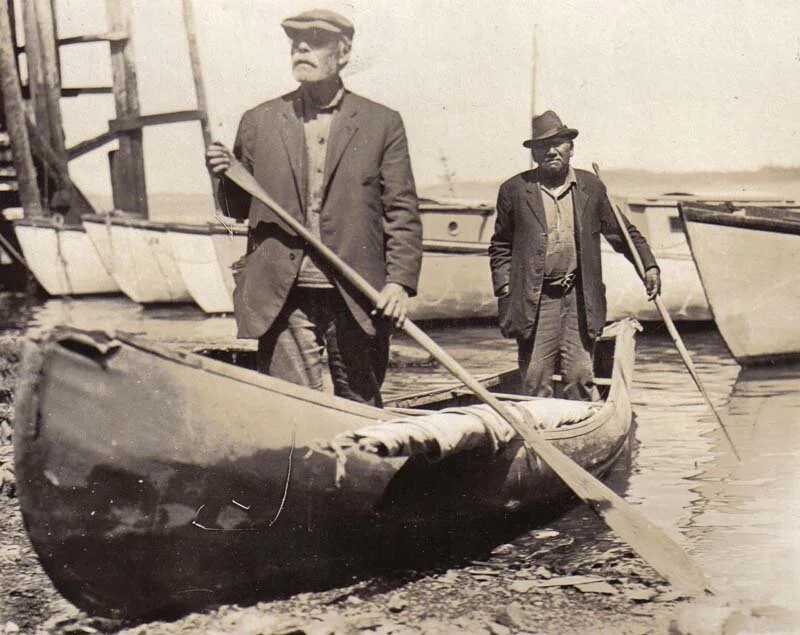
Winner of a 2012 Leadership in History Award. Indians and Rusticators: Wabanakis and Summer Visitors on Mount Desert Island 1840s-1920s highlighted the role that Mount Desert Island (MDI) played in…
Winner of a 2012 Leadership in History Award
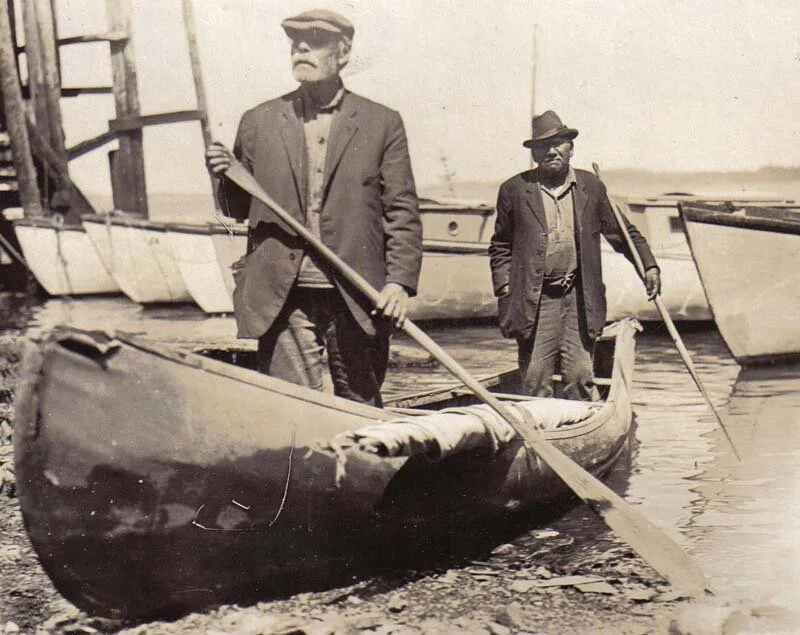
Indians and Rusticators: Wabanakis and Summer Visitors on Mount Desert Island 1840s-1920s highlighted the role that Mount Desert Island (MDI) played in the cultural and economic survival of Wabanaki people. Offering a focused look at the seasonal interactions of Wabanaki people and summer rusticators (summer residents from the large urban areas of the Northeast), it profiled various personalities, especially the iconic Penobscot Indian showman Frank “Big Thunder” Loring, whose unforgettable presence on MDI spanned 60 years of the Rusticator Era. The stories told and research presented was the work of guest curators Bunny McBride, MA, and Dr. Harald Prins, highly regarded scholars and authors of Wabanaki history.
Learn More: Indians & Rusticators Exhibit Adaptation for Maine Memory Network
Wabanaki Guides (2013)
Wabanaki Guides focused on the legacy of Wabanaki people serving as guides for European and American explorers, cartographers, tourists and artists from the 1600s to the present. Visitors were invited along…
.
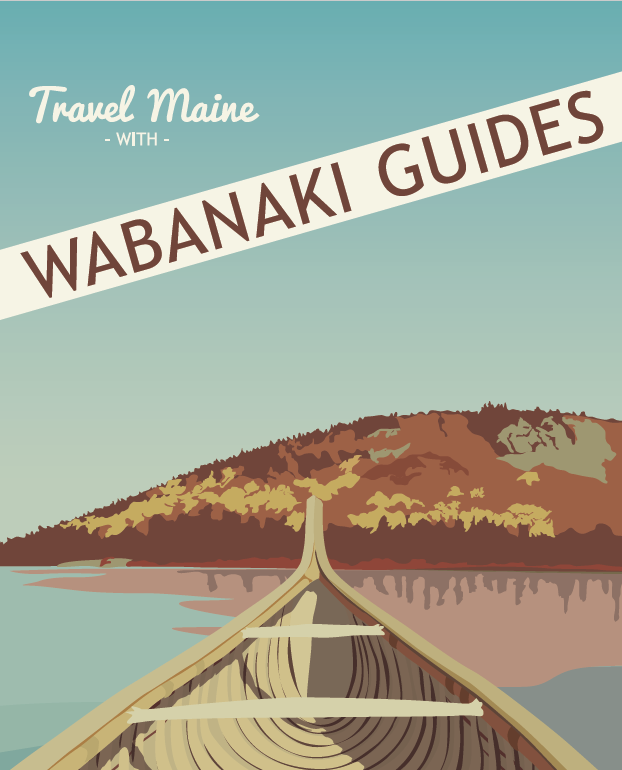
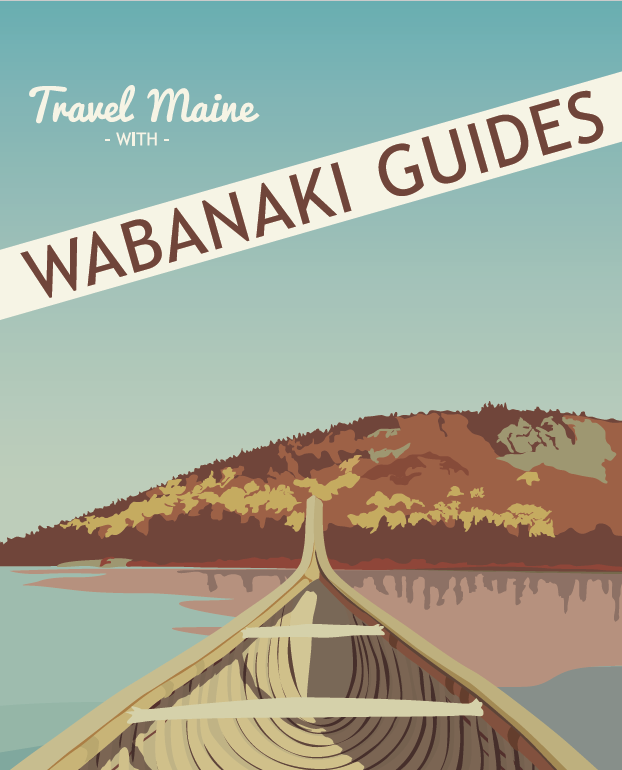
Wabanaki Guides focused on the legacy of Wabanaki people serving as guides for European and American explorers, cartographers, tourists and artists from the 1600s to the present. Visitors were invited along for a simulated canoe ride down a Maine river. The journey shined a spotlight on ways in which Wabanaki knowledge of land and waterways influenced Maine’s early visitors and illustrated how this legacy is linked to the modern-day tribes, tourism, and environmental sustainability in Maine.
Visitors “climbed into a canoe with their guide” and began their journey. Along the way, they stopped at “portages” on the river bank. At each portage, visitors learned about the various things a guide needs to consider when planning a trip and what one might expect to encounter along the way. The exhibit focused on the following themes: mapping, tracking, tourism, and economics. Stories and historic accounts from various view points were weaved throughout, incorporating the voices of Wabanaki guides both past and present as well as explorers, artists, and cartographers such as Henry David Thoreau and Joseph Treat.
Learn more: Wabanaki Guides Exhibit Script