Panelists | Performers | Market Artists
Find market artists and participants another way:
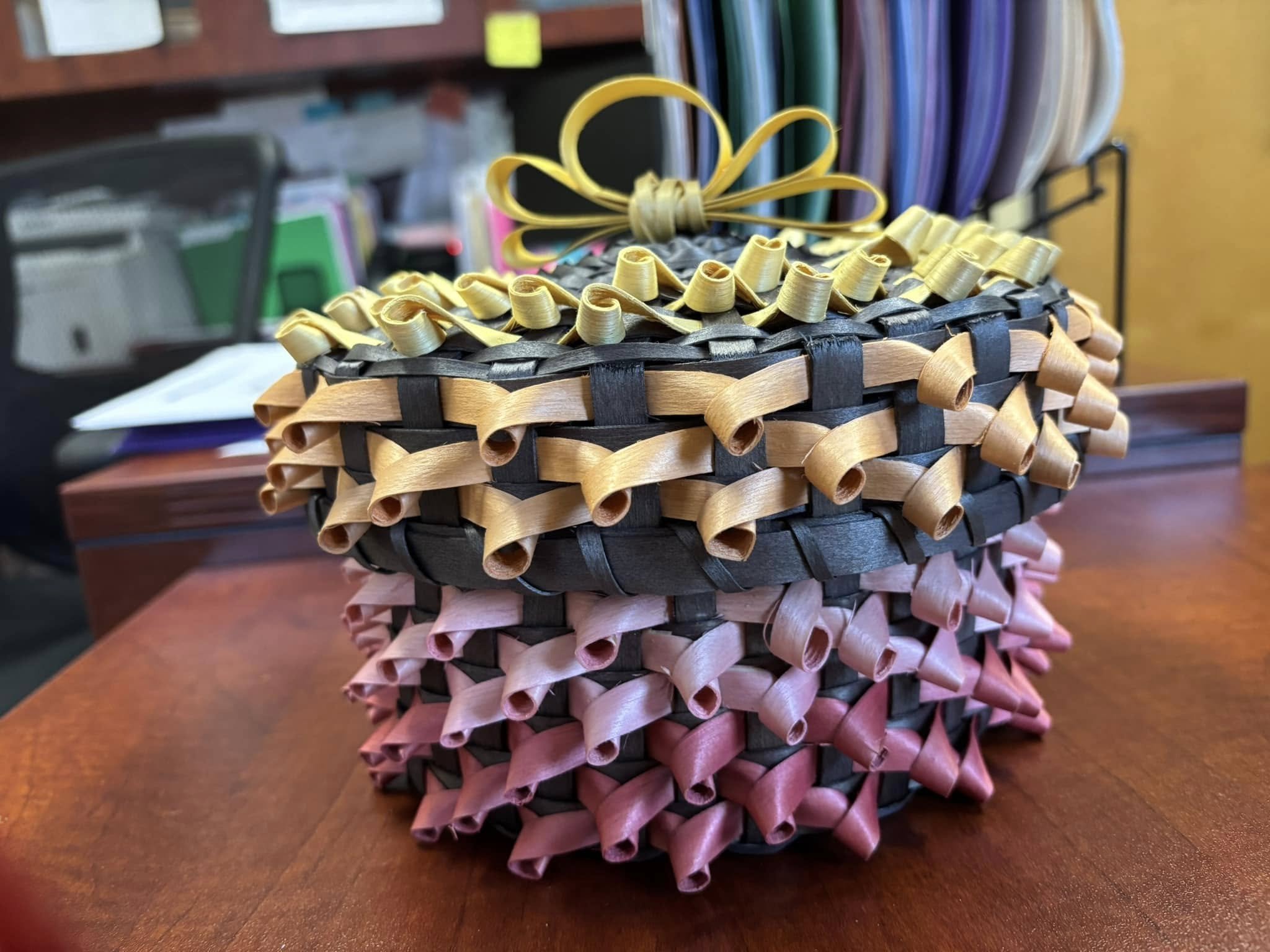
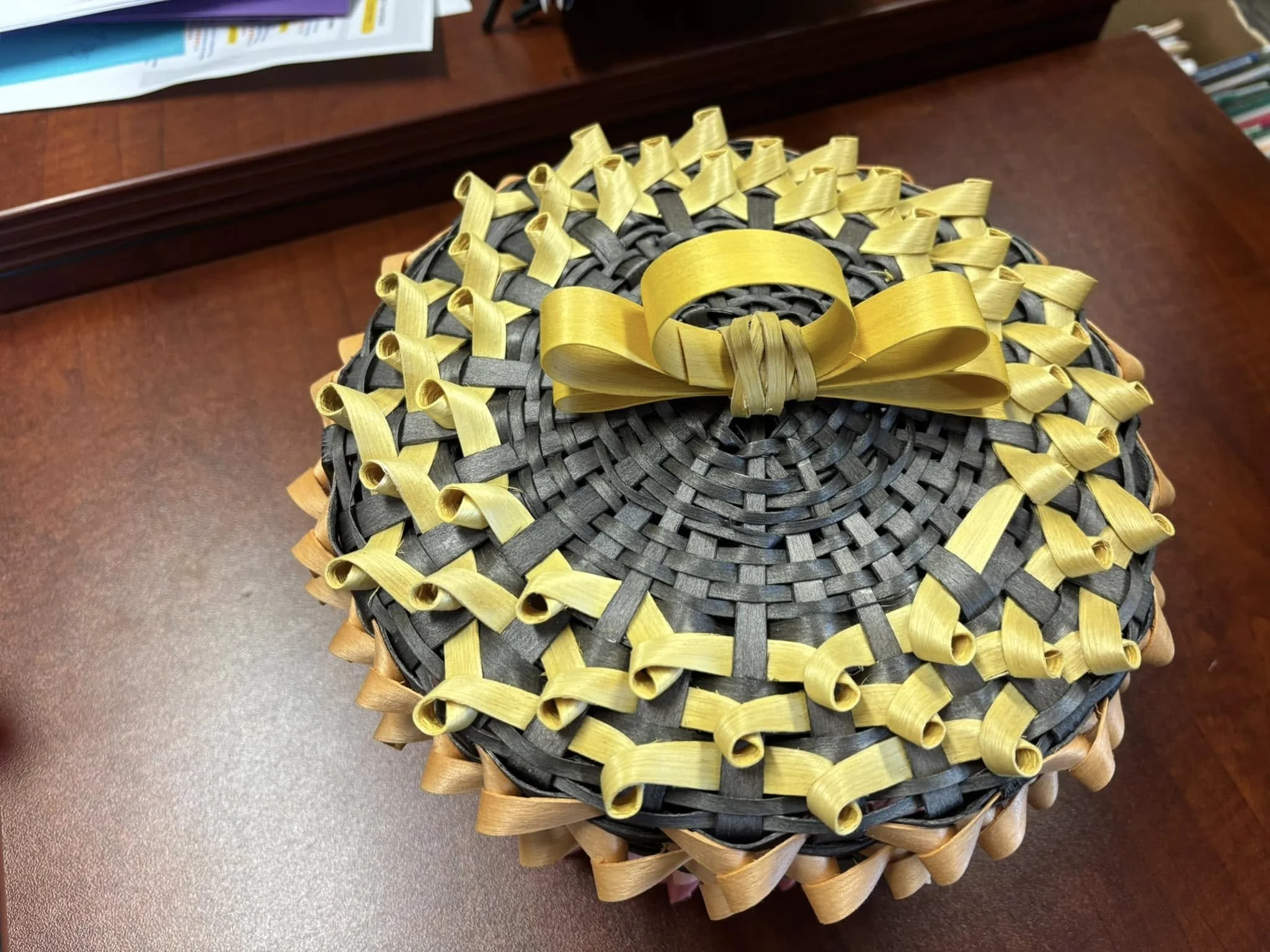
Benjamin Labobe
TRIBAL AFFILIATION: Mi'kmaq Nation
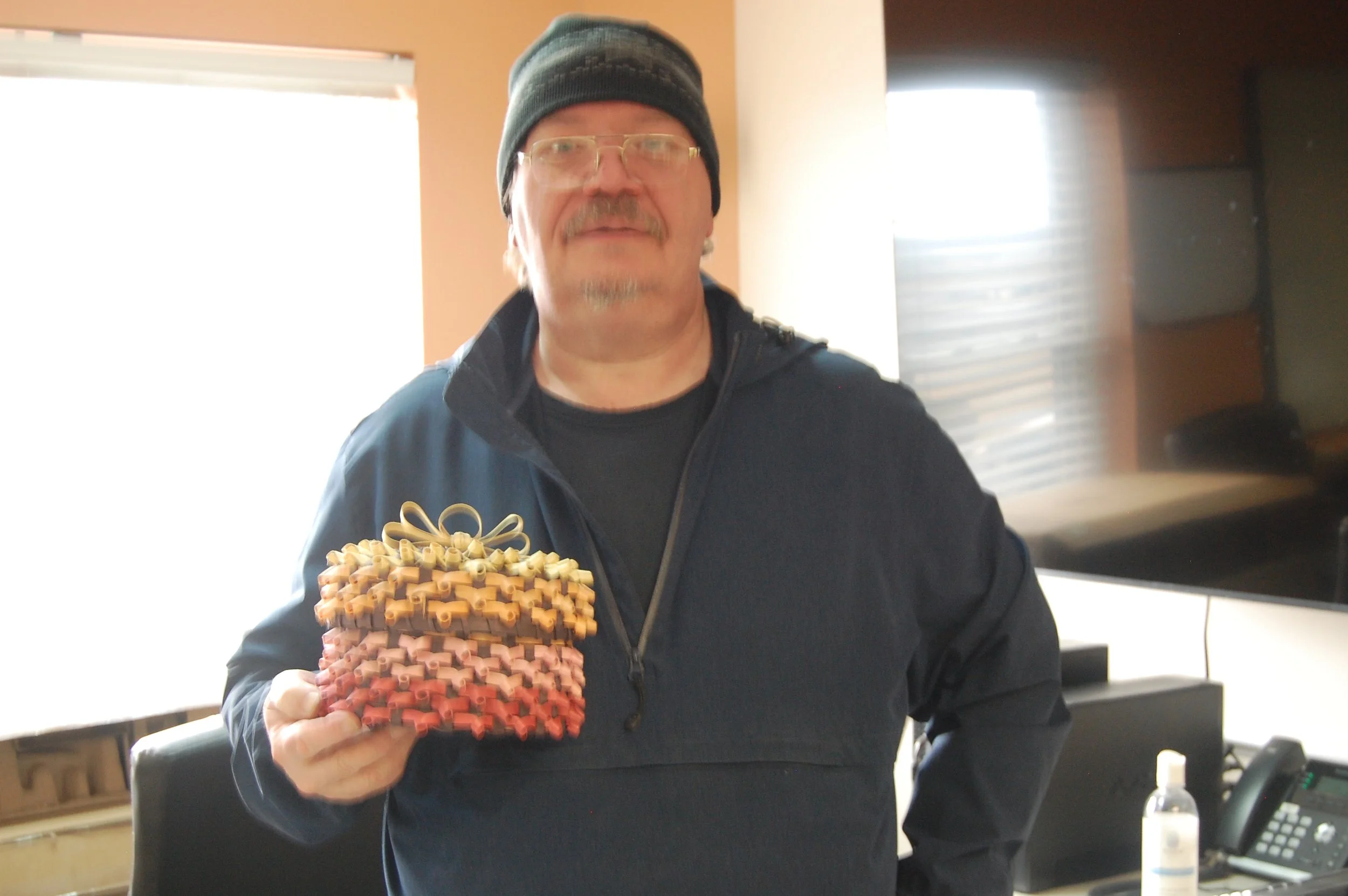
MEDIUM: Ash Basketry
ARTIST STATEMENT
I grew up in Houlton in the basket-making family of the Hannings and Labobe's. As a small child, the years went by, and I found myself interested in my grandmother's baskets. She had gifted our family with a whole set of fancy baskets in the 70's. I began the 25-year journey of basket making that I am still on. I just wanted to be as good at this as she was. Now, at the beginning of 2027, I'm starting the videotaping of the baskets for a web show coming in the years to follow. My plan is to not only film the baskets but also the events.
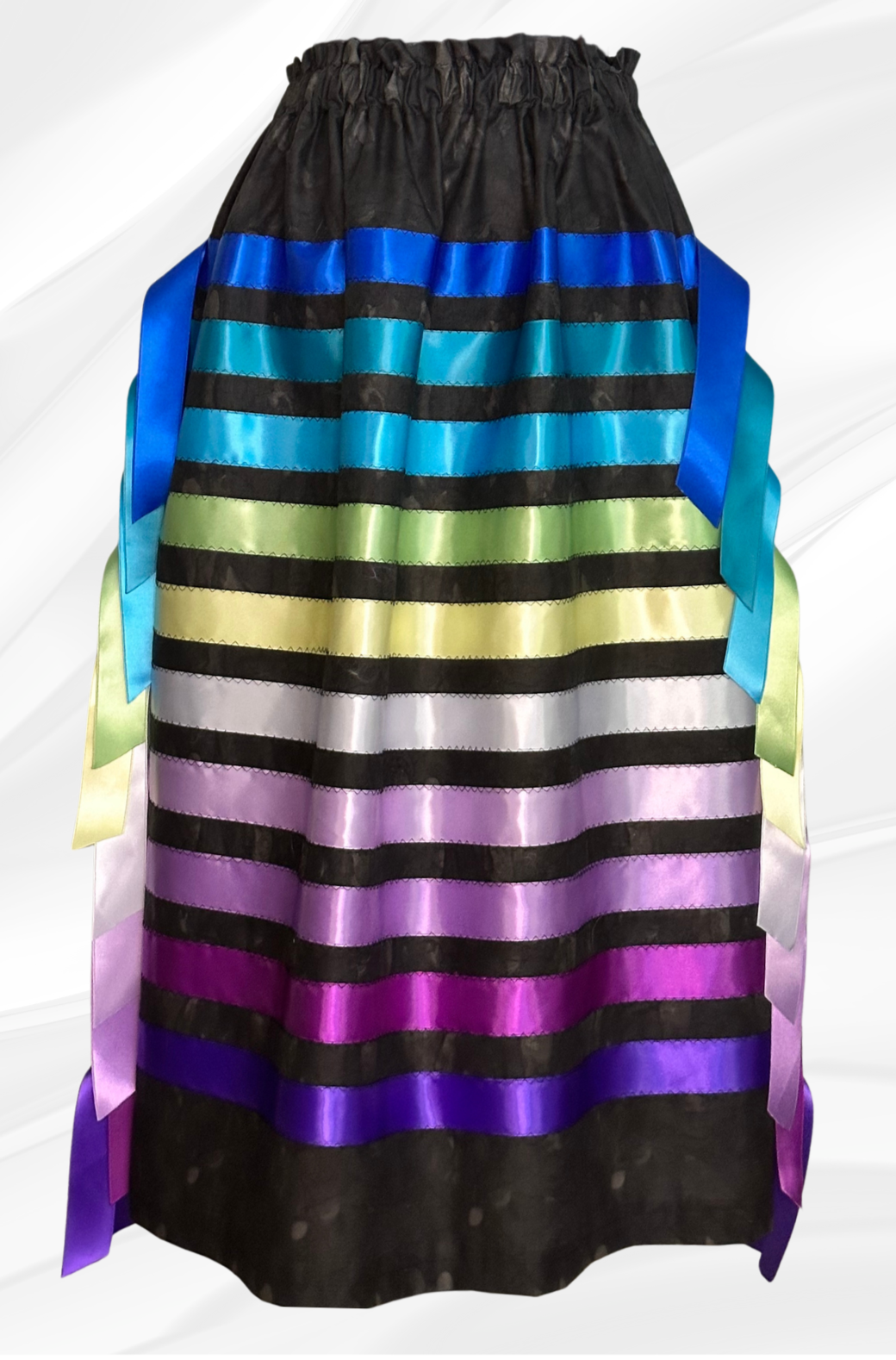
Lee DeCora Francis
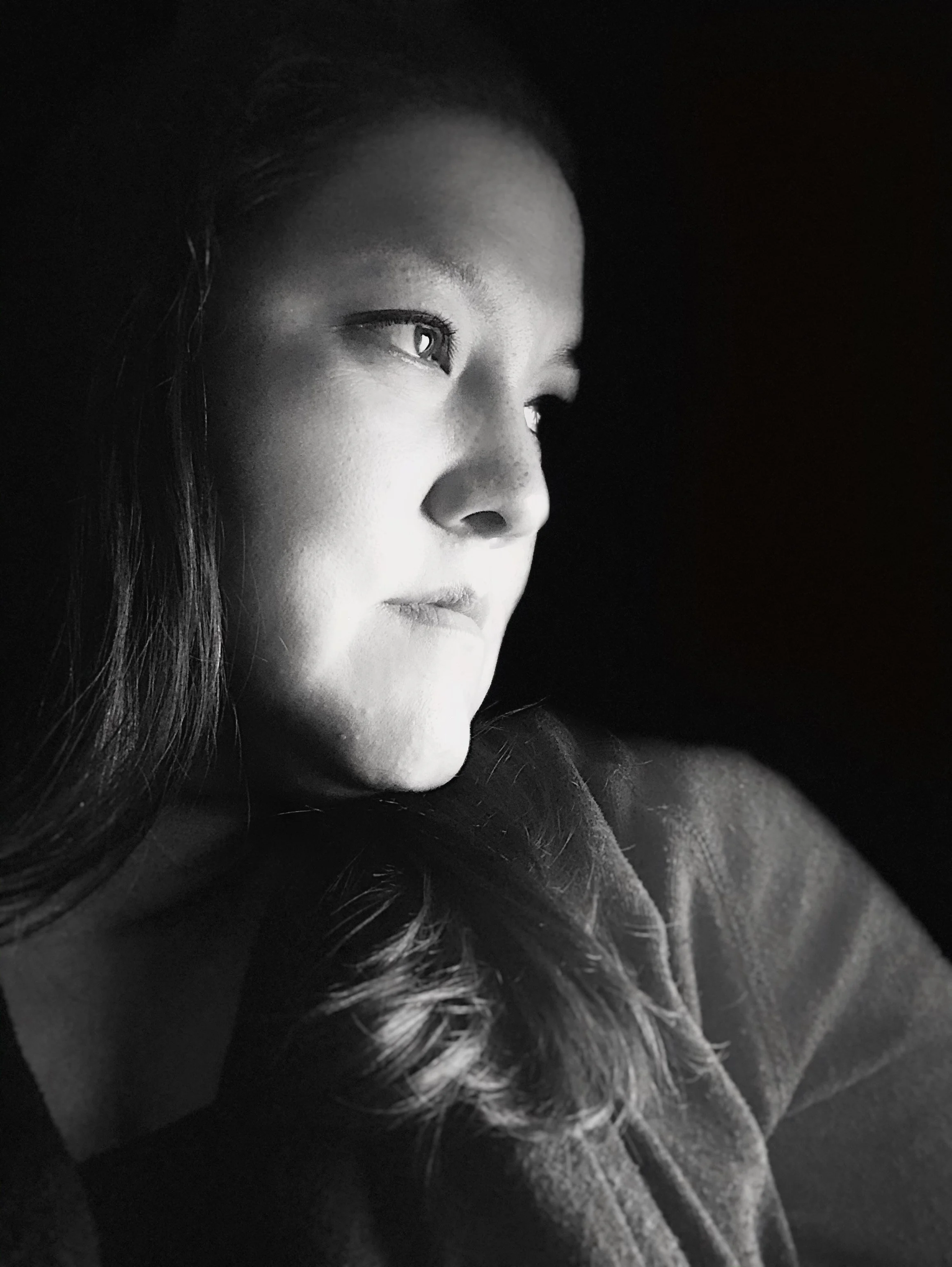
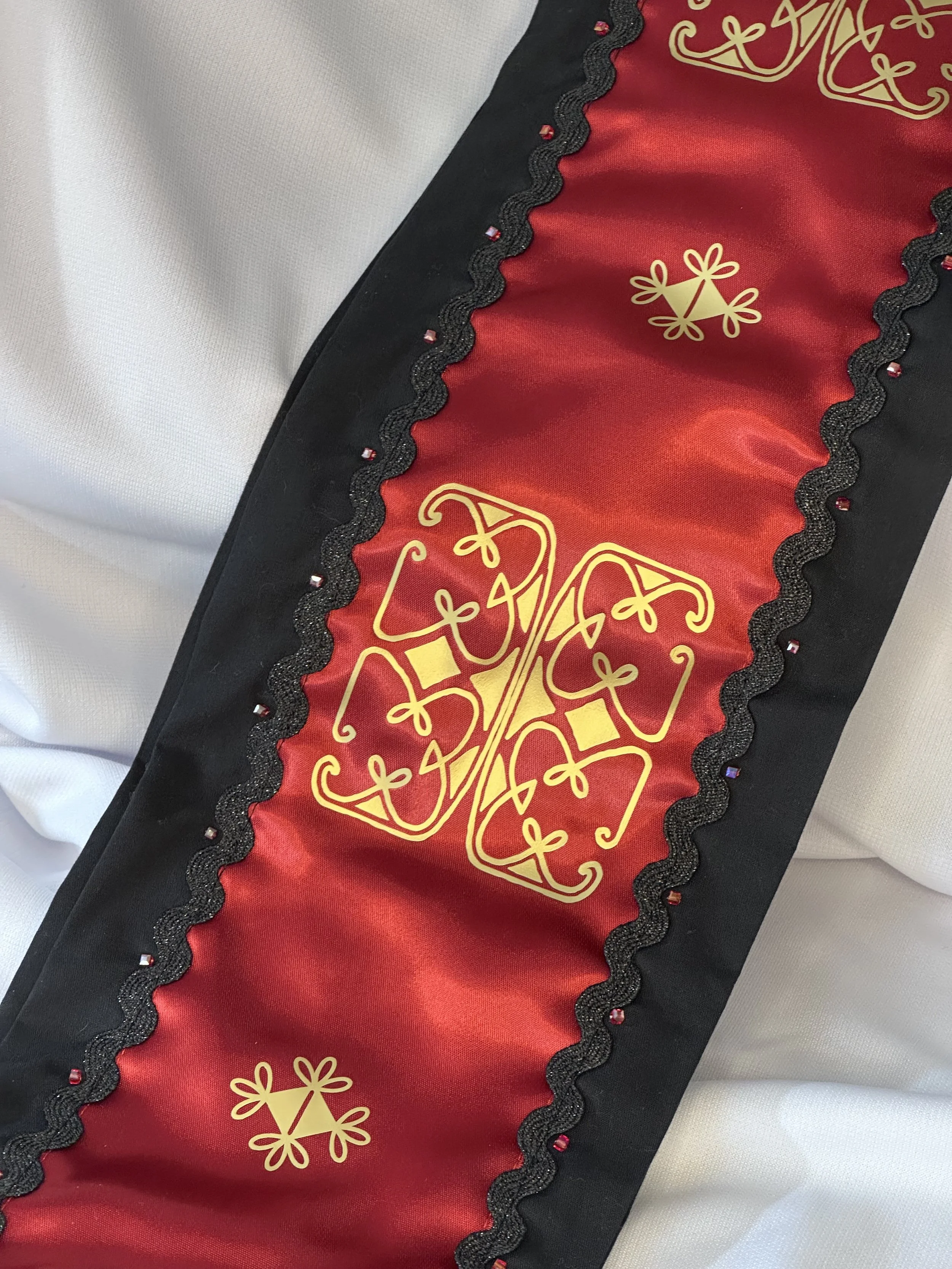
TRIBAL AFFILIATION: Penobscot Indian Nation
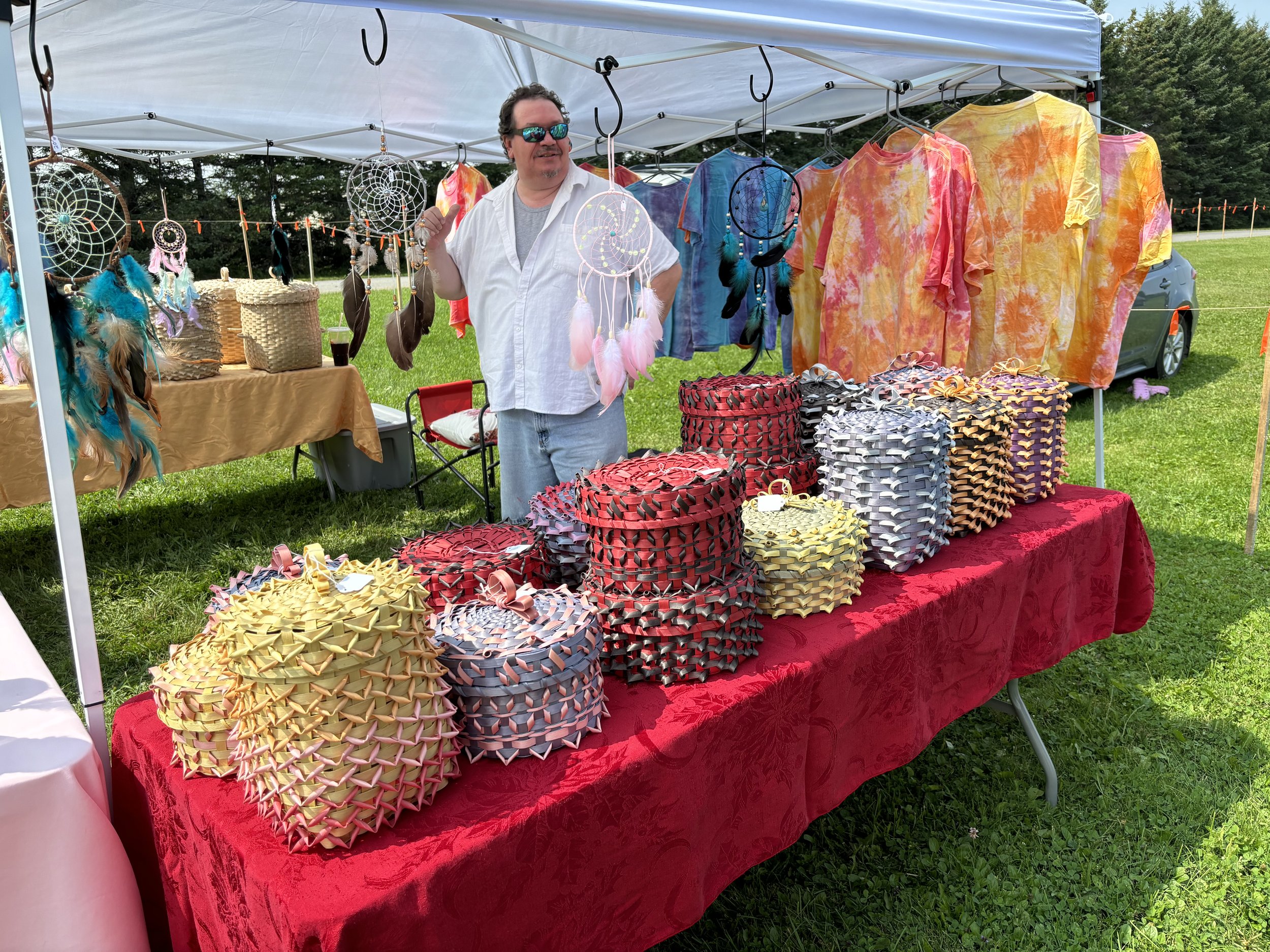
MEDIUM: Clothing
ARTIST STATEMENT
Lee DeCora Francis (Penobscot and Ho-Chunk) is an educator, artist, author, and community leader whose work is grounded in Indigenous education, cultural revitalization, and service to her people. Over the past two decades, she has served as a teacher, school leader, Tribal Councilor, and advocate for Native communities while working to strengthen relationships between culture, identity, and learning. Through Sokolaponsis Designs, Lee brings those same values into her artistic practice. Drawing inspiration from ribbonwork traditions, Wabanaki artistry, and the lands and waters of her homelands, she creates contemporary Indigenous pieces that blend traditional influences with modern design. Her work explores themes of resilience, beauty, belonging, and connection across generations. Guided by the teachings of her ancestors, Lee creates pieces that honor those who came before, celebrate those with us today, and carry stories forward for future generations.
Mihku Paul
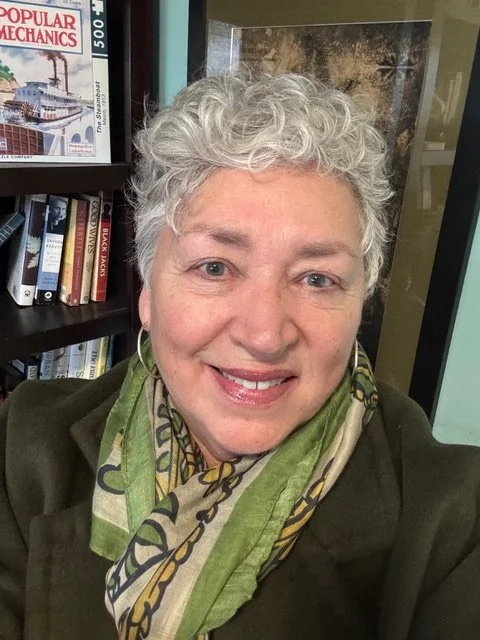
TRIBAL AFFILIATION: Kingsclear
PANEL: Native Freedom of Expression
BIOGRAPHY:
Mihku Paul is a Maliseet Elder who was raised on a wild Maine river. She is enrolled at
Kingsclear First Nation, N.B. Canada and holds a BA in Human Development and Communication,as well as an MFA from Stonecoast. Her background is in Early Childhood Ed, and she has spent decades presenting Waponahki culture and history in Portland Public Schools. Her poetry is published internationally and has been translated to French and Spanish. Mihku now works in Food Sovereignty and serves on the board of Maine Writers and Publishers. She lives and works in Portland.
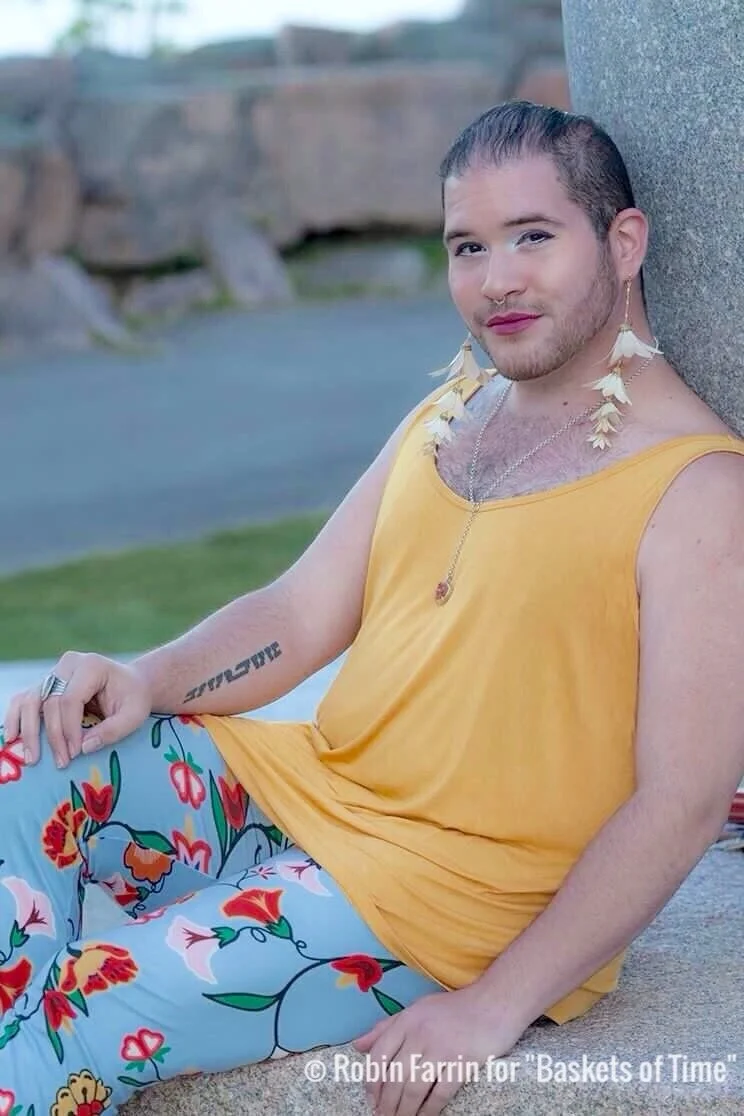
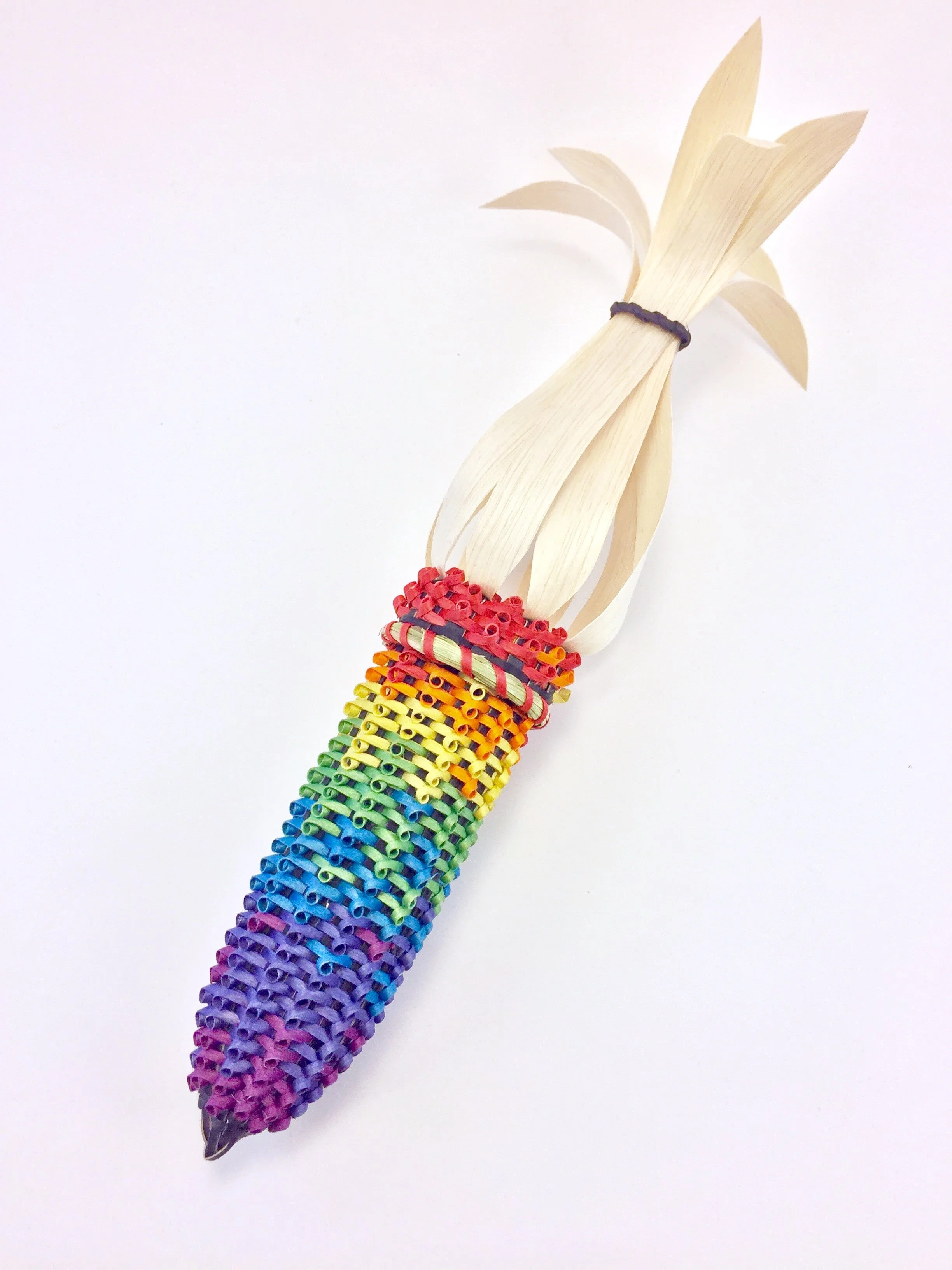
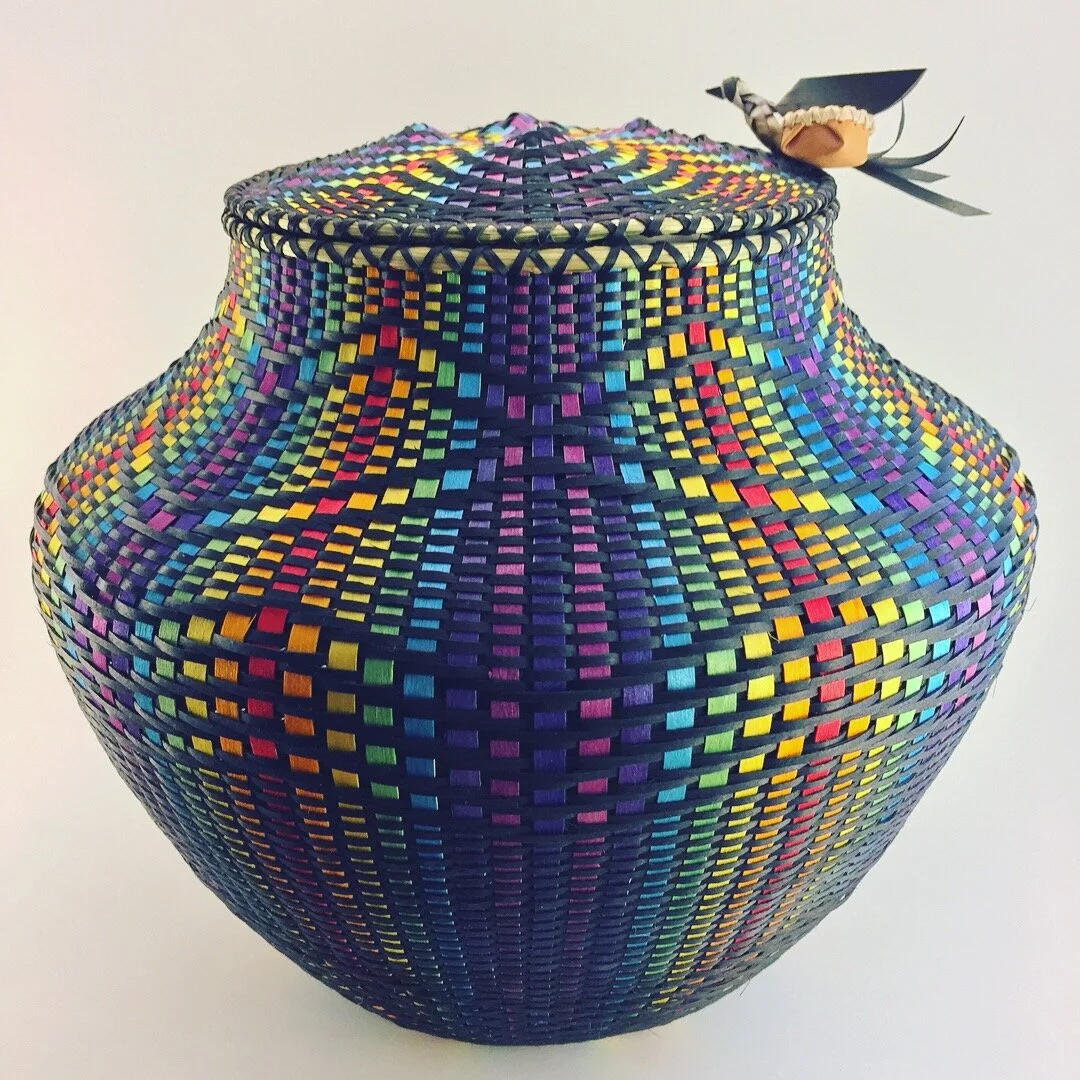
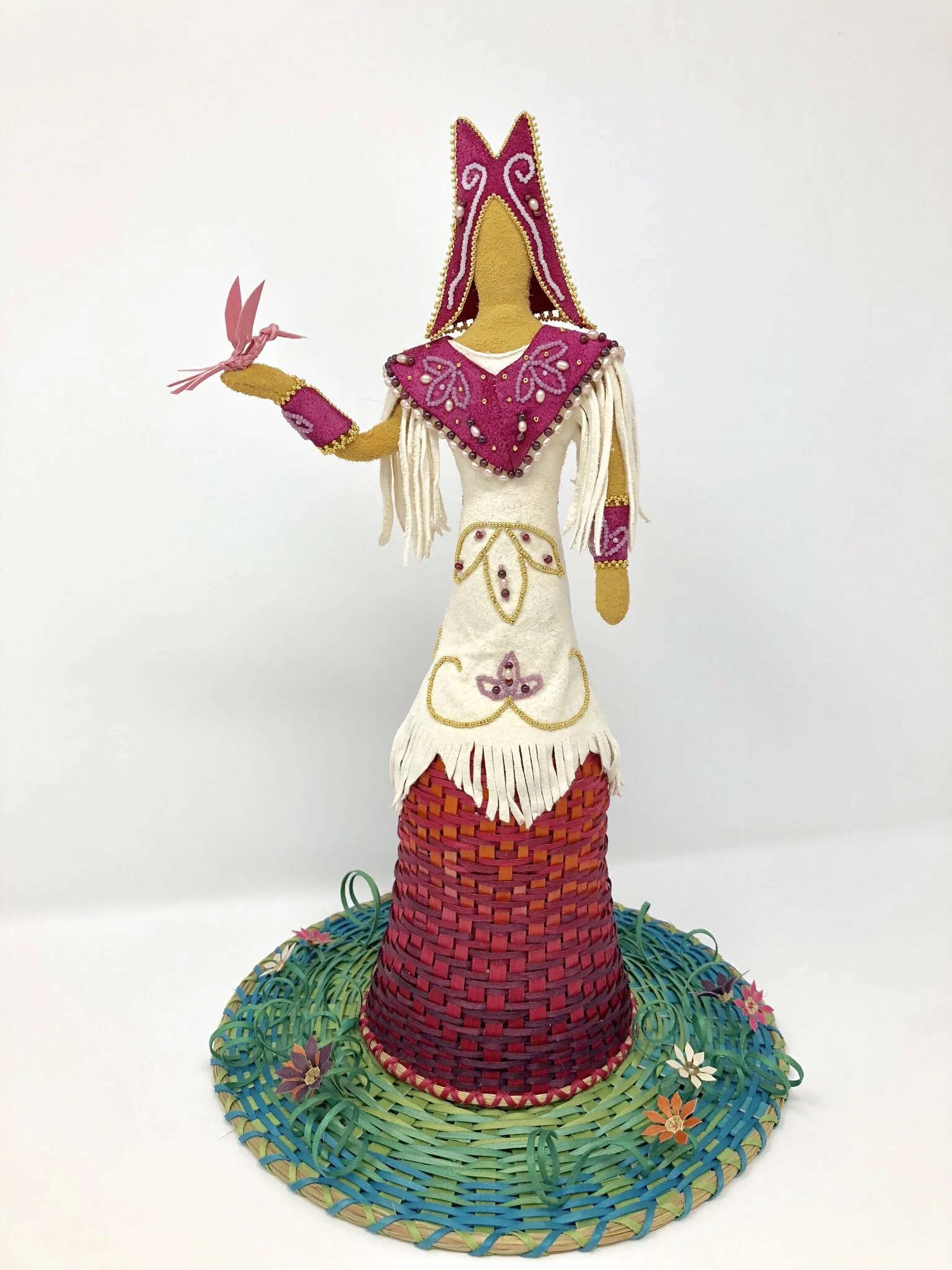
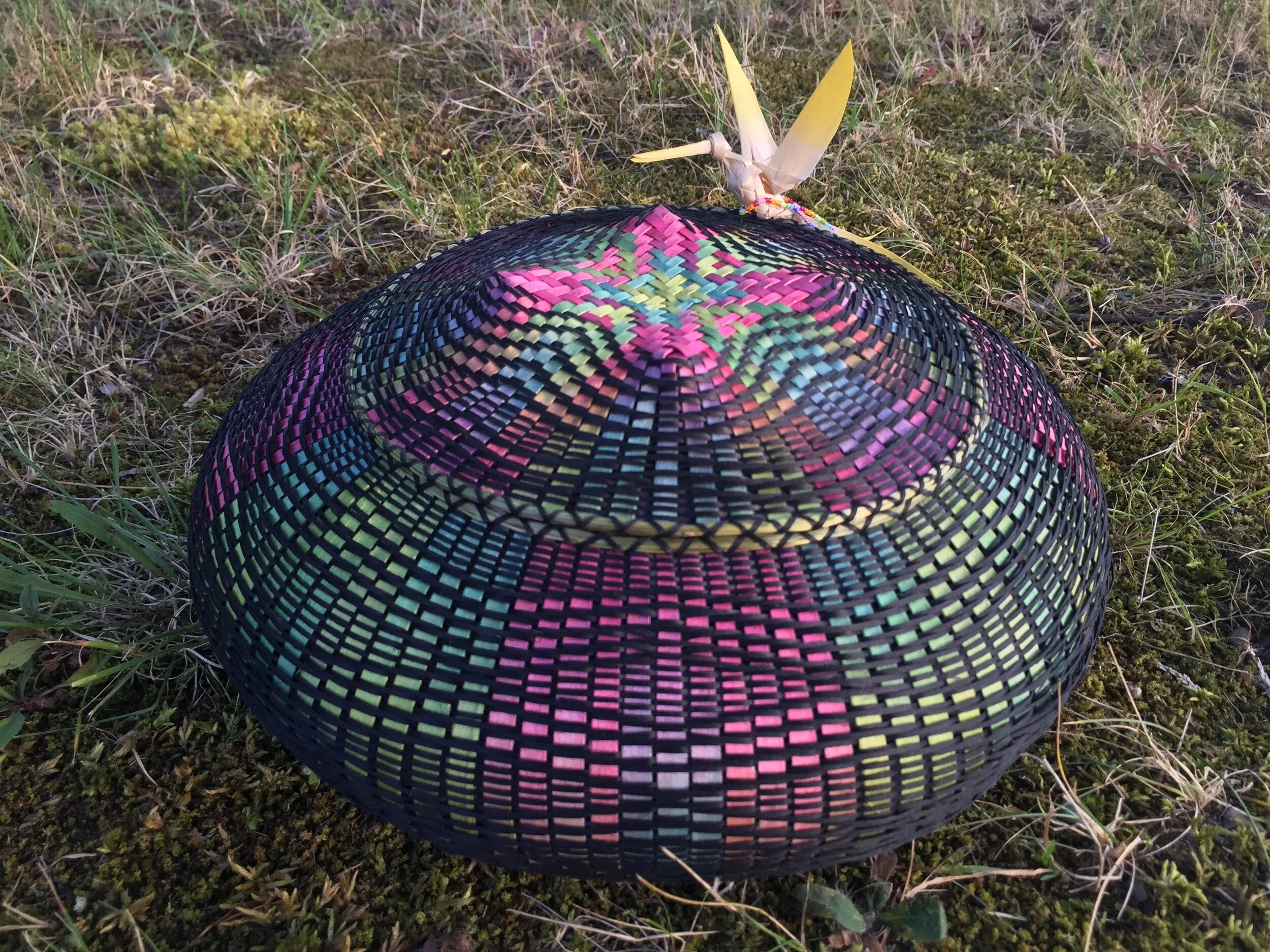
Geo Soctomah Neptune
TRIBAL AFFILIATION: Passamaquoddy Tribe
MEDIUM: Basketry - Ash, Clothing, Diverse-Arts
MARKET PERFORMER: Sunday, July 12, 10-10:30 a.m. on the Market Stage
ARTIST STATEMENT:
Geo Neptune is a member of the Passamaquoddy Tribe from Indian Township, Maine, and is a Master Basketmaker, a Drag Queen, an Activist and an Educator. As a person who identifies as a two-spirit, an indigenous cultural gender role that is a sacred blend of both male and female, Geo uses they/them gender-neutral pronouns.
At four years old, Geo had already been asking their grandmother Molly Neptune Parker to teach them how to weave baskets; after being told to wait until they were older, Geo found another elder that would teach them, and presented their grandmother with their first completed basket. Later that year, after turning five years old, Geo wove their first basket with their grandmother, beginning a lifelong apprenticeship.
After graduating from eighth grade at the Indian Township School, Geo attended Gould Academy in Bethel, Maine, where they were able to explore more artistic outlets before becoming a member of the Dartmouth College Class of 2010. Proficient in Spanish and a performing arts major, Geo studied abroad in both Barcelona and London during their time at Dartmouth.
When Geo graduated from Dartmouth College and returned to the Indian Township reservation, they began to focus heavily on their weaving, and developing their own individual artistic style. Experimenting with their family's signature woven flowers mixed with natural elements of twigs and branches, Geo began forming what would eventually be known as their signature sculptural style of whimsical, elegant, traditionally-informed basketmaking. During their time at home, Geo was also the Cultural Activities Coordinator and Drama Instructor for the Indian Township After School and Summer Programs, and eventually went on to serve as the Unit Director for the Passamaquoddy Boys and Girls Club. In 2012, Geo attended the Santa Fe Indian Market for the first time, accepted the position of Museum Educator at the Abbe Museum, and watched their grandmother receive the National Endowment for the Arts National Heritage Fellowship before moving to Bar Harbor.
Living in Bar Harbor, Geo maintained a life as a basketmaker, actor, drag queen, and activist in addition to serving as the Museum Educator. Participating in Idle No More protests here in Maine, Geo was invited as the first Indigenous youth delegate to the World Summit of Nobel Peace Laureates in Capetown, South Africa in 2014. After attending the Summit again in 2015, returning to Barcelona, Geo was then invited to attend a PeaceJam conference in Winchester, England, where they met Rigoberta Menchu Tum, the first and only Indigenous woman to win the Nobel Peace Prize. In 2016, Geo was the first drag queen on the cover of Native Peoples Magazine, with their story featured in the magazine's first official LGBTQ Pride issue. In late 2016, Geo decided to pursue their art and activism full time, and they now live back in their community at Indian Township. At home, they are able to spend more time with their apprentice and youngest sister Emma--who, at thirteen years old, has won numerous more awards for her basketry than Geo has--and with their grandmother, keeping the family and cultural tradition of basketry alive. Geo hopes to be able to work to embrace the sacred role of the two-spirit, truly becoming a keeper of tradition and a teacher and role model for Passamaquoddy and other Wabanaki youth. Most importantly, Geo hopes to inspire other two-spirits from across turtle island to accept their truth and embrace their sacred responsibility, and travels across the state and country educating learners of all ages about Wabanaki history and culture, the art of basketmaking, and what it means to them to be a Two-Spirit.
Connect with Geo
Deborah Spears-Moorehead
TRIBAL AFFILIATION: Seaconke Pokanoket Wampanoag Tribal Nation
MEDIUM: Painting, music,
ARTIST STATEMENT
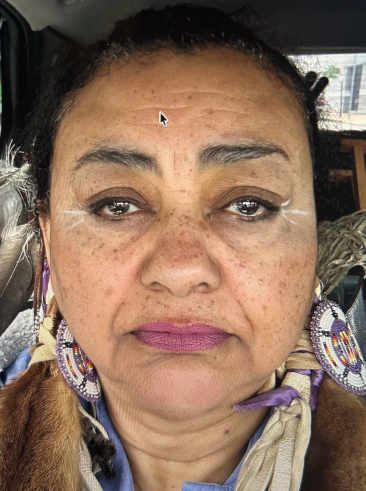
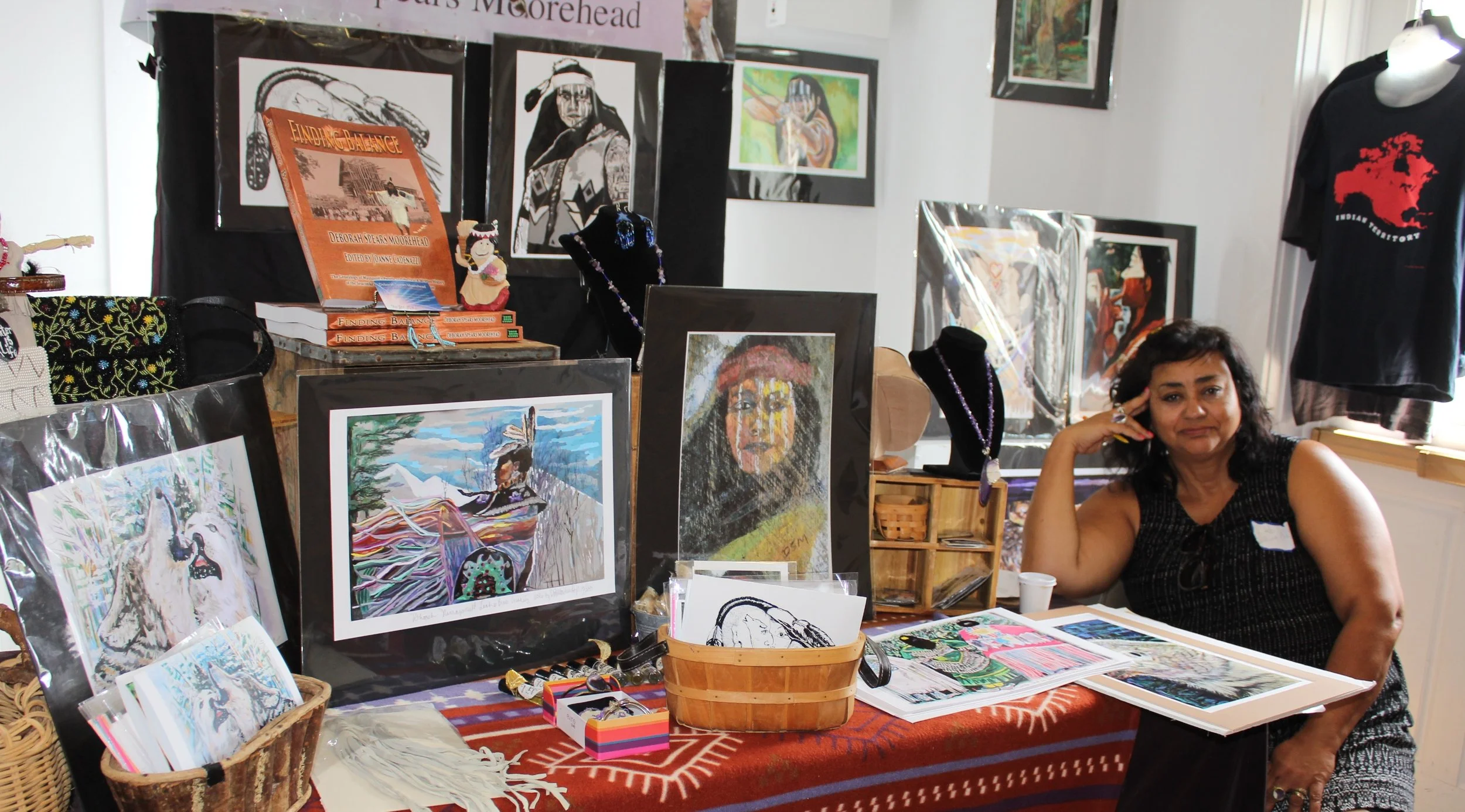
Deborah Spears Moorehead is an award-winning, internationally recognized Native American Fine Artist. She earned a Master of Arts in Cultural Sustainability from Goucher College in 2013 and a Bachelor of Fine Arts in Painting and Sculpture from the University of Massachusetts in 1981. She also attended continuing education courses at Rhode Island School of Design, Brown University and Rhode Island College. .Deborah is a published Author and Cultural Bearer of Traditional Storytelling and Eastern Woodland Native American Music.
She is the owner and Director of Painted Arrow Studio, Talking Water Productions, and a founding member of Nettukkusqk Singers. All of her artistic expressions, literature, and music performances serve to recover, educate, assert, promote, value, and validate the identity of the past, present, and future generations of Eastern Woodland Tribal Nations. Her creative expressions, which include paintings, murals, music, lectures, sculptures, clothing, and greeting cards, have been featured in museums, magazines, and galleries all over the world. Each piece I create tells a unique story. inspired by my people, our culture, and our homelands. In 2014, Deborah authored the books "Finding Balance: The Oral and Written History and Genealogy of Massasoit's People,” published by Blue Hand Books, and "Four Directions at Weybossett Crossings.” In 2019, her book “Finding Balance” is a Native American-inspired reflective recovery of the systematic erasure of Eastern Woodland Native American people. It emphasizes and responds to the unbalanced, overly biased version of educational curricula taught as the History of the United States. In 2025, the International Society of Ethnology and Folklore invited Deborah to present her paper at their conference at the University of Aberdeen. Scotland..” Currently, Deborah is a”2022-2026 “Distinguished Scholar and Artists in Residency"at Bunker Hill Community College, Boston.
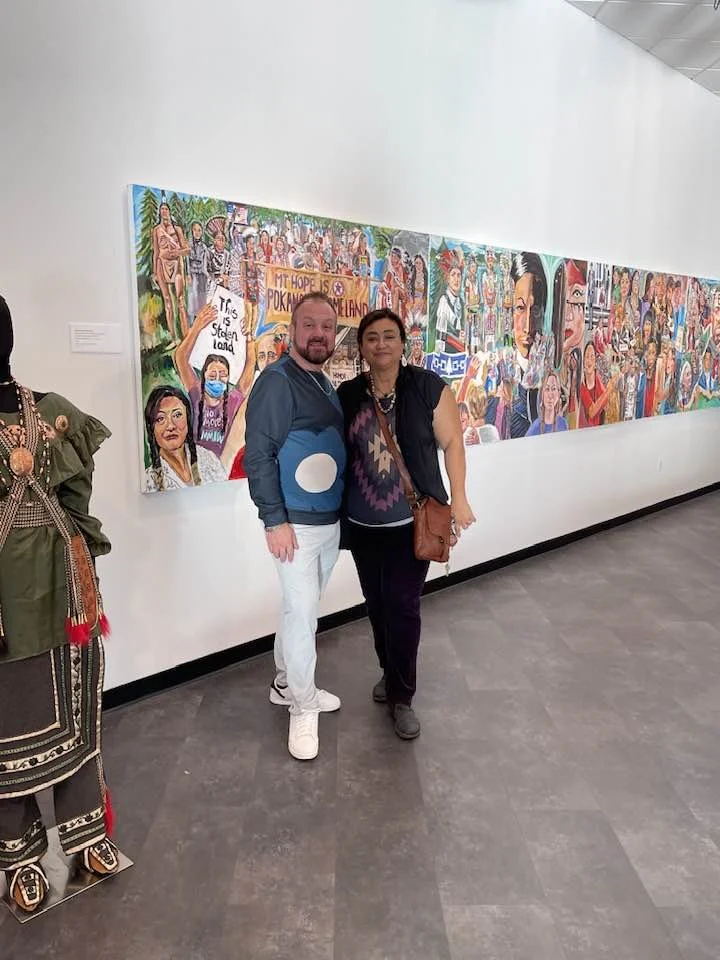
Debrah Spears Moorehead is a Massachusetts State Recognized Enrolled Member of The Seaconke Pokanoket Wampanoag Tribal Nation. She is a direct descendant of many Eastern Woodland Native American tribal leaders. One notable ancestor is Ossamequin, who was the Massasoit (Great Leader) of the Pokanoket Wampanoag Confederation in the seventeenth century. His significant role in U.S. history includes entering into a peace agreement and treaty in 1620 with the lost and starving Pilgrim colonists, with whom he saved their lives. Additionally, this connection extends to Roger Williams, the founder of Rhode Island. Her most recent project, titled "Fighting For Freedom,” commemorates the contributions of Native Americans, African Americans, and men of mixed ethnicities, who saw enlisting on the colonists' side in the Revolutionary War as an opportunity to gain their freedom from the men and society that enslaved them. The “Fighting For Freedom Project” includes a mural, a coloring book, panel discussions, and a music composition. Also in 2025, the US Department of Fish and Wildlife Service Northeast Regional Office in Hadley, MA. exhibited Moorehead’s solo art show. Gather Rhode Island commissioned Deborah for two portraits for their gallery’s permanent collection. In 2024, Deborah retired from working for the Mashantucket Pequot Tribal Nation, where she had been employed for over thirty years. Her original painting, “Granny Squant, “won the 13 Moon exhibit, Art Award from the Mashantucket Pequot Tribal Nation. “ The Quinnipiac Museum of Guilford, Connecticut, at Dudley Farm, procured two paintings from Moorehead in 2022, and the Pocumtuck Memorial Museum purchased an original mural titled "Fifty Mishoonash " for their permanent collection. The image of Fifty Mishoonash traveled to forty-nine educational institutions to educate on the history of the region. In 2024, Deborah illustrated the cover design for Dr. Drew Lopenzina's forthcoming book about a historic Pequot Wampanoag named William Appes. In 2022/23, Deborah was the Fitts Family Grant recipient and Artist in Residency at The John Nicholas Brown home, which houses the Humanities Department of Brown University. During the 2021 pandemic, she created two murals: a community mural for the Collective Museum in Wakefield, R.I., and another for the Nolumbeka Project in Turner Falls, MA. In 2020, the Tomaquaug Museum honored her with a Princess Redwing Art Award. Also, in 2020, she collaborated with Artist Alison Newsome on a sculpture for the Culture and Tourism Department for the City of Providence, PVD festival. "The Three Sisters Sculpture" was procured by the New England Historical Society. and make its permanent home at Casey Farm in Narragansett, R.I.
In 2018-2021. Moorehead was also awarded a Folk Art Master Apprentice Grant through the Rhode Island State Council for the Arts to teach a mentee traditional Native American music. At this time, she painted two murals in Providence: a 16-foot Land Acknowledgment Mural on the bridge on Cypress Street, commissioned by a Community Health Initiative Grant through Brown University, and the Providence Preservation Society funded the second mural. Her rendered color pencil drawing " Whoosh " won the Art Contest award for the National Congress of American Indians in 2015. The Rhode Island State Council for the Arts honored Moorehead with a Community Leadership Award. In 2013.-her painting, Good Energy, was displayed in Congressman David Ciciline's office. In 2012, the University of Rhode Island honored her as a "Woman of Distinction. In 2005, she won the "Youth Mural Award "from the National Museum of the American Indian Smithsonian Institute.
Dawn Spears
TRIBAL AFFILIATION: Narragansett Indian Tribe
MEDIUM: Clothing, Diverse Arts, Painting/Illustration
ARTIST STATEMENT
I try to capture the vibrant colors of our natural world; they are my inspiration along with my appreciation of the symbolism within our indigenous culture. I enjoy opportunities that allow us to share our work and give us space to be able to dispel the myths and stereotypes that our people have been forced to endure. Misconceptions about Native American art continue today, for years I was discouraged from pursuing my own style of work because it was not “Native American” enough, it didn’t show horses, and scenes from the wild west.
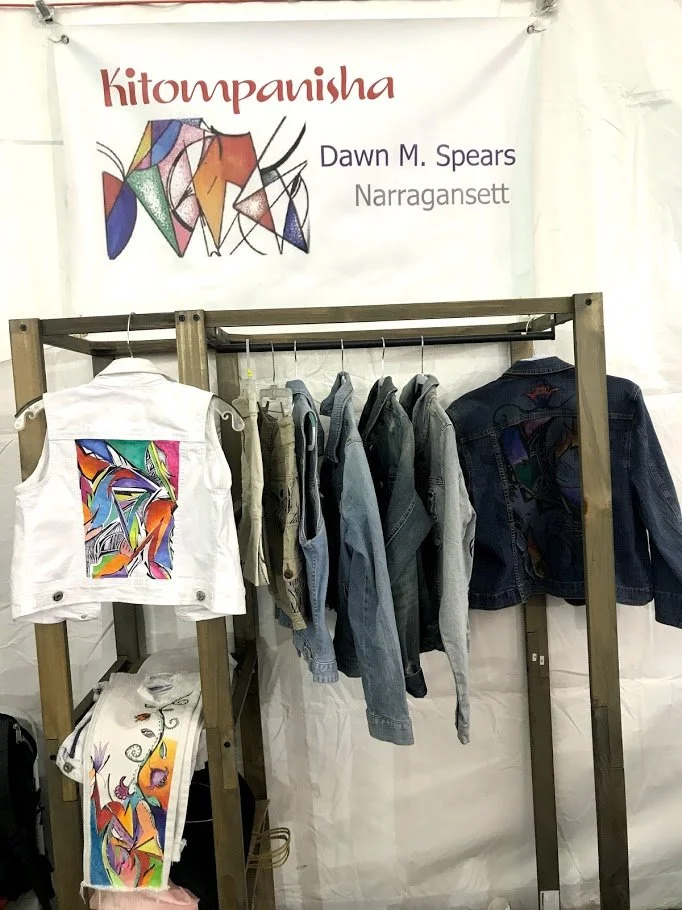
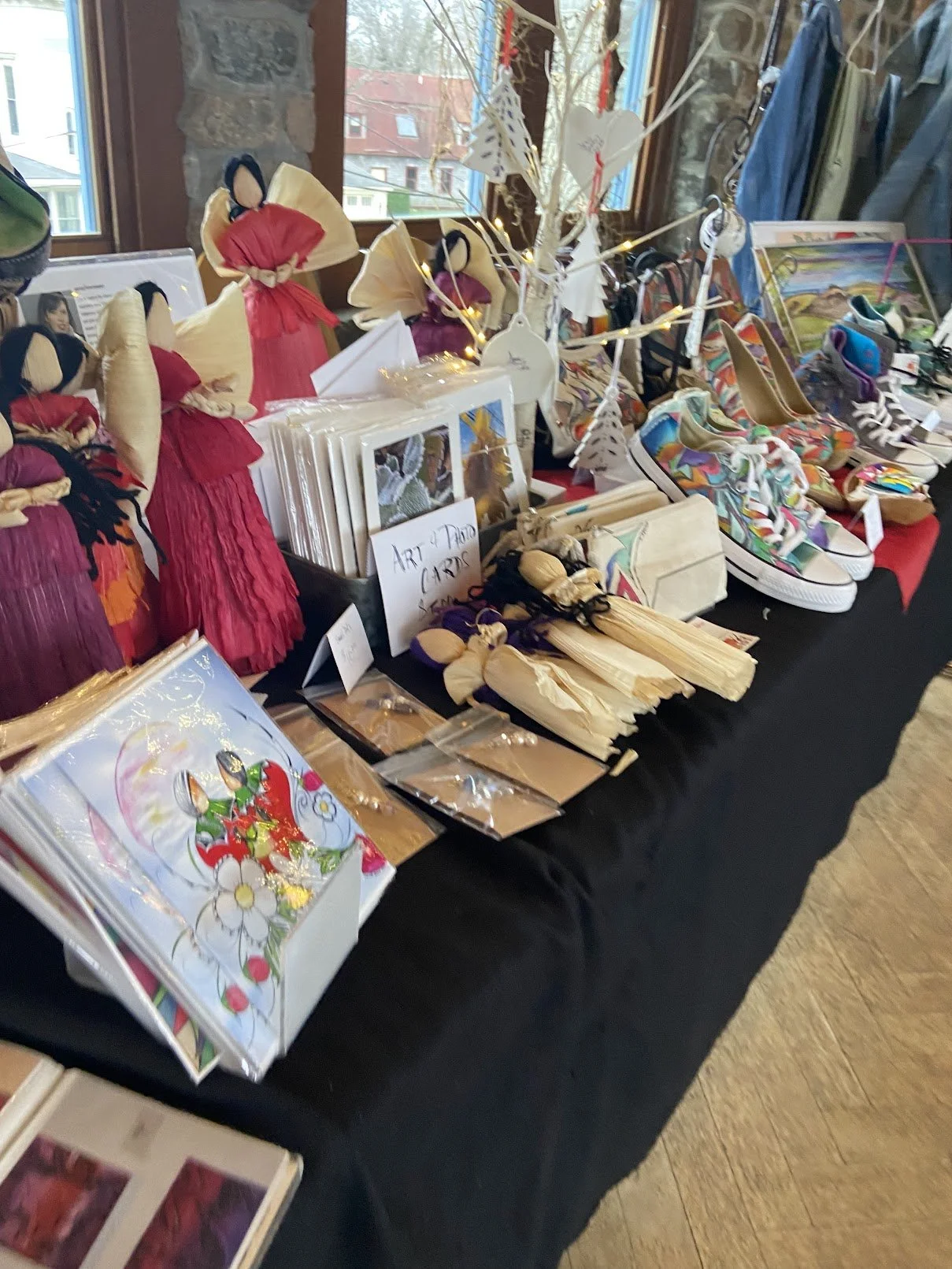
I channel my creativity in my work by making a range of art; corn husk dolls, illustrations/drawings, painting, and capturing the beauty of our natural world in photography. I work in both contemporary and traditional mediums; I use both traditional and unconventional tools. I like to experiment with these mediums and create amazing colors. In the last few years I have added custom sneakers, shoes, and handbags to my list, and I even tag jeans and jackets and have participated in fashion shows with my designs. I feel like the possibilities are endless.
A Narragansett/Choctaw, my mother, Diosa Summers (Choctaw), was an artist and educator, and I grew up attending and assisting her. She taught me the fundamentals early; I was immersed in the arts at a young age and I easily became an educator of Eastern Woodland Native Culture myself, my art and work professionally reflect all facets of my life. It was inevitable that I would end up with similar interests as my mother.
Over the last twenty-five years plus years, I have taught youth and adult classes, coordinated cultural events, dance troupes and created educational programs and materials for native language and arts. Alongside my role as a mother, grandmother and wife of thirty-nine years, I find that being able to create original art that typifies Eastern Woodland culture and tradition to be a true outlet.
BIOGRAPHY
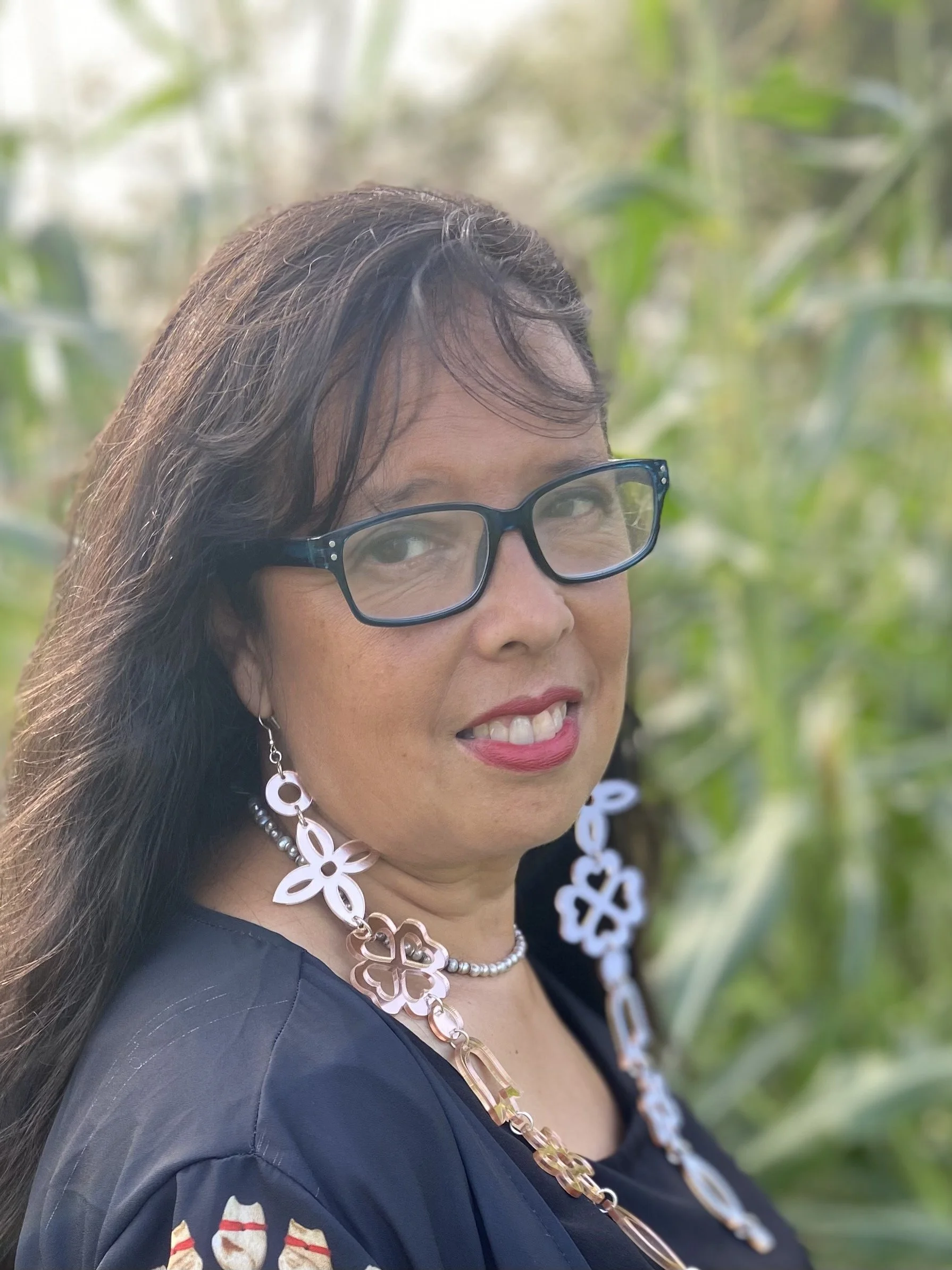
Dawn Spears (Narragansett) is the Director of the Northeast Indigenous Arts Alliance (NIAA). For more than twenty-five years Dawn has worked to support Indigenous arts as an artist, educator, demonstrator, and organizer. Most recently Dawn produced two of the largest and most significant markets in New England, the Indigenous Fine Arts Market East in 2016 and the inaugural Abbe Museum Indian Market in 2018. She is a 2020 Assets for Artists grantee, a 2015 RI State Council for the Arts (RISCA) Master Apprenticeship grantee and was the Community Artist in Residence at the New Bedford Art Museum in 2021. Dawn has exhibited at the most prestigious Indian art markets across the country including the American Indian Arts Marketplace at the Autry Museum in Glendale, CA, Heard Museum Indian Fair & Market in Phoenix, AZ, and the SWAIA Santa Fe Indian Market in Santa Fe, NM. Dawn has served on the board of the Tomaquag Indian Memorial Museum and Native Americans in Philanthropy and sits on several advisory’s (Brown University, Yellow Farmhouse, Tomaquag Museum, Abbe Museum’) continues to work consulting regionally and nationally supporting arts programming and business training for artists.
An active member of her tribal community, Dawn served as the Narragansett Indian Tribe’s Tribal Secretary for two terms and currently serves as chair on the Narragansett Indian Tribal Election Committee and vice chair for the Economic Development Commission. In 2014 Dawn and her husband of thirty-eight years formed the Narragansett Food Sovereignty Initiative, a farm-based organization devoted to reclaiming food and cultural ways for Narragansett people. They currently own and operate Ashawaug Farm in Ashaway RI. Dawn also enjoys her role as mother and grandmother. Dawn's work within her family, community, and in the arts is driven by her belief in the preservation and education of culture and traditions.
Connect with Dawn

April Lola
TRIBAL AFFILIATION: Passamaquoddy Tribe
MEDIUM: Diverse Arts
ARTIST STATEMENT:
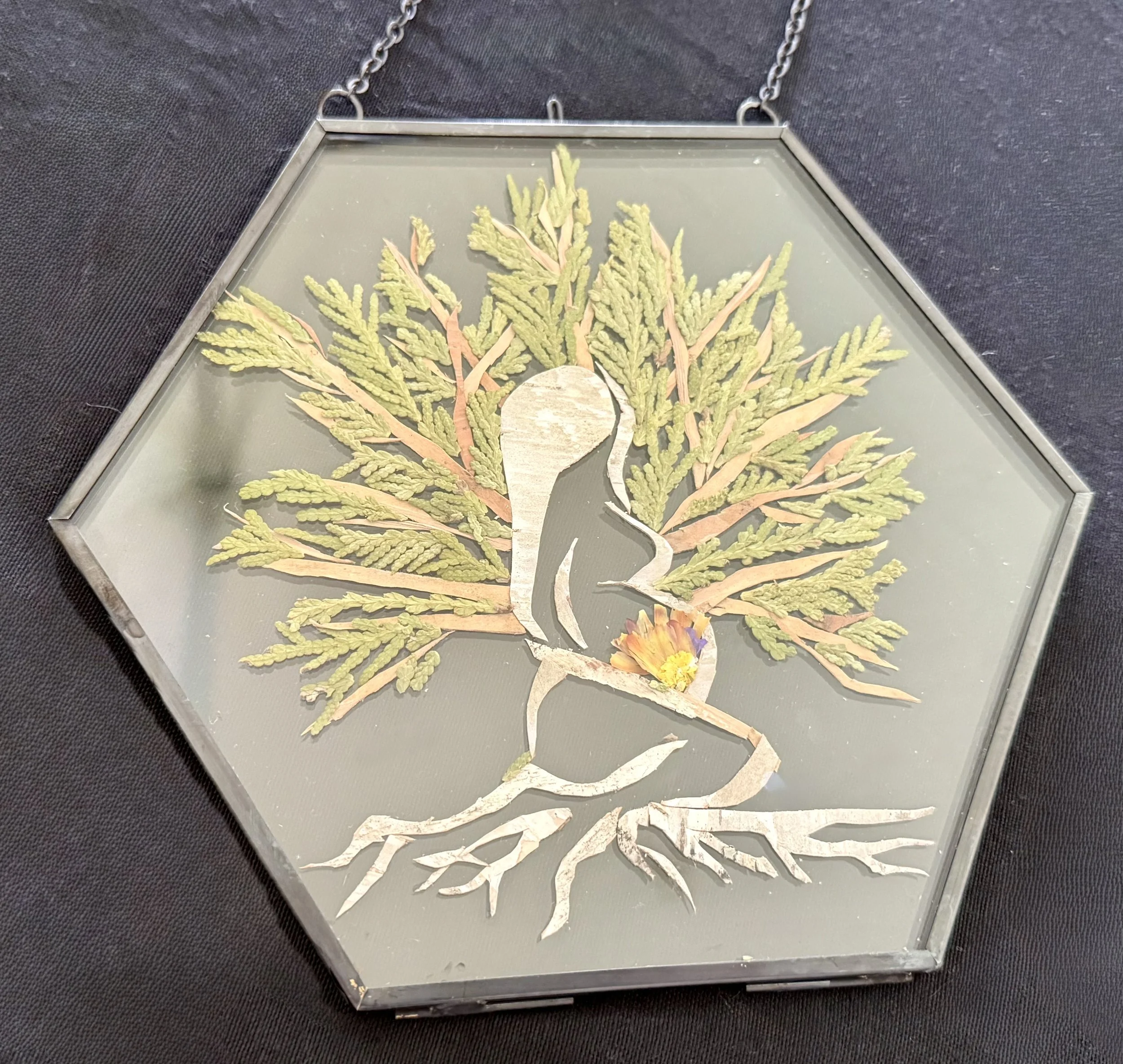
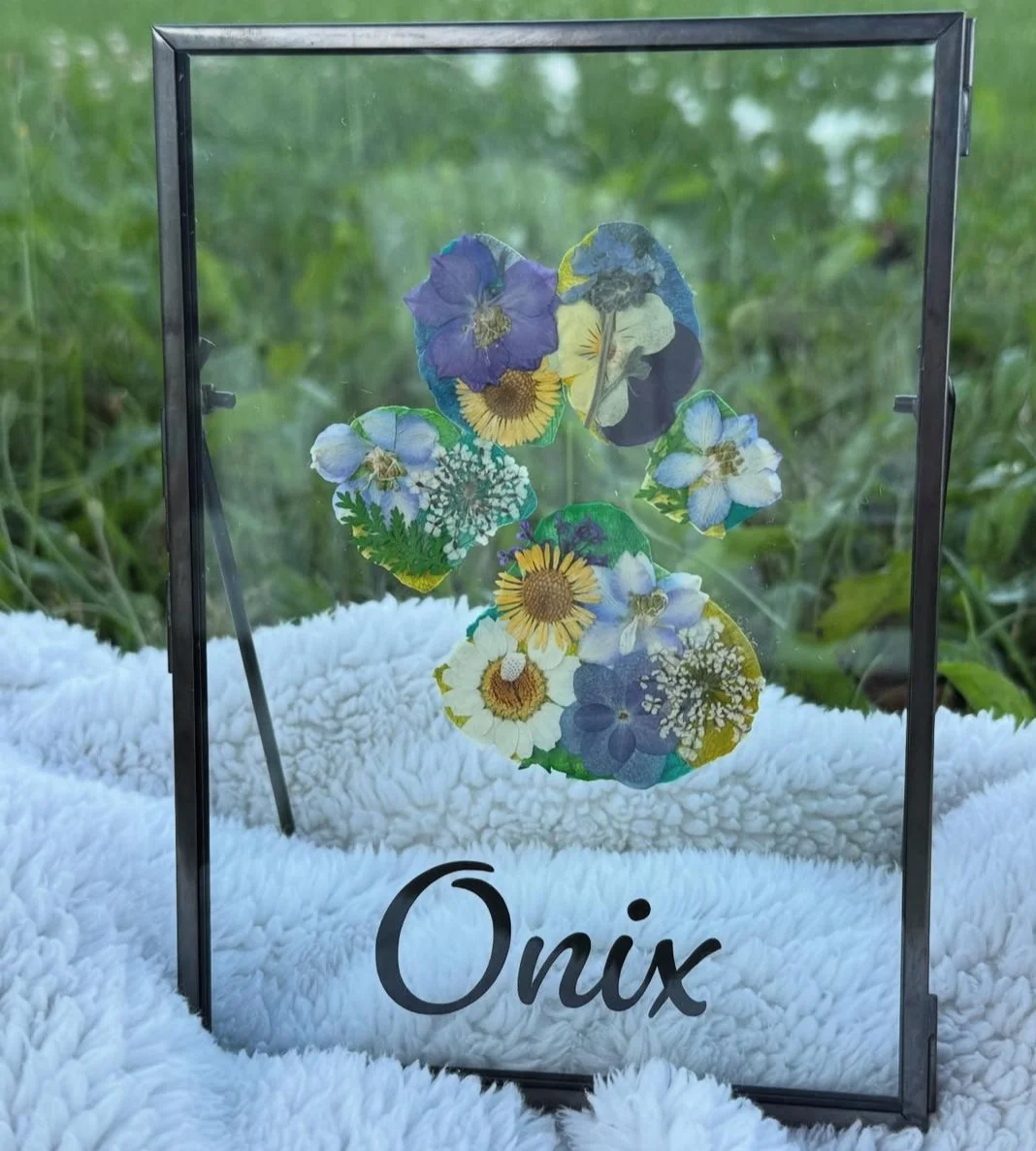
April Lola is a Peskotomuhkati (Passamaquoddy) artist from Motahkomikuk (Indian Township). A mother of two Passamaquoddy and Maliseet daughters and a graduate student in clinical counseling, she turned to botanical framed art as a way to carve out time for creativity and self-care amidst her busy life.
Born and raised on the Motahkomikuk reservation, her home was filled with art, April was deeply influenced by her mother, a respected beader known for her intricate dream catchers. She gravitated toward floral art, preserving foraged and gifted flowers over time. Inspired by the beauty and significance of these natural elements, she began incorporating medicines of the four directions and themes of feminine strength into her work. Through silhouettes of the divine feminine, she tells stories of resilience, empowerment, and connection to the land.