
This archive is primarily a list of all Abbe Museum exhibits, though we have included additional content wherever possible. Exhibits are organized alphabetically by title, though you may also browse by the closing date or any associated keywords using the search tools below. Don't see something that you're looking for? Get in touch with us at info@abbemuseum.org.
A-C / D-F / G-J / K-M / N-P / Q-S / T-V / W-Z
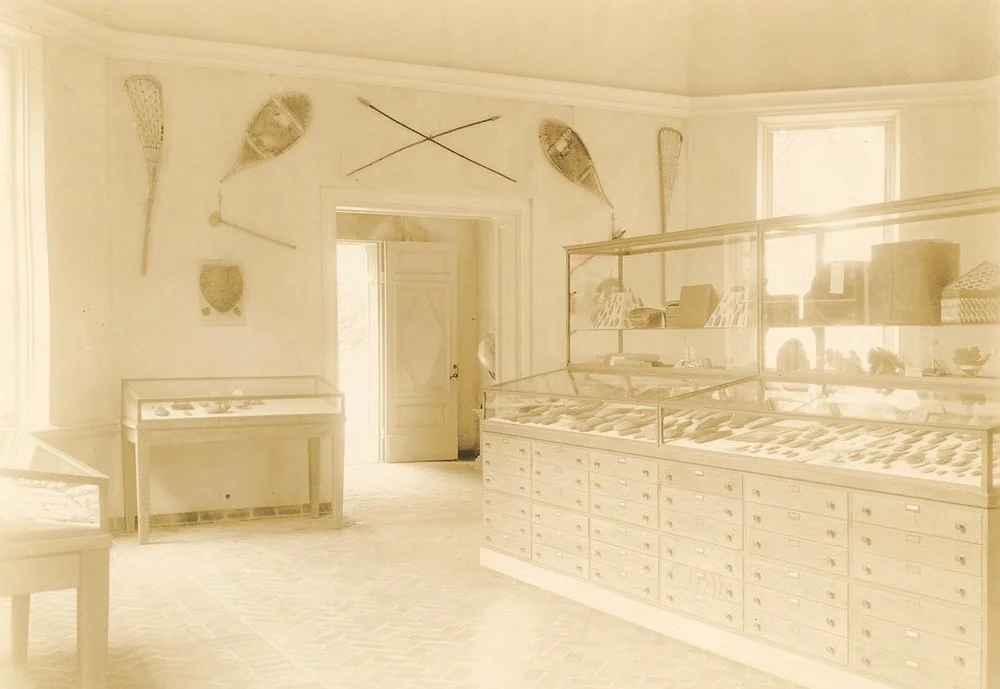
Dr. Abbe's Stone Age Museum (ongoing)
Visit the original Abbe Museum at Sieur de Monts Spring in Acadia National Park, built as a trailside museum in 1928. The exhibits focus on the archaeology of Maine and are…
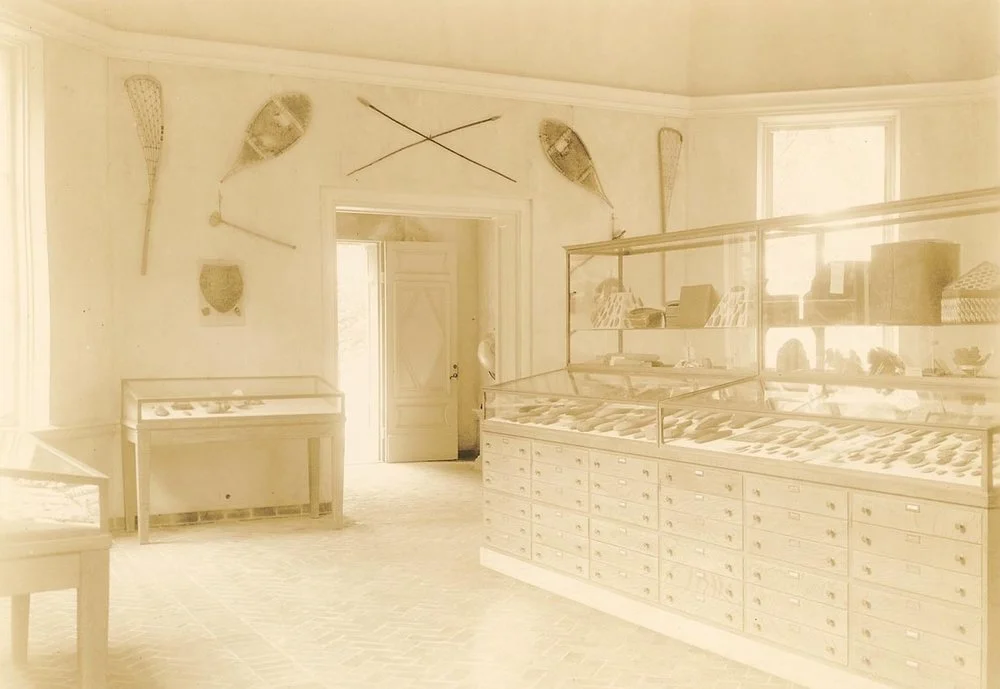
Visit the original Abbe Museum at Sieur de Monts Spring in Acadia National Park, built as a trailside museum in 1928. The exhibits focus on the archaeology of Maine and are reminiscent of the way the museum would have looked when it originally opened. See how bone and stone tools and pottery were made, explore artifacts from the Museum's early collections, and find examples of artifacts from many towns around eastern Maine. An introductory exhibit gives you a brief history of the Abbe Museum and is complemented by a giant map of Mount Desert Island (MDI) and the surrounding area, made by Museum founder Robert Abbe. Four dioramas depict life on MDI before the arrival of Europeans. The Abbe at Sieur de Monts Spring is open daily 10 am to 5 pm from late May through early October.
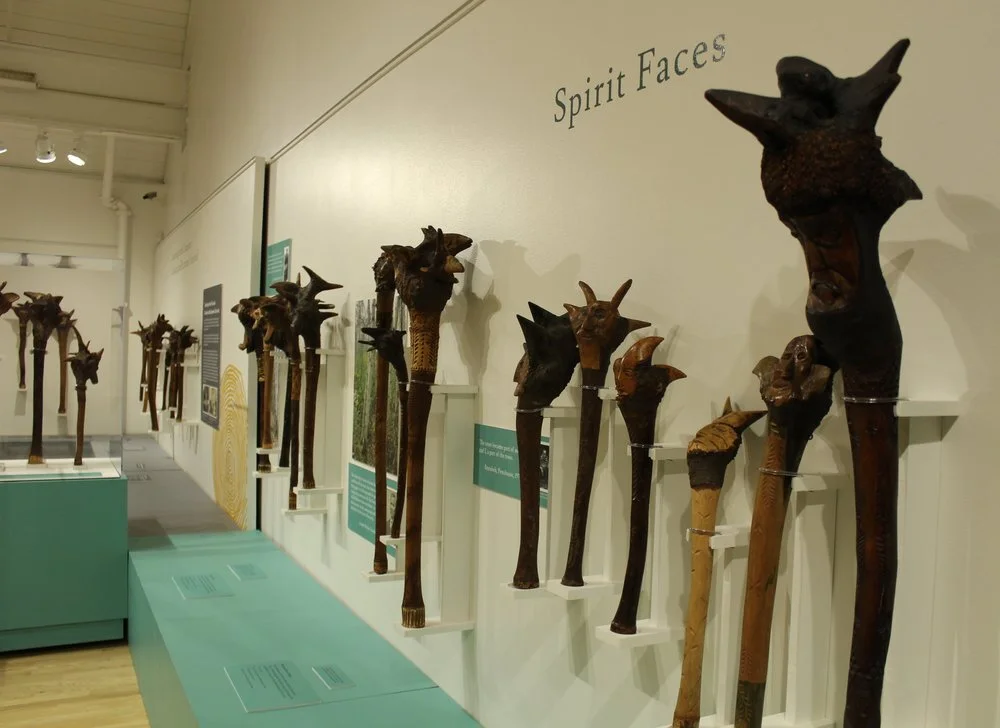
Emergence: Root Clubs of the Penobscot Nation (2018)
This exhibit celebrated a uniquely Wabanaki art form, a centuries-old craft that has frequently been dismissed by museums and academics as not “traditionally” Wabanaki. Root clubs have been viewed by…
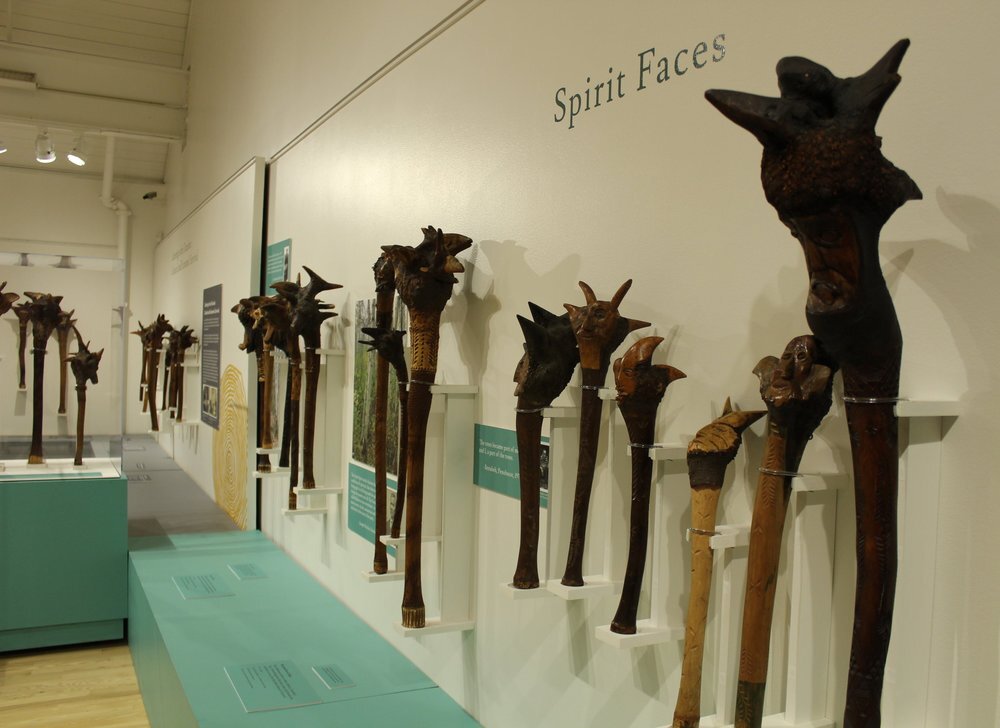
This exhibit celebrated a uniquely Wabanaki art form, a centuries-old craft that has frequently been dismissed by museums and academics as not “traditionally” Wabanaki. Root clubs have been viewed by museums and anthropologists as “tourist art,” not “traditional” enough to warrant a place in museums. Decades of research by exhibit curators Stan Neptune, Penobscot, and Joan Lester have built the body of evidence to show that this uniquely Wabanaki form, in fact, is very much a part of Wabanaki traditions going back centuries or more. And while new styles have been created over the years to support an economy tied to tourism, the earlier forms have continued and are still being made today. Over 70 clubs were exhibited and loaned from the Penobscot Nation, Hudson Museum, private collectors, and more.
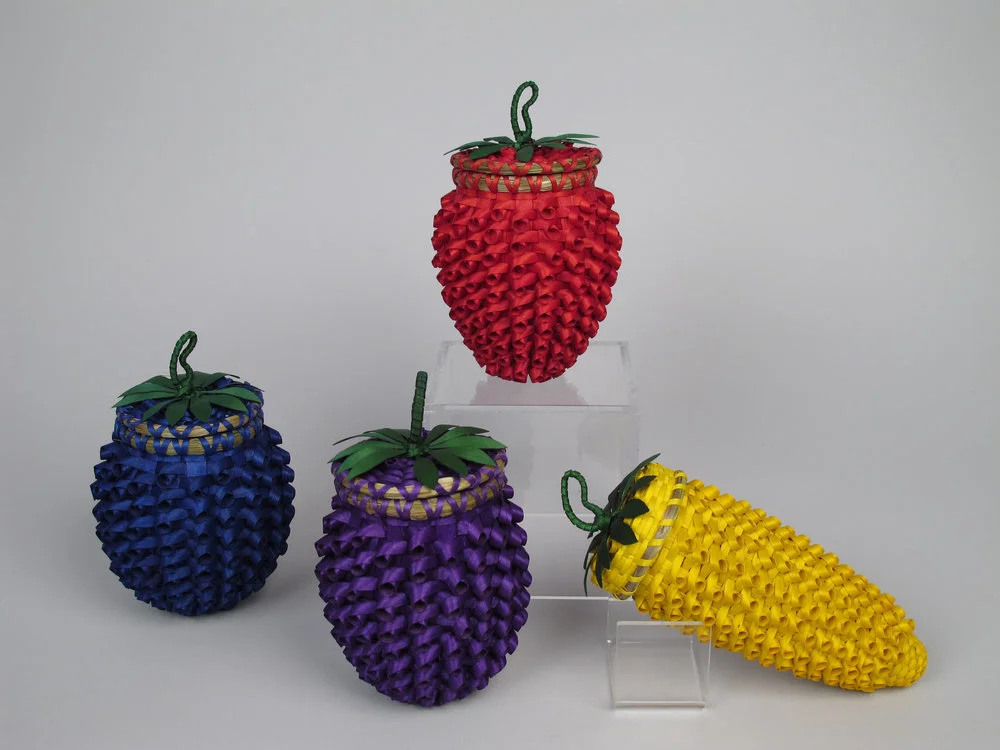
Four Directions of Wabanaki Basketry (2013 – 2021)
Four Directions of Wabanaki Basketry, located in our unique Circle of the Four Directions, offers a place of quiet reflection for visitors. The exhibit features a basket from each of the…
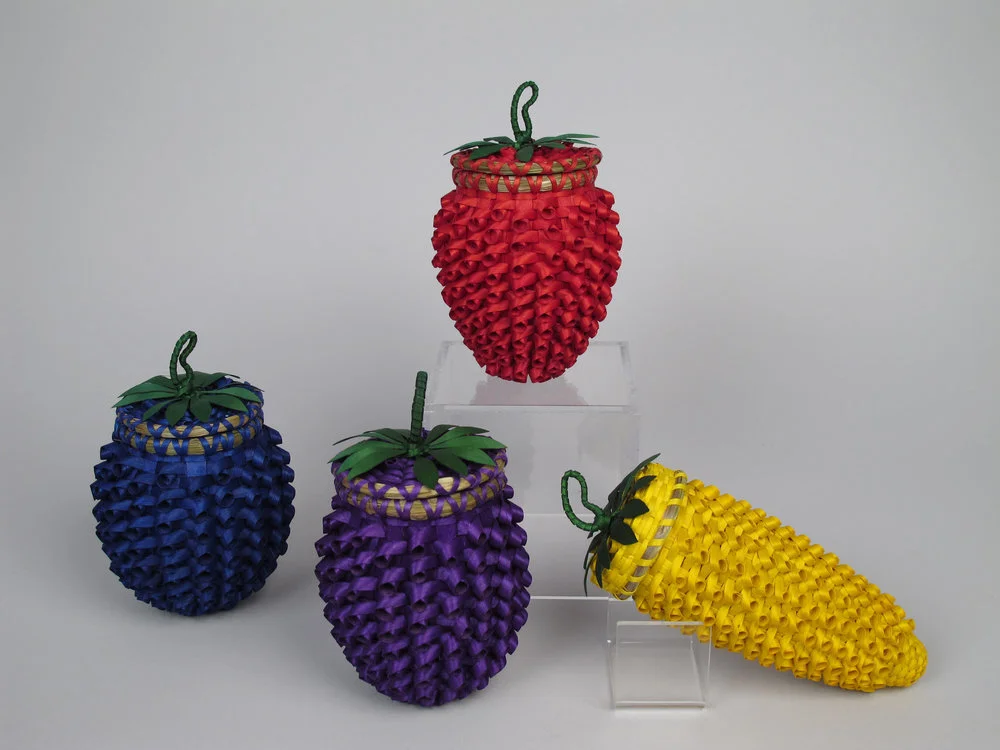
Four Directions of Wabanaki Basketry, located in our unique Circle of the Four Directions, offers a place of quiet reflection for visitors. The exhibit features a basket from each of the Wabanaki tribal communities: the eastern basket made by a Maliseet child, the southern baskets made by Passamaquoddy women, the western basket made by a Penobscot man, and the northern basket by a Micmac elder. Visitors will also hear the creation story of Koluskap and the Ash Tree in the Penobscot, Passamaquoddy/Maliseet, and Micmac languages. Click below to listen to the audio.
Made possible through the generosity of John and Ruth Overton.