Abbe President and CEO travels to Washington for Museums Advocacy Day

Abbe President and CEO, Cinnamon Catlin-Legutko will travel to Washington, D.C. on February 24-25 to participate in Museums Advocacy Day, during which over 300 museum professionals from across the country journey to the capitol to make the case for federal support of America's museums.


Museums Advocacy Day is the embodiment of the Constitutional right of citizens to petition the government, and a basic exercise in democracy, whereby average citizens have their voices heard in Congress. Catlin-Legutko will meet with Maine's representatives and present powerful data on the economic, educational, and community impact museums make both locally and nationally. 

Stay tuned for a report after Advocacy Day!

Catlin-Legutko meets with Senator Collins during Museums Advocacy Day, 2013

Exhibit Opening for "Twisted Path III"


We are excitedly preparing for the new feature exhibit, Twisted Path III, Questions of Balance, opening to the public on Thursday, February 6. The evening before we will celebrate the new exhibit with a special opening reception, from 5:00 - 7:00pm on Wednesday, February 5. You must RSVP to attend this event, so please contact Abbe Director of Development, Hannah Whalen, if you are interested in attending - hannah@abbemuseum.org or 207-288-3519. 

For now, we give you a teaser of what you will see when Twisted Path returns.

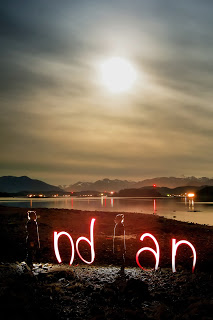
Photograph by Nicholas Galanin

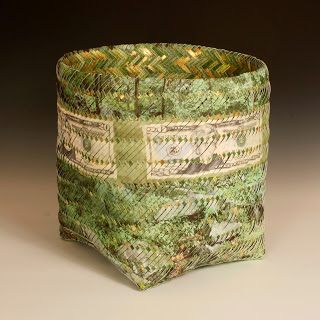
Color of Conflicting Values, by Shan Goshorn

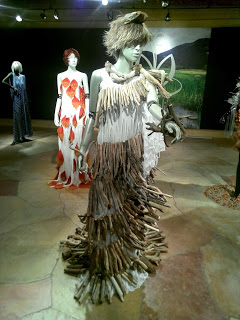
Dress by Patricia Michaels

Abbe Offers Free Admission, Sponsored by Machias Savings Bank


Breaking News! The Abbe Museum will be offering free admission half of the year beginning this February.

The museum, which is celebrating its 86th year on Mount Desert Island, has a long-standing commitment to serving the local community, with much of the museum’s educational programs offered free of any additional charge after museum admission, and this year the Abbe is taking that commitment even further.

“The decision to offer free admission from November through April was a natural one,” explains Abbe President and CEO, Cinnamon Catlin-Legutko. “We really have two audiences here at the museum. During the summer and fall, we serve a large number of tourists as visitors pour onto the island from around the country and the world, via car, bus and cruise ship. During the winter and spring, the local people, who are often too busy working in the summer, come back to the museum for film events, exhibit openings and other educational programs.. In recent years we have really been focusing on how to deepen our connection to the year-round community, both on Mount Desert Island and beyond, and we feel that free admission during the quieter months is a really good way to do so.”

The first year of free admission is made possible through the support of Machias Savings Bank. “Machias Savings Bank is very pleased to be able to support this effort,” said Bar Harbor Branch Manager, Matt Horton.  “The Abbe does so much to help bring awareness about the Wabanaki Nations to the general public.  It is an incredible resource to have right here in our own backyard and we are happy to be part of making it even more accessible for the local community and all of Maine.”

Matt Horton, Cinnamon Catlin-Legutko and Abbe Director of Development, Hannah Whalen
The Abbe is currently closed for the month of January, as they take down last year’s feature exhibit, Wabanaki Guides and install the new feature exhibit, Twisted Path III, Questions of Balance.When the museum reopens on February 6, the doors will open to that new feature exhibit and admission will be free for all. Free admission begins February 6 through the end of April, and begins again November 1.

The Abbe Welcomes New Curator of Education, Jennifer Pictou!


Jennifer Pictou, Abbe Museum Curator of Education
The Abbe Museum welcomes Jennifer Pictou, Micmac, as the new Curator of Education. Ms. Pictou has a wealth of experience working in the museum field in general and the museum education field in particular. Over the past ten years, she worked as the Museum Educator for the Mashantucket Pequot Museum and Research Center in Mashantucket, CT, as the Education Programs Supervisor at the Mystic Seaport Museum and, most recently, as the Executive Director at the Bangor Museum and History Center. Ms. Pictou currently serves as the Tribal Historic Preservation Officer for the Aroostook Band of Micmacs, a position she will continue to hold as she starts work at the Abbe. Ms. Pictou holds a Bachelors in Fine Art from the University of Maine, a Bachelors of Art in Anthropology from the University of Southern Maine and a Masters in American and New England Studies, also from the University of Southern Maine.

Ms. Pictou stepped into the role of Museum Educator at the Abbe on January 13. "The Abbe is a leading educational voice about the Wabanaki in Maine and I am pleased to be welcomed into the organization," says Ms. Pictou. "As both a museum professional and a member of the Arookstook Band of Micmacs, I look forward to expanding cultural connections for museum visitors as well as helping integrate more Native voices in public dialogue. In addition to bringing the energy and vibrancy of Maine's Natives to visitors from around the globe, I am eager to engage museum learners in multi-sensory experiences that will highlight our deep connections to the land, culture, and people."

Jennifer Pictou succeeds Raney Bench, who left the Abbe in early December to become the executive director of the Seal Cove Auto Museum.

Abbe Museum Brown Bag Lunch Series 2014

Passamaquoddy basketmaker Gabe Frey will lead the March 20 talk.
The popular Brown Bag Lunch Series returns in 2014 with a later start. The first Brown Bag Lunch will be on Thursday, February 20 - details are still forming and the speaker will be named soon. Future Brown Bag Lunches will take place on Thursday, March 20 and Thursday, April 17. The March talk will be given by Gabe Frey, Penobscot basketmaker and April's talk will feature Gina Brooks, Maliseet artist. Please note, there will not be a Brown Bag Lunch this Thursday, January 16.

This popular program was introduced in 2011 to examine issues relevant to the major exhibit at that time, Headline News, and to encourage open dialogue. The series was very well-received and has continued every year since, shifting to align with featured exhibits. This year, each Brown Bag Lunch will be led by a different artist from the upcoming exhibit Twisted Path II, Questions of Balance. The three lunchtime talks will focus on current environmental issues that Wabanaki people face.

Twisted Path III, Meet the Artists


Mask by Shane Perley-Dutcher
We are now less than one month away from the opening of our new feature exhibit, Twisted Path III, Questions of Balance. Art work is coming in, and as we continue to introduce you to the incredibly talented group of artist participating in this exhibit, we are delighted to share a little more about the artists. We look forward to seeing you when the exhibit opens!

Shane Perley-Dutcher


Shane Perley-Dutcher is Wolastoq from the Tobique Maliseet First Nation and as a child was given the spirit name “Aduksis.” Aduksis translated from the Maliseet language means little deer. Shane’s passion for creativity has inspired his journey as an artist. “Creativity has been my heart beat since I was a child. Over the years, the beat has found many rhythms. Creative energy is transferable and keeps me balanced, without it life changes for me.” 
In 2000, Shane graduated with honors and distinction from the New Brunswick College of Craft and design jewelry manufacturing/metal arts program. In 2006 he formed Aduksis Jewellery Designs as a product of his creativity. Shane’s business focuses on a balance of cultural richness and aesthetic appeal. “I want you to see a product that has a life behind it, every piece from Aduksis Jewellery Design has a connection to Maliseet culture. Sharing the historical and cultural aspects of my jewellery/art is a source of pride for me and for Aduksis Jewellery Designs.” 


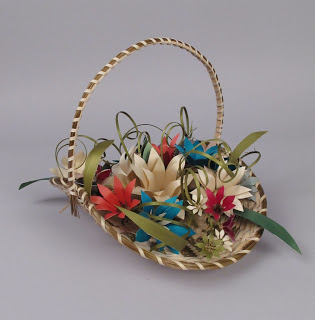
Basket by Shane Perley-Dutcher
Statement for Twisted Path III: 

Balance is a lifelong journey. The pieces created for Twisted Path III, Questions of Balance reflect the struggles of our people, our identity. Recognizing that I live much differently than my ancestors, I face challenges they did not have. I was not brought up making traditional artwork - I learned through my own artistic journey. The fight to keep traditional knowledge alive is present in the production of aboriginal artwork itself. My connection to the land is sacred. I need the land for my spiritual and mental well-being. Every ash basket, metal basket, birch basket, birchbark canoe, wooden mask, and piece of jewelry I've made has come from a place of love and respect for my culture.

I feel like a walking contradiction because I consider the land sacred, but at the same time I live in a way that disrespects that relationship. Twisted Path, to me, means that we live in a world that is full of contradictions on many levels. Balance in the face of contradictions is a daily exercise - I am still pushing forward knowing I am evolving as a Maliseet and as an artist. In my culture we believe in lifelong learning, and it is through this principle that I am learning how to find balance in the twisted path I face every day. 

Nicholas Galanin
Get Comfortable, 2012, Digital print

Born in Sitka, Alaska, Nicholas Galanin, Tlingit/Aleut, has struck an intriguing balance between his origins and the course of his practice. Having trained in "traditional" as well as "contemporary" approached to art, he pursues them both in parallel paths. His stunning bodies of work simultaneously preserve his culture and explore new perceptual territory. 

Galanin studied at the London Guildhall University, where he received a Bachelor’s of Fine Arts with honors in Jewelry Design and Silversmithing and at Massey University in New Zealand, earning a Master’s degree in Indigenous Visual Arts. Valuing his culture as highly as his individuality, Galanin has created an unusual path for himself. He deftly navigates “the politics of cultural representation”, as he balances both ends of the aesthetic spectrum. With a fiercely independent spirit, Galanin has found the best of both worlds and has given them back to his audience in stunning form. 


Statement for Twisted Path III

The State of Being, Displaced, 2013, Digital print

Culture cannot be contained as it unfolds. My art enters this stream at many different points, looking backwards, looking forwards, generating its own sound and motion. I am inspired by generations of Tlingit creativity and contribute to this wealthy conversation through active curiosity. There is no room in this exploration for the tired prescriptions of the "Indian Art World" and its institutions. Through creating I assert my freedom.

Concepts drive my medium. I draw upon a wide range of indigenous technologies and global materials when exploring an idea. Adaptation and resistance, lies and exaggeration, dreams, memories, and poetic views of daily life—these themes recur in my work, taking form through sound, texture, and image. Inert objects spring back to life; kitsch is reclaimed as cultural renewal; dancers merge ritual and rap. I am most comfortable not knowing what form my next idea will take, a boundless creative path of concept-based motion.

"Winter in the Dawnland" - New Wabanaki Stories and Craft Activity Series for Children

Muwin and the Seven Bird Hunters, Illustration by Kristy Read and Sana Kavanaugh
On Monday, January 20, while public schools are closed in observance of Martin Luther King Day, join Abbe Museum Educator, George Neptune for a special children's activity. From 1:00 - 3:00pm, Neptune will share stories and a craft activity appropriate for children of all ages as part of the new "Winter in the Dawnland" program series.

In Wabanaki culture, the winter season was traditionally a time of quiet introspection and, most importantly, a time to share traditional stories.  In this new program series designed for children, each month will feature a different traditional story from the Wabanaki tribes and a craft activity that relates to the story.  This month, hear stories such as Muwin and the Seven Bird Hunters, the Girl who Married a Star, and legends of the Star People—then, weave and decorate your own paper star to take home with you! 

The next "Winter in the Dawnland" program will take place on Tuesday, February 18 during school vacation week. See our full schedule of programming for that week!

In Gratitude

As the snow starts to fall on Bar Harbor and the end of 2013 draws near, all of us at the Abbe wanted to take this opportunity to express our deepest gratitude for the support of our community throughout this past year. By visiting the museum, becoming a member, donating, volunteering and generally being interested in what we do, you have made the many accomplishments of this past year possible. And what a year it has been, with the opening of four new exhibits and our first traveling exhibit from the Smithsonian, the opening of the renovated Sieur de Monts Spring location, the 20th Annual Native American Festival, the artist-in-residence month-long canoe build and, of course, our affiliation with the Smithsonian Institute. Throughout all of these events and exhibits, our educators have diligently been working to develop and take curriculum on the Wabanaki into classrooms throughout the state.

We are so proud of the work the Abbe does and honored by the people we attract. Thank you for being a part of that intelligent, enthusiastic and creative community!

Happy holidays from everyone at the Abbe!

Cinnamon Catlin-Legutko, Abbe Museum President and CEO at the 2013 Gathering Gala.

Membership, a gift that keeps giving all year long


Not sure what to get for that person who “has everything and needs nothing” on your gift list.  Well, look no further!  May we suggest giving the gift of an Abbe Museum membership?  There are many levels to choose from, and the most popular one is the Household Membership for $65.   Benefits include: unlimited free admission for two to both museums, subscription to the Abbe Museum eNews and calendar of events, invitations to museum events, and 10% discount on all purchases in the Museum shops.  

Now that the Abbe is a Smithsonian Affiliate, we are able to offer a membership to the Smithsonian through the Abbe.  For $30 more, you can add a Smithsonian membership to make it a double membership gift.  These benefits include:  personalized membership cards identifying you as a Smithsonian Affiliate member, a one year subscription to Smithsonian or Air & Space Magazine, 10% discount off all purchases from the Smithsonian Catalog and Smithsonian Store, discounts on shopping and dining at the Smithsonian in Washington, DC, members-only travel opportunities and more!

Call 288-3519 to order your gift membership and we will mail you a gift-wrapped membership package.  Ask for Johannah or Hannah or email johannah@abbemuseum.org or hannah@abbemuseum.org.  You are also welcome to come by the museum store in person.

Winter hours for the museum and shop are 10:00am to 4:00pm Thursday through Sunday.  The museum is closed for the month of January, as we will be installing the newest exhibit, Twisted Path III, Questions of Balance and will reopen on February 6 with the new exhibit.

Add a paddle and save a stamp


What do we mean by this?

This holiday season, we are making it easy for you to make an on-line gift to the Abbe.  By clicking the link below, you will be brought to a page with an image of a canoe full of paddles.  You can choose a dollar amount listed next to the canoe, go through the paypal portal and and the next day you will see that your gift has triggered another paddle to be added to the image.  The number of paddles in the water indicates the number of gifts that we have received through online giving in November and December.  

Our online goal is to reach $5,000 before the end of December 2013.  All gifts support the annual fund, which is, metaphorically-speaking, our canoe.  The annual fund keeps us afloat, it helps us go where we need to be in 2014, which is a museum full of fresh, new, exciting exhibits and vibrant educational programs for people of all ages. The annual fund helps to protect our 50,000 piece collection; and it allows us to continue moving forward with the important work of sharing our mission with the 30,000 people who will visit us next year.

Farewell to Raney Bench

This past week we bid farewell to Raney Bench, Curator of Education, as she resigned to become the new executive director of the Seal Cove Auto Museum.  During her seven years at the Abbe, Raney has been instrumental in the current vision and strategic direction of the institution.  She has been an extraordinary educator and advocate and her connections and relationships locally and throughout the tribal communities have been invaluable.  The staff, trustees, volunteers and the Abbe community will miss her but we wish her all the best in her new adventure. 

Twisted Path III, Meet the Artists


/abbemuseum/2013/11/opening-february-2014-twisted-path-iii.html

As we approach the end of the year here at the Abbe, Curator of Collections, Julia Clark and Manager of Guest and Creative Services, Allison Shank are hard at work preparing to install our new feature exhibit, Twisted Path III, Questions of Balance. In our previous eNews we featured two of the ten artists participating in the exciting new exhibit. Here we introduce you to two more:

Will Wilson, Diné was born in San Francisco and moved permanently to the Navajo Reservation at the age of 10. He attended the Bureau of Indian Affair's Tuba City Boarding School from 1978 to 1983. He holds a bachelor's degree in art history and studio art and a master's of fine art in photography. Wilson has worked in a variety of media and has produced large-scale multi-media installations that incorporate photography and sculpture, monumental art pieces and intimate photo essays. 


In addition to his profession as an artist and photographer, he is also an arts educator and community organizer. Wilson has taught sculpture at the Institute of American Indian Arts in Santa Fe, N.M., and he served two years as a photojournalist in Central America for the Associated Press. He currently resides in Tucson, Ariz., where he is the co-director of the Barrio Anita Community Mural Project (BAMP), the largest public art commission in Tucson's history. Wilson is also a Visiting Professor of Photography at the University of Arizona in Tucson. 


Most recently Wilson's work provides a glimpse into the complex contemporary negotiation with a land we have become alienated from, our dis-ease in understanding who we are, and possible paths for healing. 


Wilson's work focuses on Navajo people and their relationship to the land. "His works are poetic and gritty meditations on the human condition and Wilson's relationship to Dinetah, Navajo land," notes Joe Baker, Lloyd Kiva New Curator of Fine Art at the Heard Museum. 

"In my work, there are stories that I grew up with, stories bringing together the cultural weave from which I come. These stories are personal to me as an individual and as a member/citizen of a people, therefore they must be presented and received with respect," Wilson says. "I want my work to strengthen Indians with examples of resistance, and the possibilities of controlling one's own representation." 

One of Wilson's powerful photographs serves as the poster image for the exhibit, seen below:


Vera Longtoe with twined bag. Photo by Lina Longtoe.

Vera Longtoe Sheehan is an indigenous Vermont artist who has lectured and exhibited her work both nationally and internationally. She preserves the tradition of her ancestors, the last known Native American family in northern New England making twined, plant-fiber creations. Her father taught her the proper ways to harvest and process plants to make cordage, and then to use that cordage to make her distinctive twined bags, baskets and textiles. Today Vera combines family tradition with knowledge of Wabanaki culture to create her one-of-a-kind twined art that is both contemporary and ancient at the same time. Each innovative handmade object takes hours, days, weeks or even months of complex weaving and knotting to complete. Vera is committed to teaching her two children to twine, so that this endangered art form endures. For almost twenty years, Vera has combined her indigenous Vermont heritage, her knowledge of regional history, and a passion for artistic creation, in offering programs for schools and museums. Her twined bags, baskets and textiles reside in museum and private collections and can be seen in films and literature.
 

2014 Brown Bag Lunch Series


The Abbe Museum's Brown Bag Lunch Series will return in January 2014. This popular program was introduced in 2011 to examine issues relevant to the major exhibit at that time, Headline News and to encourage open dialogue. The series was very well-received and has continued every year since, shifting to align with featured exhibits. This year, each Brown Bag Lunch will be led by a different artist from the upcoming exhibit Twisted Path III, Questions of Balance. The three lunchtime talks will focus on current environmental issues that Wabanaki people currently face, including the threat of the emerald ash borer beetle, control over water quality within tribal communities, and the complicated processes of fisheries management. 


The 2014 series will begin on Thursday, January 16 from 12:00 - 1:00pm. Stay tuned for details on our calendar page. Future dates in the 2014 Brown Bag Lunch Series include Thursday, February 20 and Thursday, March 20, also from 12:00 - 1:00pm. Each program is free and open to the public and attendees are encouraged to bring their lunch to enjoy during the talk.


"Winter in the Dawnland", Children's Program


Muwin and the Seven Bird Hunters, Illustrated by Kristy Read & Sana Kavanaugh

Join Museum Educator, George Neptune on Monday, January 20 from 1:00 - 3:00pm (a public school holiday) for a children's program entitled Winter in the Dawnland, Wabanaki Stories and Craft Activity.

In Wabanaki culture, the winter season was traditionally a time of quiet introspection and, most importantly, a time to share traditional stories.  In this new program series designed for children, each month will feature a different traditional story from the Wabanaki tribes and a craft activity that relates to the story.  This month, hear stories such as Muwin and the Seven Bird Hunters, the Girl who Married a Star, and legends of the Star People—then, weave and decorate your own paper star to take home with you!

A New Book by Susan Guyette


From time to time, the Abbe team reviews books for our audiences; whether they are teachers looking for a good book for their classrooms or a library trying to find an appropriate book for a children’s program on Native Americans, we hope to be useful in our recommendations.  A new book is on the market and it is extremely useful for tribal museums and communities that are making cultural tourism plans.  Written in a practical, accessible, and realistic manner, Susan Guyette’s Sustainable Cultural Tourism: Small-Scale Solutions is a must-have reference for tribal communities working with limited resources, but are committed to inviting tourists and other visitors to engage in cultural experiences. 
 

From the author -

Cultural tourism of the future will foster authenticity and learning experiences through small-scale, linked enterprise networks. The interface between museums and tourism offers potential for visitor education as well as income for museum programs.

 
Preserving the diversity of traditions, lifeways, and cultural values is a core concern in rural and Indigenous communities. With a careful planning effort, cultural pride is inspired and resources are generated for cultural retention—with a museum as the community hub. As a community adjusts to changing economic conditions, cultural tourism holds the potential to be one of several options considered for museum resiliency.
 

This practical text guides planning and development efforts—addressing regional linkages, the tourism plan, visitor surveys, marketing, cultural centers and museums, job creation, enterprise development, and evaluation of sustainability. A new paradigm for a cultural value-based approach is discussed with examples throughout the book.
 

Susan Guyette, Ph.D. (Métis – Micmac and Acadian French) has 25 years of direct experience working with Indigenous and rural communities in cultural tourism, as well as cultural centers and museums. She is the author of Planning for Balanced Development: A Guide for Rural and Native American Communities, the co-author of award winning Zen Birding: Connect in Nature, 2010, and the author of several texts for American Indian Studies. She is the owner of Santa Fe Planning & Research in New Mexico (USA). www.susanguyette.com

 
To order the book, visit Amazon.com (ISBN: 978-0-9858788-0-1) or follow this link.


Special Program with Donna Augustine, Mi'kmaq storyteller and singer


On Thursday, November 14 from 12:00 - 1:00pm join us at the Abbe for a special, free brown bag lunch program with Donna Augustine, Thunderbird Turtle Woman. Donna is a Mi'kmaq storyteller and singer from the Elsipogtog First Nation reserve in New Brunswick and is a member of the the Aroostook Band of Micmac Indians of Maine. Donna is a spiritual leader and a Native American Graves Protection and Repatriation Act (NAGPRA) designate for her tribe. Donna has been active in indigenous rights, ceremonies and repatriation issues since 1977 and has recently been nominated to and accepted on a working group for international repatriation.


The Year of the Canoe


Did you know that it takes 500 hours to build a birchbark canoe?  Invented over 3,000 years ago by the Wabanaki, the birchbark canoe remains a beautiful and efficient vessel.  Perfectly suited to Maine waterways and easy to transport, this innovation is also a remarkable vehicle for engaging our visitors in learning about the first peoples of Maine.

This is truly “the year of the canoe” at the Abbe Museum and it was successfully launched back in January with a generous response to last year’s appeal. Thanks to your support, we have had a vibrant 2013 with six new exhibits between Sieur de Monts and downtown and over 50 programs, workshops and demonstrations (most of which are free).  By the end of this year, we estimate that more than 30,000 people will have visited the Abbe, a 7% increase from last year.

Back in February, we installed our lead exhibit, Wabanaki Guides. Upon entering the main gallery, visitors are invited to journey down a Maine river through the four seasons to learn about the woods, wildlife and history of guiding in Maine from a variety of viewpoints. Throughout the year, programs were designed to accompany the exhibit, including tracking and mapping workshops, lunch lectures with contemporary Wabanaki guides and a month-long artist-in-residence program. 

As the summer season peaked, expert birchbark canoe builders, David Moses Bridges, Passamaquoddy, and Steve Cayard spent a month building a 14’ canoe from start to finish in the courtyard.  Museum guests were encouraged to ask the builders questions as they worked on the various stages. As the first birchbark canoe built on Mount Desert Island in over 100 years, this canoe now resides as the centerpiece of the museum’s education collection.  We will bring it to classrooms around Maine and use it for demonstrations and lectures in and outside of the museum.

At the Abbe, making accessible educational experiences is what we do, but we cannot do it without you. Will you please consider making a contribution of $50 or more to our autumn Annual Fund drive to support our work in 2014?  Your gift makes all the difference, ensuring that our curators and educators can research, build and create the exceptional exhibits and programs that you expect from your Abbe Museum.  The impact of our work resonates with visitors, who leave more informed about the Wabanaki and with different perspectives on complex social issues that affect all of us. Thank you for your support.


"Thunderheart" comes to the Abbe - the 5th Annual Native Film Series


http://www.youtube.com/watch?v=2dfmkymTr4c
This year, the Abbe’s annual film series focuses on the changing representation of Native people in film, specifically as Native writers, actors and directors gain more control over telling their own stories. On Thursday, November 7 from 7:00 to 9:00pm the Abbe will show the second film in the series. Thunderheart is based on actual events on the Pine Ridge reservation in South Dakota and the story follows an FBI man with Sioux background who is sent to help with a murder investigation. While on the reservation, the agent faces his own past and has to come to terms with his heritage. The American Indian Movement (AIM), whose members were deeply involved with the events chronicled, helped inform the story, and some of the actors in the film are members of AIM. A discussion will follow the film. 


The final film in the series, on Thursday, December 5, will be More Than Frybread. This film showcases Native storytelling in a mockumentary style film that is written, directed, and acted with an almost all Native cast and crew. It tells the story of twenty-two Native American frybread makers, representing all twenty-two federally recognized tribes in Arizona, who convene in Flagstaff to compete for the first ever, first annual, state of Arizona Frybread Championship! 

Both films are free and open to the public thanks to support from Reel Pizza. 
http://www.reelpizza.net/


A Time for Giving Thanks, Book Reading and Children's Activity with George Neptune


Join Museum Educator George Neptune for a reading of the children’s book, Thanks to the Animals, written by Allen Sockabasin, Passamaquoddy, and participate in an activity that focuses on Passamaquoddy animal names.  In the Passamaquoddy language, animals are named for certain behaviors or physical characteristics—is there an animal in your life that you are particularly thankful for? Re-name your favorite animal, and see if the new name can be translated into Passamaquoddy! The holiday season is a time when you are encouraged to reflect upon the things in your life that make you thankful.  You might be thankful for certain things that are very different from what a person from another place or culture would be thankful for—you may even find that you and other people are thankful for very similar things! Free and open to the public.