
Twisted Path III, Meet the Artists
 |
| Mask by Shane Perley-Dutcher |
 |
| Basket by Shane Perley-Dutcher |
Balance is a lifelong journey. The pieces created for Twisted Path III, Questions of Balance reflect the struggles of our people, our identity. Recognizing that I live much differently than my ancestors, I face challenges they did not have. I was not brought up making traditional artwork - I learned through my own artistic journey. The fight to keep traditional knowledge alive is present in the production of aboriginal artwork itself. My connection to the land is sacred. I need the land for my spiritual and mental well-being. Every ash basket, metal basket, birch basket, birchbark canoe, wooden mask, and piece of jewelry I've made has come from a place of love and respect for my culture.
I feel like a walking contradiction because I consider the land sacred, but at the same time I live in a way that disrespects that relationship. Twisted Path, to me, means that we live in a world that is full of contradictions on many levels. Balance in the face of contradictions is a daily exercise - I am still pushing forward knowing I am evolving as a Maliseet and as an artist. In my culture we believe in lifelong learning, and it is through this principle that I am learning how to find balance in the twisted path I face every day.
 |
| Get Comfortable, 2012, Digital print |
Born in Sitka, Alaska, Nicholas Galanin, Tlingit/Aleut, has struck an intriguing balance between his origins and the course of his practice. Having trained in "traditional" as well as "contemporary" approached to art, he pursues them both in parallel paths. His stunning bodies of work simultaneously preserve his culture and explore new perceptual territory.
Galanin studied at the London Guildhall University, where he received a Bachelor’s of Fine Arts with honors in Jewelry Design and Silversmithing and at Massey University in New Zealand, earning a Master’s degree in Indigenous Visual Arts. Valuing his culture as highly as his individuality, Galanin has created an unusual path for himself. He deftly navigates “the politics of cultural representation”, as he balances both ends of the aesthetic spectrum. With a fiercely independent spirit, Galanin has found the best of both worlds and has given them back to his audience in stunning form.
 |
| The State of Being, Displaced, 2013, Digital print |
"Winter in the Dawnland" - New Wabanaki Stories and Craft Activity Series for Children
 |
| Muwin and the Seven Bird Hunters, Illustration by Kristy Read and Sana Kavanaugh |
In Wabanaki culture, the winter season was traditionally a time of quiet introspection and, most importantly, a time to share traditional stories. In this new program series designed for children, each month will feature a different traditional story from the Wabanaki tribes and a craft activity that relates to the story. This month, hear stories such as Muwin and the Seven Bird Hunters, the Girl who Married a Star, and legends of the Star People—then, weave and decorate your own paper star to take home with you!
The next "Winter in the Dawnland" program will take place on Tuesday, February 18 during school vacation week. See our full schedule of programming for that week!
In Gratitude
 As the snow starts to fall on Bar Harbor and the end of 2013 draws near, all of us at the Abbe wanted to take this opportunity to express our deepest gratitude for the support of our community throughout this past year. By visiting the museum, becoming a member, donating, volunteering and generally being interested in what we do, you have made the many accomplishments of this past year possible. And what a year it has been, with the opening of four new exhibits and our first traveling exhibit from the Smithsonian, the opening of the renovated Sieur de Monts Spring location, the 20th Annual Native American Festival, the artist-in-residence month-long canoe build and, of course, our affiliation with the Smithsonian Institute. Throughout all of these events and exhibits, our educators have diligently been working to develop and take curriculum on the Wabanaki into classrooms throughout the state.
We are so proud of the work the Abbe does and honored by the people we attract. Thank you for being a part of that intelligent, enthusiastic and creative community!
Happy holidays from everyone at the Abbe!
 |
| Cinnamon Catlin-Legutko, Abbe Museum President and CEO at the 2013 Gathering Gala. |
Membership, a gift that keeps giving all year long

Add a paddle and save a stamp
 What do we mean by this?
Farewell to Raney Bench
 This past week we bid farewell to Raney Bench,
Curator of
Education, as she resigned to become the new executive director of the
Seal
Cove Auto Museum. During her seven years
at the Abbe, Raney has been instrumental in the current vision and
strategic
direction of the institution. She has
been an extraordinary educator and advocate and her connections and
relationships locally and throughout the tribal communities have been
invaluable. The staff, trustees,
volunteers and the Abbe community will miss her but we wish her all the
best in
her new adventure.
This past week we bid farewell to Raney Bench,
Curator of
Education, as she resigned to become the new executive director of the
Seal
Cove Auto Museum. During her seven years
at the Abbe, Raney has been instrumental in the current vision and
strategic
direction of the institution. She has
been an extraordinary educator and advocate and her connections and
relationships locally and throughout the tribal communities have been
invaluable. The staff, trustees,
volunteers and the Abbe community will miss her but we wish her all the
best in
her new adventure. Twisted Path III, Meet the Artists

One of Wilson's powerful photographs serves as the poster image for the exhibit, seen below:

 |
| Vera Longtoe with twined bag. Photo by Lina Longtoe. |
2014 Brown Bag Lunch Series
The Abbe Museum's Brown Bag Lunch Series will return in January 2014. This popular program was introduced in 2011 to examine issues relevant to the major exhibit at that time, Headline News and to encourage open dialogue. The series was very well-received and has continued every year since, shifting to align with featured exhibits. This year, each Brown Bag Lunch will be led by a different artist from the upcoming exhibit Twisted Path III, Questions of Balance. The three lunchtime talks will focus on current environmental issues that Wabanaki people currently face, including the threat of the emerald ash borer beetle, control over water quality within tribal communities, and the complicated processes of fisheries management.
The 2014 series will begin on Thursday, January 16 from 12:00 - 1:00pm. Stay tuned for details on our calendar page. Future dates in the 2014 Brown Bag Lunch Series include Thursday, February 20 and Thursday, March 20, also from 12:00 - 1:00pm. Each program is free and open to the public and attendees are encouraged to bring their lunch to enjoy during the talk.
"Winter in the Dawnland", Children's Program
 |
| Muwin and the Seven Bird Hunters, Illustrated by Kristy Read & Sana Kavanaugh |
A New Book by Susan Guyette
Special Program with Donna Augustine, Mi'kmaq storyteller and singer

The Year of the Canoe
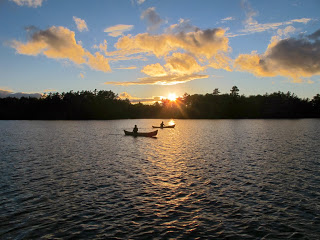 Did you know that it
takes 500 hours to build a birchbark canoe?
Invented over 3,000 years ago by the Wabanaki, the birchbark canoe
remains a beautiful and efficient vessel.
Perfectly suited to Maine waterways and easy to transport, this
innovation is also a remarkable vehicle for engaging our visitors in learning
about the first peoples of Maine.
Did you know that it
takes 500 hours to build a birchbark canoe?
Invented over 3,000 years ago by the Wabanaki, the birchbark canoe
remains a beautiful and efficient vessel.
Perfectly suited to Maine waterways and easy to transport, this
innovation is also a remarkable vehicle for engaging our visitors in learning
about the first peoples of Maine.
"Thunderheart" comes to the Abbe - the 5th Annual Native Film Series

A Time for Giving Thanks, Book Reading and Children's Activity with George Neptune

Join Museum Educator George Neptune for a reading of the children’s book, Thanks to the Animals, written by Allen Sockabasin, Passamaquoddy, and participate in an activity that focuses on Passamaquoddy animal names. In the Passamaquoddy language, animals are named for certain behaviors or physical characteristics—is there an animal in your life that you are particularly thankful for? Re-name your favorite animal, and see if the new name can be translated into Passamaquoddy! The holiday season is a time when you are encouraged to reflect upon the things in your life that make you thankful. You might be thankful for certain things that are very different from what a person from another place or culture would be thankful for—you may even find that you and other people are thankful for very similar things! Free and open to the public.
The Abbe Museum's 2012 Annual Report
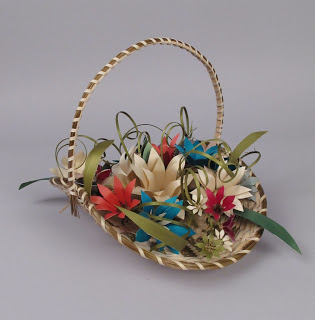
Opening February 2014 - Twisted Path III, Questions of Balance

Twisted Path III: Questions of Balance
, the latest exhibit in the
, will open in February 2014 and invites artists to consider their personal and cultural connection to place, and how they communicate this through their artwork. Whether from a sense of comfort and pride in one’s homeland, or criticism about the condition of our planet and concerns about environmental genocide, the works of each artist offer a unique perspective expressed through their art. This exhibit will bring together artists engaging in conversations nationally, sharing their voices and experiences to Abbe visitors.
In keeping with our charge to develop Native voice as primary voice in our exhibits and programs, Rick Hunt (Abenaki) will serve as co-curator with Raney Bench, the Abbe’s Curator of Education. Raney and George Neptune (Passamaquoddy), Museum Educator, have designed a program series to accompany this exhibit that includes a variety of artists, media, and learning experiences which will be scheduled throughout 2014. We have recently
in support of the exhibit and accompanying programs.
Eleven artists will join us for this exhibit. Over the next few months, we will profile those artists here. First, we'd like to welcome
, fashion designer from the Taos Peublo, and Gina Brooks, Maliseet ink and pen artist from Maine.
Patricia Michaels
is a traditional native woman who is a style-maker at the forefront of modern fashion design and aesthetics. She creates boldly hip designs with a quality of timeless elegance. Michaels spent her youth between Santa Fe, where her parents operated their art gallery, and Taos Pueblo. In 1985 she apprenticed with the Santa Fe Opera’s costume designer, and then went on to the Institute of American Indian Arts where she studied graphic design, jewelry and traditional techniques. In 2001, after working in Chicago at the Field Museum and an art gallery, she apprenticed with a tailor in Milan, Italy. Michaels later brought her son and daughter with her to New York where she worked in the city’s garment district. After two years there, Michaels developed her own collection, becoming the first Native American to feature a label at the prestigious New York Fashion Week. Michaels competed in the 2013 season 11 of the popular show Project Runway, finishing as runner up and a fan favorite. Now based back home in Taos, Patricia exhibits her work in museums and at fashion weeks in New York and Santa Fe, and her innovative designs have garnered top honors at Santa Fe Indian Market.
Artist Statement for
Twisted Path III
"I create highly individualized pieces that are elegant, fluid, sophisticated, and organic by fusing my own aesthetic with indigenous and European
perspectives.
The detail of every garment, from hand-painted silk feathers, and meshed leather to textures that echo the natural world, I evoke my own history and culture as part of a larger timeless narrative.
Each design tells a story. Just as a river is pierced by a tree branch, time is momentarily anchored within the garment. Each piece is created, is worn, and continues to create fresh new meanings into the future. Every person brings his or her own sense of self into the narrative and enriches the meaning. In this way, we might defy the consumerist sense of fashion as something we can put on, take off, and casually cast aside."


Gina Brooks
is a Maliseet from St. Mary’s First Nation (in New Brunswick, Canada), and resides at Pleasant Point, Maine. She considers herself an artist informed by Wabanaki traditional knowledge. Her art includes brown ash basketry, porcupine quill and birch bark basketry, carving, and print making. Her original prints include acrylic and ink, and lithographs, monotypes, and copper etch plating. She is currently completing her bachelor’s degree in Native Studies at St. Thomas University, Fredericton, NB.
Her basketry and print art has been commissioned by private art collectors and aboriginal organizations from across Canada. Her work has been exhibited in 2011 in a group exhibit at the Charlotte Street Arts Center in Fredericton, NB, Sudbury Nature Center in St. Andrews, NB (Weaving Traditions), and is featured in the New Brunswick Museum’s Wabanaki contemporary art collection in St. John, NB.
Artist Statement for
Twisted Path III
My life is informed by Wabanaki traditional knowledge. My art is inspired by my people, our homeland and things that have historical significance and spiritual depth, which I attempt to communicate in my art. I see art as an opportunity to learn about myself thought ancient stories, symbols, motifs and language. Wabanaki belief systems are woven and etched within the portals and layers of our sacred mother—
skitk
ǝ
mikw
.
My intention is to share examples of Wabanaki art, with their diverse and powerful designs—many of which have also served a very practical purpose in the everyday lives of generations of living and breathing people. Art to the Wabanaki people is an essential aspect of their humanity and a reflection of a communal, spiritual well-being and love of life that flows through the essence of its being—
skitk
ǝ
mikw
.
Beyond technical rendering of the subject, I have extensively researched the historical background of Wabanaki material culture and the spiritual, symbolic significance of distinctive traditional designs. My hope is to gain knowledge and share understanding that can deepen the appreciation of our homeland and my people, a unique experience that can enrich the lives of all people and their environment. In fact, for me, my subject helps in the creation of itself, informs the creative choices I make, and gives the artistic process depth and meaning. I let no social, political, or religious standards interfere with this process. I create from my own truth.
Wabanaki reality is best understood through the traditional language and storytellers, and stories of a creator who is constantly transforming and shape-shifting. Using Wabanaki oral stories, I am better able to deconstruct and reconstruct ideas about Wabanaki present-day issues, and help serve as a portal for the ancient transformative process.
These pieces call on the people of the earth to write a new story in the language of the old ones, a new pipe to signify the commitment to our ancient beliefs and to embrace the sacred journey of giving thanks for life.
Teach the world “
W
ǝ
liwen skitk
ǝ
mikw ciw psiw-
ǝ
te keke
”
– give thanks to the earth for everything it gives.
Abbe receives grant funding for "Twisted Path III"
 We are excited to announce that the Abbe has received two grants for the upcoming feature exhibit Twisted Path III, Questions of Balance.
 The exhibit will be funded in part by a $5000 grant from the Maine Arts Commission, an independent state agency supported by the National Endowment for the Arts. Additionally, an anonymous grant in support of the exhibit has also been rewarded for $10,000.
Read more about the exhibit and keep an eye out for upcoming artist profiles over the next few months.If you would like to sponsor this exhibit and the attendant educational programs, please contact Hannah Whalen at hannah@abbemuseum.org or 207-288-3519.
The history of the Twisted Path exhibits
Throughout North America, Native people balance the importance of tribal identity and knowledge with the non-Native communities that surround them. Art serves as one means of survival, expressing a wide range of emotions and experiences, from hopes and fears for the future, to dreams and anger about the past. Breaking away from stereotypes of Native American art and what is considered "traditional," the work of contemporary Native artists proves that art and culture are not static, but constantly evolving.
 | |
| Blanket stories, by Marie Watt |
Twisted Path: Contemporary Native American Artists Walking in Two Worlds opened in 2009, and featured nationally and regionally renowned artists whose works expressed the complexities surrounding Native identity.

October at the Abbe
 |
| The newly completed education canoe, about to be launched for the first time. |
See you soon!
Johannah
The Government Shutdown and the Abbe Museum
The closure of Acadia National Park has direct implications for some of the Abbe's programming and other offerings. Here are the things to know about how the government shutdown has affected the Abbe:
- The Abbe's location at Sieur de Monts Spring is closed. Luckily, this location was scheduled to close on October 14th, and while we are certainly sad to see it close early, we hope visitors to the downtown location will enjoy the installation of Saint Sauveur, a new exhibit that has been on display at the Sieur de Monts Spring location over this summer. We hope to have the exhibit in place very soon.
- Our popular program, "Tea, Popovers, and Archaeology" will continue, if the Park reopens by October 21. Should the shutdown be prolonged, we will re-tool this program - please stay tuned for updates.
In acknowledging the loss that is the early closing of Acadia National Park at a time of year when the park is so beautiful, we also wish to encourage visitors to continue to enjoy Mount Desert Island and the many activities, outdoors and in, that are still available. We are happy to direct guests to ways to enjoy the island while the park is closed and offer any additional support possible to enhance each visitor's experience this fall.David E. Putnam, Lecturer of Science at the University of Maine at Presque Isle, will shaure his personal evolution as a prehistoric archaeologist in Maine, and how his own attitudes about the interests of Native American/First Nations people in archaeological issues initially reflected those of his peers and community. - See more at: http://www.abbemuseum.org/calendar/october.html#sthash.qglOg9Wl.dpuf