
Wabanaki Guides Opens Feb 7!

During January, staff and volunteers transformed the Abbe Museum’s main gallery into a simulated canoe trip down a Maine river. On Thursday, February 7, the Abbe will open a new exhibit entitled Wabanaki Guides. This thematic exhibit illustrates how the Wabanakis’ expert knowledge of land and waterways, has influenced the Maine visitor experience throughout history - from European contact in the 1600s up to the present day. Stories and historic accounts from a variety of individuals, including Henry David Thoreau and Joseph Treat, will illustrate how guiding is still intrinsically linked to the tribes, tourism, economics and environmental sustainability in Maine.
A Wabanaki guide can offer a unique perspective on Maine’s natural environment,
one that reflects centuries of reliance on this place. Explorers coming over from Europe,
cartographers, artists, hunters, and writers depended on Wabanaki people to
guide them through the forests and waters of Maine. Wabanaki
Guides will highlight stories from a variety of perspectives and points in
time.
Hunting with a tribal guide means having a connection to the land and the species that goes back for thousands of years. That connection is formed through the hunting knowledge that comes with being a tribal member. It is knowledge learned from their parents, uncles, and grandfathers—men in the community that have passed that knowledge down for generations. Knowing the land, the species, when to hunt, where to hunt, hunting techniques—the knowledge of these things has been passed down for 10,000 years. --- Matt Dana, Passamaquoddy guide.
Upon entering the exhibit, visitors will be able to imagine themselves embarking on a canoe trip into the Maine woods, the ancestral home of the Wabanaki for 12,000 years. In this place of rugged beauty, and harsh weather, newcomers depended on their guides to teach them how to travel, hunt, and survive in the woods. Museum visitors will be encouraged to consider the wildness and vastness of the Maine woods and the challenges that lie within.
 The birchbark canoe is featured as the primary mode of transportation. Prior to the invention of the birchbark canoe, which happened about 3,000 years ago, the Wabanaki likely traveled in wooden dug out canoes which were heavy and difficult to portage. With the invention of the much lighter birchbark canoe, people could travel faster and further. This pre-contact invention demonstrates ingenuity, creativity, and represents a desire to explore one’s resources and create a broader world. The birchbark canoe was a major influence on the Wabanaki way of life and on guiding; canoes of all types still continue to be one of the best ways to travel to remote places in Maine in the warmer months.
During their canoe journey, museum visitors will be able to stop at “portages” on the river
banks to read about the various things a
guide needs to consider when planning a trip, as well as what one might expect
to encounter along the way. Items that
might be needed on such a trip may include: watertight birchbark baskets, pack
baskets, ash fishing creel, snowshoes, crooked knives, a birchbark moose call,
cup, muskrat traps, canoe paddles and root clubs. Visitors will learn how and why these items
were used and needed. When going into
the Maine
woods for weeks at a time, it is important to pack key provisions. In the exhibit there will be lists of
ingredients, recipes and historically documented methods for cooking in the
woods; flap jacks, biscuits, and beans were staples and coating a flat rock
with bacon grease and heating it evenly over an open fire was the recommended
method for cooking meat or fish.
“The guiding skills that the Wabanaki teach have been passed
down from generation to generation for thousands of years,” says Donald
Soctomah, Passamaquoddy Tribal Historian and exhibit co-curator. “People come to Maine because it is still wild. Maine
has millions of acres of undeveloped land and it is one of the few states with
a high population of moose.” Guiding
continues to be an economic engine for the Wabanaki, both for individuals and
for tribal governments.
 When recounting some of the most memorable stories of
guiding, Soctomah recalled the Passamaquoddy guide, Joe Mell, who features prominently
in the exhibit. “Joe Mell was the guide
for a writer named William Underwood, who came to Maine
every summer from New York City. Mr. Underwood once invited Joe to visit him in
the city,” Soctomah said, “and Joe went, but the city scared him. ‘Take me back
to the woods,’ is what he said to Mr. Underwood.”
When recounting some of the most memorable stories of
guiding, Soctomah recalled the Passamaquoddy guide, Joe Mell, who features prominently
in the exhibit. “Joe Mell was the guide
for a writer named William Underwood, who came to Maine
every summer from New York City. Mr. Underwood once invited Joe to visit him in
the city,” Soctomah said, “and Joe went, but the city scared him. ‘Take me back
to the woods,’ is what he said to Mr. Underwood.”
The exhibit is based on research done by co-curators, tribal
historians Donald Soctomah, Passamaquoddy, and James Francis, Sr., Penobscot, working
with Raney Bench, the Abbe’s Curator of Education. The exhibit will feature a
public program series throughout 2013; please check the Abbe’s online calendar for more information about program offerings.
Meet the Curators
 |
| "Autumn" along the exhibit's imaginary river. |
When you visit Wabanaki Guides, you will be witnessing the result of months worth of research and planning. We are grateful for the hard work of the exibit's co-curators:
- James Eric Francis Sr., Penobscot Nation Director of cultural and Historic Preservation
- Donald Soctomah, Passamaquoddy Tribal Historic Preservation Officer
- Raney Bench, Curator of Education, Abbe Museum
To the curators...Thank you!
James Eric Francis Sr., Penobscot Nation Director of Cultural and
Historic Preservation
James Eric Francis Sr. is the
Director of Cultural and Historic Preservation for the Penobscot Nation. James
currently is leading the Penobscot Language Revitalization Project where
Penobscot speakers are using modern technology to enhance language learning and
preservation efforts. James also serves as the Penobscot Nation's Tribal Historian
and is studying the relationship between Maine Native Americans and the landscape. Prior to working at the Penobscot Nation James worked for the
Wabanaki Studies Commission helping implement the new Maine Native American
Studies Law into Maine
schools and has managed a team of teachers and cultural experts in developing
curriculum.
James co-produced a film on race
relations in Maine.
Invisible looks at the problem of
racism as it pertains to Native American people in Maine and the Canadian Maritimes. Recently
James conducted an extensive Oral History Project for the Penobscot Nation.
This project brought to life historical pictures and highlighted a community
history that cannot be found it books. He was the curator of Penobscot History in Bangor, Maine, an
exhibit for the Bangor Museum and Center for History, and more recently the
guest curator of Aunt Lu: the Story of
Princess Watahwaso an exhibit at the Abbe
Museum in Bar Harbor, Maine.
James is an accomplished
historical researcher, photographer, filmmaker, and graphics artist. Mr.
Francis serves on the Board of Directors for Four Directions Development
Corporation, a Native American Community Development Financial Institution.
James serves on the Native American Advisory Council for the Abbe Museum
and the Native American Advisory Board for the Boston Children’s Museum and is
a lifetime member of the Maine Historical Society. He has served on the Advisory Board of the University of Maine’s
Hudson Museum
in Orono, Maine,
Board of Directors for the Bangor
Museum and Center for
History where he served as Chair of the Collections committee. James has also
served as Chair of the Penobscot Nation’s Cultural and Historic Preservation
Committee. Recently James has returned to school to pursue a Intermedia Masters
of Fine Arts degree from the University
of Maine.
Donald Soctomah, Passamaquoddy Tribal Historic Preservation Officer
Donald has been involved
with the Abbe Museum for well over a decade and has
served as curator and advisor for a number of Abbe exhibits. He served on the Abbe Board of Trustees and
was an active participant in the planning for the Abbe’s Campaign to Bring the
Abbe to the Community 1998-2001, which resulted in the Abbe’s modern facility
in downtown Bar Harbor.
Donald is the Tribal Historic Preservation Officer for the
Passamaquoddy at Indian
Township, a position he
has held since 2002. He is involved with
historic and archaeological work and actively works to preserve the culture of
the tribe. He is responsible for creating
the interpretation and management plan for the petroglyph site in Machiasport. His work also includes writing grants to
support cultural projects including: recordings of traditional songs, work on
the Passamaquoddy dictionary and language portal, producing films and the
building of a 20’ birchbark canoe.
Donald worked as the tribal representative to
the Maine State legislature from 1998-2002 and
from 2006-2010. Prior to that he served
for fifteen years as forest manager for the Passamaquoddy Tribe and was
responsible for overseeing 140,000 acres of forest land. Donald holds a BA in Forest Management from
the University of Maine at Orono and an Honorary Doctorate from the University of Maine at Machias. He has written eight books and has appeared
in six films. Currently he is serving on
the board of the National Tribal Historic Preservation Office, as well as on
the board of Downeast Writers at the University
of Maine at Machias.
Raney Bench, Curator
of Education at the Abbe
Museum
Raney Bench, Abbe Museum Curator of Education, was born in
Minnesota, raised in California, and has been a resident of Southwest Harbor
since moving to Maine in 2007 to work at the Abbe. Raney holds a BA in Native
American Studies from Humboldt State University,
with a minor in Anthropology/Archaeology and a MA in Museum Studies from the University of Nebraska,
Lincoln. Having
started her museum career as Director of Collections for the Fairbanks Museum
and Planetarium in St. Johnsbury,
VT, she soon found that her
interest in federal Indian policy and people kept taking her to the classroom
to teach. Raney also taught for the Community
College of Vermont
for several years. In 1998 she came to Maine
for the first time and visited the Abbe
Museum. Instantly falling
in love, she knew she wanted to work for the Abbe. "It took almost 10
years to do it, but I'm thrilled to be working for this museum. I continue to
be active in collections related work through consultation with other
museums."
Winter Break Activities!
The Abbe
Museum will host five
free programs in five days during the week of February vacation Monday,
February 18 through Friday, February 22. Whether you
are interested in learning Passamaquoddy, how to track animals in winter or how
to make a birchbark-style basket, the Abbe’s winter vacation program series
offers something for everyone.
 |
| Interactive and family-oriented activities also feature heavily in our exhibition Wabanaki Guides, like this "tracking challenge" that allows you to test your knowledge. And don't forget, our Family Circle is a great place for kids to learn more while visiting the Abbe! |
Tuesday the 19
– 11 am - 3 pm, the Museum
will offer a Winter Tracking Workshop as part of a series of programs
accompanying the Abbe’s new feature exhibit Wabanaki
Guides. Led by Passamaquoddy Guide
Matthew Dana, II, this workshop will start at the Abbe Museum Downtown and end
at the Acadia National Park
Visitor Center.
Participants are encouraged to bring a
bag lunch. This program is nearly full,
and reservations are required.
Please contact George Neptune to reserve a spot: george@abbemuseum.org or 288-3519.
Wednesday the 20
- The Abbe will offer two weaving programs.
Join Neptune from 10:00 am to 12:00 pm to weave
a Wabanaki-inspired paper star or come from 1:00 -3:00 pm to weave a bookmark.
Both workshops teach skills that are the first steps towards weaving a basket.
Thursday the 21
- 12:00 pm -1:00 pm This is the second installation in the Abbe’s three-part 2013
Brown Bag Lunch Series. Designed to accompany the Wabanaki Guides exhibit, this adult-oriented program will feature
Penobscot Guide Francis “Kean” Tomer, as he shares his experiences of guiding
in the Moosehead Lake Region during the 1930s and 40s.
Friday the 22 - 10:00 am -12:00 pm The Abbe will wrap up
a week of fun with a final workshop from Neptune,
this time on birchbark baskets. Join George as he demonstrates how to fold and
stitch your own birchbark-inspired basket.
All programs are free and all ages are welcome. Tuesday and
Thursday’s Wabanaki Guides-inspired
programs are made possible thanks to support from the Lynam Trust, the Margaret
E. Burnham Charitable Trust, and Acadia
National Park. For more
information on any of the programs, visit www.abbemuseum.org
or call 288-3519.
February Brown Bag Lunch
 |
| Join us during the Brown Bag Lunch series for a contemporary perspective to complement the history and stories you'll learn in the exhibit, Wabanaki Guides. |
This discussion is part of the larger Brown Bag Lunch series, which was introduced in 2011 to examine issues relevant to the major exhibit at that time, Headline News, and to encourage an open dialogue. It was well received and the series continued the next year with Indians and Rusticators as the topic-inspiring exhibit. This year’s lunchtime discussions will focus on themes relevant to Wabanaki Guides, the Abbe’s next major exhibit, which opened on February 7, 2013.
Guests are encouraged to bring their lunch and enjoy a mid-day discussion with Guide Francis Tomer. The program is free and open to the public.
Earlier, on February 7, the Abbe Museum will host another Brown Bag Lunch as Mount Desert Island organizations play host to Mahesh Upadhyaya, IPM (International Partners in Mission) Regional Director, South Asia. Dr. Upadhyaya will be visiting Maine and looks forward to sharing stories of the remarkable work of Women in Development from South Asia with a particular focus on IPM’s Project Partners in India and Nepal. Come learn also about IPM’s upcoming Immersion Experience to India that will be facilitated by Mahesh and IPM’s CEO, Joseph Cistone, of Mount Desert. Click here to learn more.
Other News & Events for February
 |
| Click to enlarge. |
There is always something happening at the Abbe, and this winter is no exception! Please visit our online calendar regularly for more details and updates.
We
will re-open on February 7 with
our winter hours -- Thursday, Friday, and Saturday from 10:00
- 4:00. Please don't forget to call first in the event of inclement
weather; if MDI schools are closed, the Abbe Museum will be closed as
well. View the image above to see our open hours and events for February.
Interested
in learning about other news and events? Each month, we try to compile
articles and events that might interest our members and friends. We link to them in these blog posts, as well as on our Facebook page.
NEWS
Houlton Maliseet, first elected tribal representative to Maine House, looking forward to session in the Bangor Daily News
Day of Prayer to Precede Seating of Wabanaki-Maine’s Truth and Reconciliation Commissioners on Indian Country Today Media Network.com
State’s taking of Wabanaki children discussed at MLK Breakfast in the Kennebec Journal
Passamaquoddy People Actively Try to Keep Language Alive
Listen or Read about it on MPBN
Maine plans emergency debate on fish passage on CBC News
Houlton council denies Maliseet request to waive $54,000 payment in the Bangor Daily News
EVENTS
February 7, 2013
10:15 AM to 5:45 PM
Racist Stereotypes & Cultural Appropriation in American Sports -- a live webcast and community conversation by The National Museum of the American Indian (NMAI). To watch live and join the social chat, click here: http://s.si.edu/heMS4
Building Improvements
 Director of Finance & Administration John Brown ("JB") has been busy with changes to both Abbe locations.
 JB has been busy with buildings projects both Downtown and at Sieur de Monts, which has kept him moving back and forth between locations. Sieur de Monts is being renovated this winter, and a number of steps that are part of our Greening Initiative have begun Downtown. In fact, it was so hard to catch JB in one place, that we gave up and instead decided to share an image from one of these projects. Right now, scaffolding has been constructed in the Circle of the Four Directions so that the twelve large windows can be covered with a protective film that will reduce the amount of light that touches the exhibit objects, as well as the amount of heat that the light generates. This June, we will host the traveling exhibition IndiVisible from the National Museum of the American Indian in the Circle of the Four Directions.
Exhibits & Collections
Curator of Collections Julia Clark has been busy returning objects from our past exhibits to their rightful space--whether it be in our collections or another museum.
 The past couple of weeks have been hectic, but productive
weeks in the realm of exhibits and collections. First thing after returning
from a holiday vacation, I de-installed the Transcending
Traditions exhibit. This included taking all of the baskets out of their
cases and moving them down in the lab and collections storage, and removing the
wall panels. With the exception of nine baskets from the Abbe's collection
included in the exhibit, all the other baskets were borrowed from other
institutions or individuals. When the exhibit traveled from the Hudson Museum,
where it was initially created, the baskets were packed by artists. But now, I
had to sort them out by lender and get them packed up to return to each lender,
from Falmouth to Indian Township.
For most of the baskets this involved wrapping them in an archival plastic bag,
padding them with bubble wrap, and packing them in plastic totes. The grand
exception was George Neptune's large twig basket- a tiered cake with many,
intricate twigs radiating out of the back, decked with ash flowers and birds (http://www.umaine.edu/hudsonmuseum/exhibits/tt/georgeNeptune.php).
For this basket, I created a kind of back-board support that will protect the
twigs in transit.
The past couple of weeks have been hectic, but productive
weeks in the realm of exhibits and collections. First thing after returning
from a holiday vacation, I de-installed the Transcending
Traditions exhibit. This included taking all of the baskets out of their
cases and moving them down in the lab and collections storage, and removing the
wall panels. With the exception of nine baskets from the Abbe's collection
included in the exhibit, all the other baskets were borrowed from other
institutions or individuals. When the exhibit traveled from the Hudson Museum,
where it was initially created, the baskets were packed by artists. But now, I
had to sort them out by lender and get them packed up to return to each lender,
from Falmouth to Indian Township.
For most of the baskets this involved wrapping them in an archival plastic bag,
padding them with bubble wrap, and packing them in plastic totes. The grand
exception was George Neptune's large twig basket- a tiered cake with many,
intricate twigs radiating out of the back, decked with ash flowers and birds (http://www.umaine.edu/hudsonmuseum/exhibits/tt/georgeNeptune.php).
For this basket, I created a kind of back-board support that will protect the
twigs in transit.
Once this project was underway, I then had to de-install the
objects and graphics from Indians &
Rusticators. There were a lot of objects and graphics in Indians & Rusticators... In no time,
the lab and any spare shelves in collections storage were full, and many of the
prop objects from the show were tucked in the activity tent section in the main
gallery until we could make space for them elsewhere. Working with Raney, we then took down all of
the graphics, and moved as many of the cases as we could out of the way so that
deconstruction of the built parts of the exhibit could begin, leading into
the construction for Wabanaki Guides.
This has been where a wonderful new addition to the Abbe team, Allison Shank,
our new part-time exhibit specialist, has been a great help! She is working
with Raney, the designers and our carpenter, Mida Ballard and her crew, to
bring about the transformation. Believe me, it will look completely different
when you walk into the main gallery come February!
 |
| New team member Allison discusses wall placement for the new exhibit. |
So now that I had all the objects (with the exception of the
canoe, which I will get to in a minute!) downstairs, I had to go through all of
these pieces and get them sorted out. Jane Clifton, who most folks encounter in
her position in guest services or as my indispensable field school assistant,
came in and spent a full day getting the Abbe collections objects re-united
with their tags and put back in their permanent storage locations. Meanwhile, I
began to get the loaned objects grouped by lender, so that like the baskets
from Transcending Traditions, they can
be returned to the institutions and private collectors who generously lent them
to the exhibit. Several groups of objects had to be packed to ship to places
like Kansas and New Mexico. The bulk of the loan will get
loaded into my car and driven to places like Bath,
Bangor, and Mount Desert.
So sometime in the near future, I will be making an almost statewide road trip
returning precious objects to their homes after two very successful exhibits.
 |
| This large birch bark canoe proved quite a challenge. |
So, the canoe. There was one large (19 foot) canoe in Indians & Rusticators, and two
somewhat smaller canoes that are currently in storage but will be on exhibit in
Wabanaki Guides. The only way to get
our full-size canoes between collections storage and the gallery is to take
them out the front door, down School Street, in the back door and into storage,
where they go onto the custom canoe rack (or vice versa). I don't know if
anyone else has noticed, but there is some snow, and slush, and ice outside.
Plenty of it between the front and back doors of the museum if you take the
outside route. So for the moment, the big canoe that was in Indians &
Rusticators is hanging out in Layers of
Time, hoping that soon enough of the snow/slush/ice will have been cleaned
up or melted to that we can safely lug the canoes back and forth.
These are just a few of the busy, exciting things that have
been happening with the collections and exhibits while the museum is closed. To
answer the question I occasionally get, "So, do you work in the
winter?" - yes, plenty!
- Though Transcending Traditions can no longer be visited in a museum, it can still be viewed online! Please visit the web version of this beautiful exhibit at: http://www.umaine.edu/hudsonmuseum/exhibits/tt/index.php
- More information about Indians & Rusticators can be found here. Miss the exhibit already? Don't worry, an online version of the exhibit is coming this spring to a computer near you!
- Want to learn more about Julia's work in Collections? Visit our online exhibit about collections care, Objects of Our Affection.

Getting Ready for upcoming Events!
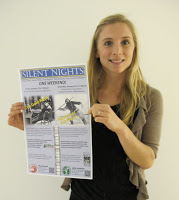
Here is the press release Johannah has prepared for Nanook, and we hope to see you there!
Abbe Museum
and Reel Pizza
present Film/Live Music Performance
present Film/Live Music Performance
On
Saturday, January 26, 2013, the Abbe Museum will present the final installment of a four
part film series which has featured Native life in the Arctic. Unlike the other three films, which were
shown at the Abbe, the fourth will take place at Reel Pizza in Bar Harbor. The
classic silent film, Nanook of the North
will light up the big screen and the halls of Reel Pizza will ring with live
music. This unique combination of silent film and live music will feature the
Sumner McKane group, who composed an original score specifically to accompany Nanook of the North. The group is known
for creating live “docu-exhibits,” which narrate the scenes in a film through
their original music.
Filmed in 1922, Nanook of the North is considered to be the
first anthropological documentary film ever made. The filmmaker, Robert. J.
Flaherty, spends a year following the lives of an Inuit family, led by Nanook,
the head of the family, through their travels and travails enduring an Arctic
winter. This film was one of the first 25 films to be selected for preservation
in the United States National Film Registry for its cultural and historical
significance.
The new score, an expansive
and expressive original piece of music composed by the Sumner
McKane Group, was written meticulously in spring 2008 over a brief and harried
4-week period. The undertaking was part of the Local Score/Silent Film series,
presented by One Longfellow Square
in Portland.
Unlike other performers in the series, the group opted to score the entire
film, using no improvised musical elements at all. The group's bravery in this
endeavor was rewarded by two successful shows with substantial local press
coverage. Since then, the band has played successful shows of Nanook at Slates in Hallowell, Space
Gallery in Portland,
and the Boothbay Opera House, as well as releasing a 100-CD limited-edition
studio recording of Nanook, available
online for a very limited time.
The Sumner
McKane Group, a modern instrumental music trio, is based in Maine, with
guitarist Sumner McKane, bassist Joshua Robbins, and
drummer Todd the Rocket Richard residing in Wiscasset, Whitefield, and
Westbrook respectively.
A national audience has
already taken notice of this musical work. Host John Diliberto of National Public
Radio’s Echoes program has said of the music, "McKane's landscapes are
tinged in ambient atmospheres and pulled by an undertow of psychedelia that
makes them some of the most unassumingly mind-bending music of the decade... Sumner manages to touch the nostalgic, wistful side of us,
without being remotely quaint."
This event is being made
possible by Reel Pizza and grants from the Lynam Trust and the Margaret E.
Burnham Charitable Trust. The show
starts at 7:00pm, tickets are $10 in advance and $12 at the door. Please call
the Abbe Museum at 288-3519 or email johannah@abbemuseum.org to reserve
your tickets.
Other News & Events for January
There is always something happening at the Abbe, and this winter is no exception! Please visit our online calendar regularly for more details and updates.
 |
| Open Hours for January 2013. |
We
are currently closed for January and will re-open on February 7 with
our winter hours -- Thursday, Friday, and Saturday from 10:00
- 4:00. Please don't forget to call first in the event of inclement
weather; if MDI schools are closed, the Abbe Museum will be closed as
well. View the image above to see our open hours and events for
January.
Interested
in learning about other news and events? Each month, we try to compile
articles and events that might interest our members and friends. We link to theme in these blog posts, as well as on our Facebook page.
NEWS
Idle No More Gaining Momentum and Forming Plan of Action in
Indian Country Today Media Network
Panel to Probe child welfare abuses against tribe read it and watch it on wlbz2.com
IndiVisible: African-Native American Lives in the Americas video of a Symposium at the National Museum of the American Indian on
the SmithsonianVideos youtube channel.
The traveling exhibition, IndiVisible, will be coming to the Abbe this
summer.
 |
| Join us Saturday, Jan 12 from 10 - noon for a kids craft activity! |
November 23 This American Life Program, titled Little War on the Prairie Listen to it here:
Inviting Ceremony into Revolution - #IdleNoMore in the Halifax Media Co-op
Last Chance to see two Abbe Exhibits – a December article about
the closing of Indians and Rusticators
and Transcending Traditions on
December 31
On Thursday, Jan 10at the Whitman Memorial Library Arla Patch will speak about the Maine
Wabanaki State Child Welfare Truth and Reconciliation Commission
Native Americans, indigenous peoples say they will be “Idle No More” atPortland Rally Read and Watch on the Bangor Daily News
Groups Rally for Rights of Indigenous People In the Portland
Daily Sun
Mrs. Connecticut champions a healthy outlook.
Vanassa Sebastian, the current Mrs. Connecticut is a breast cancer survivor and
member of the Passamaquoddy Tribe. Read
her story on TheDay.com
Dee Sabattus,Passamaquoddy, is honored for “exceptional initative and accomplishments inadvocating for USET member Tribes health needs in multiple national forums”
by The United States Department of Health and Human Services Indian Health Services,
who last month honored employees, partners, and members of the Nashville Area
Office, In Native American Times
Watch George Neptune’s speech at the Portland Idle No More
event
From the Development Desk
Director of Development Hannah Whalen has been planning our goals and fundraisers for 2013:
 |
| Hannah arranged to host the Mount Desert Island Non-Profit Alliance at the Abbe Museum last week for a discussion of "Greening" our organizations. |
As I write this, I have just finished putting together the 2013 goals for
our development team, to keep us on track to match our year-end monetary goals; while not the most exciting part of my
job, it is a necessary component that helps keep us moving purposely
forward. Membership, Community Partnerships, the Annual Appeal, the
Gathering Gala, special projects and other gifts are the various categories
that are assigned numeric goals. The
actions steps that help to bring us to these goals include: mailings, cultivation
events, visits, community outreach, public relations and specific asks. Once the structure is in place, the more
exciting part of my job comes to life, which is the actual interaction with
people, finding their interests and sharing the story of the Abbe Museum.
Our newest exhibit, Wabanaki
Guides, will offer many new opportunities for people to engage with the Abbe Museum,
especially some of the accompanying programs such as learning the Native place
names on Mount Desert Island or paddling in a
birchbark canoe with a certified Maine Guide!
I will certainly miss Indians
& Rusticators (which will one day live online), but after talking about
Wabanaki Guides for many months, I
can’t wait to see the actual exhibit up on the walls; it officially opens to
the public on February 7, 2013.
The first gathering of the Gala Committee is next week and I
am the staff coordinator for this year’s event.
Last year was a great success and we plan to make 2013 even better! We
are already receiving sponsorship commitments and the Auction Committee
will soon be requesting donations from artists to help support the Abbe’s
largest fundraising event of the year.
The save the date card has been designed and will be arriving in your mailboxes
by the end of the month. Save the Date: Wednesday,
July 17 from 5:00pm – 11:00 pm at the Bar Harbor
Club.
Last Friday, we hosted the Mount Desert Island Non-Profit Alliance
(MDINA) monthly meeting. We had more
than 30 people in attendance, representing nonprofits from around the island. We had agreed to have “Greening” as the main topic
for the first meeting of the year; Cinnamon shared the process of “Greening the
Abbe,” our goals and funding strategies, and College of the Atlantic
shared their greening process. There was discussion and the entire group left
with some takeaways that we can immediately do to be better stewards of our
environment. Some examples were: use
green cleaning products, carpool whenever possible, shut blinds at night on
cold days, don’t use plastic water bottles and recycle whenever possible.
The Abbe opened in 1928, and we are going strong 85 years
later. I really am looking forward to
participating in and sharing the unique, interesting and inspiring programs,
events and exhibits that are planned for 2013!
See you at the Abbe!
Planning for 2013
CEO Cinnamon Catlin-Legutko finds herself planning for what is to come in 2013:

The winter months find me nestled away in my office and
meeting rooms planning for the year’s activities, securing funding for all the
great mission-driven projects and needs we have, and attending to a variety of
management and board support tasks. It’s
also a great time to meet with collaborative partners on the island and across
the state who have an affinity for the Abbe’s mission and our role as a viable
community partner and leader. These
conversations lead to broadened thinking, shared resources, and community
action. This is just a sample of some the conversations I have been part of
this winter.
- Working with the Maine Indian Basketmakers Alliance to develop a memorable 20th annual Native American Festival and Basketmakers Market.
- Met with the MDI Non-Profit Alliance about our Greening the Abbe initiative.
- Collaborated with the Friends of Island History and the Island Association for Museums and Historical Societies to identify and meet the needs of our area’s historic resources.
- Participated in a series of conversations with representatives from the Waponahki Museum and Resource Center at Pleasant Point as they transform the museum into a tourist destination and vital community resource.
- Coordinated and led a series of community input sessions for our interpretive plan, which determines priority messages that are most meaningful to the public and are aligned with the Abbe’s educational goals.
And the list goes on.
The staff and I are working mightily within these walls and outside of
them so that we can connect with all of our constituents, share the mission of
the Abbe, and contribute to the quality of life in Bar Harbor and the state of Maine. The winter months are really when the building
blocks come together and build a foundation that sustains us and propels us
into the future. It’s a great place to
work.
Changes for the New Year
Astra Haldeman, Manager of Museum Services, has been getting ready for the new year.
My new year has started with a number of projects, so you
can keep your eyes open for some changes during 2013!
 |
| Astra has been taking photos as the exhibits change, so that we can share the process with all our Abbe friends. |
We now have a new database system and I have been working
hard to get that up and running. Once it
is ready, we should make all our communications with our members and supporters
– like all of you – more efficient and user friendly. It will also help us move into a greener era
of increased email communications for those who prefer it—but not to worry, if
you still want paper, our new database will also help us make sure that you get
it. So if in the next few months you
find an error of any kind – in your address, your email, the spelling of your
name, or your mailing preferences – please let me know.
Another big project I’ve started work on is updating our
membership program. Last spring we sent
out a survey, and I’m grateful to everyone who took the time to respond. If there is something you want to share about
our membership program, you can always feel free to email me with your
thoughts. Those responses, along with a
good deal of research on memberships that Cinnamon and I have been working on,
will help us as we move forward in 2013 and prepare to launch some
changes. Our goal is to offer you
membership options that allow you to support the Abbe Museum
in ways that add value to your life and our programs, and we welcome your
suggestions.
I also spent some time putting together this issue of Abbe
eNews, so I hope you enjoy! As always,
please let me know if you have any suggestions or comments, or if there are articles
or topics you would like to see us cover in 2013. And don’t forget to check our Facebook page ( www.facebook.com/abbemuseum ) often – in between issues of Abbe eNews, Johannah has been posting news
articles, event updates, and press releases to keep everyone informed about
what is happening at the Abbe
Museum!
January Means Major Exhibit Changes at the Abbe!
Behind the Scenes with Raney Bench, co-curator of the upcoming exhibition Wabanaki Guides:
 |
| Raney removes a panel as she deconstructs the award-winning exhibit, Indians & Rusticators. |
After two years in development, we are in the final stages of the project. Julia and I have been working with designers to create the look and feel of the exhibit, which will be installed over the next three weeks. We will be painting, building new features, moving walls, and printing, cutting, and installing labels and artifacts. We have been selecting objects from our collections and working with other institutions to borrow images and objects to help tell this story. George and I are working on hands-on activities and a gallery guide to enhance family experiences. Cinnamon and Astra edited the first draft of the script, and are on call to help with final edits, and their artistic eyes helped us select the final image for marketing. Cinnamon and Hannah have been raising money, and Hannah and Johannah are finishing a press kit, sponsorship, and marketing for the exhibit, as well as planning the reception. The whole staff will be on call to move three canoes and paint the gallery - most of this happens in the one month window of January! As with all major exhibits, this is truly a collaborative effort.
Wabanaki Guides was inspired by the Thoreau-Wabanaki Trail map. The map is a collaborative project that follows the three trips author Henry David Thoreau took in Maine, his notes were later published as his book The Maine Woods. While Thoreau was in Maine he relied on two Penobscot guides, noting that their knowledge of this place often transformed his understanding of plants, animals, and geography.
 |
| Julia and Raney carefully remove exhibit objects, including this stuffed seagull, with a smile! |
The exhibit was co-curated by Donald Soctomah, Passamaquoddy Tribal Historic Preservation Officer, and James Francis, Penobscot, Director of the Cultural and Historic Preservation Department. The exhibit is based on stories told from guides, and about guides as told from their clients and friends. Because this topic is new for the Abbe, we are able to introduce you to several new notable figures. Of note, Henry Red Eagle Perley, Maliseet, who was a guide in the Moosehead Lake region for decades. The youngest guide licensed in Maine at the age of 14, Perley traveled the country as a performer before returning to Maine to continue his work as a guide. We have secured a loan from the Hood Museum at Dartmouth for Perley's feather bonnet and moccasins that he wore to sportsmen shows to promote Maine guiding.
So, with other projects happening at the same time as this exhibit change, there is never a quiet time at the Abbe!
 |
| Julia and Raney move the cumbersome exhibit case tops with high-tech suction cups...no fingerprints are left behind. |
Creating New Educational Activities
 |
| Using "touchable" artifacts from the Abbe's collections, George teaches a school group about archaeology. |
Even though I have fewer school groups coming to the Abbe than most times of year, I'm still working away at educational programs. I'm developing birch bark inspired activities (including a aeart-shaped basket, in time for Valentine's day!), Wabanaki Guides activities and programming, and helping with exhibit construction whenever I can. I'm particularly excited about our two tracking workshops, in which you will learn different tracking techniques with two Wabanaki guides. One of these workshops will take place during the mid-winter school break, along with many other activities that correlate to our Wabanaki Guides exhibit. Check our February calendar to find out which activities will be available!
Nanook
On January 26, we hope you'll join us for a special performance of Nanook at
Reel Pizza, as scored and presented by the instrumental trio the Sumner
McKane Group. The group combines film, oral histories, and live music
to create live "docu-exhibits." In this performance, the 1922 silent
documentary film Nanook of the North will be brought to life
through the combination of film and a live score. Advance tickets will
soon be available. Contact the Abbe Museum for more information: 207.288.3519 or johannah -at- abbemuseum.org
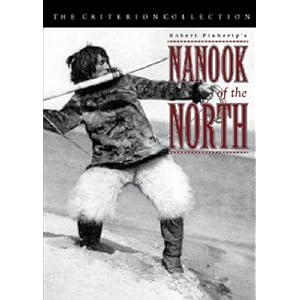 The January 26th show will feature a
screening of the film, with a live performance of the musical
soundtrack, composed by the Sumner McKane Group.
The 80-minute film, Nanook of the North, follows an Inuit family, led by Nanook, through their travels and travails enduring an Arctic winter.
The January 26th show will feature a
screening of the film, with a live performance of the musical
soundtrack, composed by the Sumner McKane Group.
The 80-minute film, Nanook of the North, follows an Inuit family, led by Nanook, through their travels and travails enduring an Arctic winter.
The January 26th show will feature a
screening of the film, with a live performance of the musical
soundtrack, composed by the Sumner McKane Group.
The 80-minute film, Nanook of the North, follows an Inuit family, led by Nanook, through their travels and travails enduring an Arctic winter.
The new score, an expansive and expressive original piece of music composed by the Sumner
McKane Group, was written meticulously in spring 2008 over a brief and
harried 4-week period. The undertaking was part of the Local
Score/Silent Film series, presented by One Longfellow Square in
Portland. Unlike other performers in the series, the group opted to
score the entire film, using no improvised musical elements at all. The
group's bravery in this endeavor was rewarded by two successful shows
with substantial local press coverage. Since then, the band has played
successful shows of Nanook at Slates in Hallowell, Space Gallery in
Portland, and the Boothbay Opera House, as well as releasing a 100-CD
limited-edition studio recording of Nanook, available online for a very
limited time.
The Sumner
McKane Group, a modern instrumental music trio, is based in Maine, with guitarist Sumner
McKane, bassist Josh Robbins, and drummer Todd the Rocket Richard
residing in Wiscasset, Whitefield, and Westbrook respectively.
A
national audience has already taken notice of this musical work.
National Public Radio's Echoes program, an ambient music show airing on
150+ terrestrial radio stations, featured a live recording of select
scenes from the score as part of a holiday special in December 2008.
Host John Diliberto has said of the music, "McKane's landscapes are
tinged in ambient atmospheres and pulled by an undertow of psychedelia
that makes them some of the most unassumingly mind-bending music of the
decade... Sumner manages to touch the nostalgic, wistful side of us, without being remotely quaint."
Winter Programming...coming soon!
While most topics and dates are still TBA (to be announced), here are some teasers from this winter's line-up:
~In January...In addition to the Brown Bag Lunch on January 17 and Nanook on January 26, we'll also be hosting a children's program. The first Brown Bag Lunch will be a conversation about guiding with Jennifer Neptune and Ron Bear; Jennifer will discuss the process of becoming a guide, and Ron will share his experiences as a current guide.
~In February...In addition to the Brown Bag Lunch on February 21 and the opening of Wabanaki Guides on February 6, we'll be hosting an animal tracking workshop and special family activities during the week of school winter break.
~In March...In addition to the Brown Bag Lunch on March 21, we'll hold our annual Teachers Workshop as well as a family-friendly program.
Other News & Events for December
There is always something happening at the Abbe, and this winter is no exception! Please visit our online calendar regularly for more details and updates.
 We have a number of exciting programs happening this week that you won't want to miss! We hope you can join us Thursday, December 6 from 7:00 - 9:00 for the last film in our 4th Annual Native American Film Series, The Necessities of Life, and Saturday, December 8 for our annual Holiday Open House, with special family activities and refreshments from 1:00 - 4:00. AND, throughout the month of December, the Abbe Shop is holding a special Holiday Sale...20% OFF EVERYTHING!
Mark your calendars for another annual event this weekend, the Maine Indian Basketmakers Alliance Sale and Demonstration at the Collins Center for the Arts, University of Maine, on Saturday, December 8 from 9:00 - 3:00. More details can be found in the Events section of this post, or by enlarging the poster embedded below.
 The following links are a sample of some upcoming activities and recent articles that may interest you. Know of more? Please feel free to post events, news, and other items on our Facebook page!
NEWS
Four Directions Development Corp marks 10 years of serving Maine's tribal communities Read the article in the Bangor Daily New, which also includes a video segment.
Maine panel hears truth about taking of Indian children in The Forecaster
Dearth of diversity in UMaine positions cause ire in The Maine Campus
Washington County sues Passamaquoddy tribe over tax claim in the New York Daily News
Huge Indian claims settlement won't benefit Native communities in Maine in the Bangor Daily News
Penobscot Nation sues State over Settlement-Protected Hunting and Fishing Rights on Indian Country Today Media Network
Big Dipper, or Sky Bear, comes to Earth on November Evenings on EarthSky.org. Interested in learning more about the Mi'kmaq sky story referenced in this article? A book and video about Muin and the Seven Bird Hunters were produced as part of the Canadian festivities celebrating the International Year of Astronomy 2009. A full download of the 25 minute video in English, Mi'kmaq, or French is available from the celebration's official site: www.astronomy2009.ca or a short excerpt can be viewed via YouTube (below). The bilingual picture book, Muin and the Seven Bird Hunters, is available for purchase in the Abbe Shop.
Milford Snowshoe, pack basket maker recognized by Maine Arts Commission in the Bangor Daily News
Lynam Grants Recipients Announced (the Abbe was a recipient!) on Fenceviewer
Misappropriating Culture: Where "Playing Indian" & Cultural Sensitivities Collide on the blog, Museum Minute.
EVENTS
Maine Indian Basketmakers Alliance
Next Up: December 8, 2012
Annual Maine Indian Basketmakers Sale and Demonstration
This event features Maliseet, Micmac, Passamaquoddy and Penobscot Basketmakers who sell their hand-made, one of a kind, ash splint and sweet grass basketry. Work baskets, such as creels, pack and potato baskets and fancy baskets ranging from strawberry and blueberry shaped-baskets to curly bowls may be found along with quill jewelry, wood carvings and birchbark work. Demonstrations of brown ash pounding, basket making and other Native arts, as well as traditional drumming, dancing and singing will be presented. More information is available from the Hudson Museum at (207) 581-1904.
Maliseet Bingo
Every Monday at 6:30 PM at the Maliseet Gym
Mark your calendars for another annual event this weekend, the Maine Indian Basketmakers Alliance Sale and Demonstration at the Collins Center for the Arts, University of Maine, on Saturday, December 8 from 9:00 - 3:00. More details can be found in the Events section of this post, or by enlarging the poster embedded below.
NEWS
Four Directions Development Corp marks 10 years of serving Maine's tribal communities Read the article in the Bangor Daily New, which also includes a video segment.
Maine panel hears truth about taking of Indian children in The Forecaster
Dearth of diversity in UMaine positions cause ire in The Maine Campus
Washington County sues Passamaquoddy tribe over tax claim in the New York Daily News
Huge Indian claims settlement won't benefit Native communities in Maine in the Bangor Daily News
Penobscot Nation sues State over Settlement-Protected Hunting and Fishing Rights on Indian Country Today Media Network
Big Dipper, or Sky Bear, comes to Earth on November Evenings on EarthSky.org. Interested in learning more about the Mi'kmaq sky story referenced in this article? A book and video about Muin and the Seven Bird Hunters were produced as part of the Canadian festivities celebrating the International Year of Astronomy 2009. A full download of the 25 minute video in English, Mi'kmaq, or French is available from the celebration's official site: www.astronomy2009.ca or a short excerpt can be viewed via YouTube (below). The bilingual picture book, Muin and the Seven Bird Hunters, is available for purchase in the Abbe Shop.
Milford Snowshoe, pack basket maker recognized by Maine Arts Commission in the Bangor Daily News
Lynam Grants Recipients Announced (the Abbe was a recipient!) on Fenceviewer
Misappropriating Culture: Where "Playing Indian" & Cultural Sensitivities Collide on the blog, Museum Minute.
EVENTS
Maine Indian Basketmakers Alliance
Next Up: December 8, 2012
Annual Maine Indian Basketmakers Sale and Demonstration
This event features Maliseet, Micmac, Passamaquoddy and Penobscot Basketmakers who sell their hand-made, one of a kind, ash splint and sweet grass basketry. Work baskets, such as creels, pack and potato baskets and fancy baskets ranging from strawberry and blueberry shaped-baskets to curly bowls may be found along with quill jewelry, wood carvings and birchbark work. Demonstrations of brown ash pounding, basket making and other Native arts, as well as traditional drumming, dancing and singing will be presented. More information is available from the Hudson Museum at (207) 581-1904.
Maliseet Bingo
Every Monday at 6:30 PM at the Maliseet Gym
Holiday Open House
The Abbe Museum's Annual Holiday Open House will be held on Saturday, December 8, and this year we are teaming up with the Bar Harbor Merchant's Association to make the event even bigger!
 Enjoy free admission to the Abbe all day, but make sure to visit from 1:00 - 4:00 for family activities and refreshments. And, from 1:30-3:30, Santa Claus will be visiting the museum, thanks to the Bar Harbor Merchants Association.
Abbe Educator George Neptune has been planning some new crafts and activities for children of all ages, and families will have the opportunity to enjoy these special activities, in addition to the other family-friendly activities the Abbe has to offer, such as our Family Room with games and more, exhibit scavenger hunts, and touchable artifacts. Volunteers will be on-hand to help children create items that they can take home with them, or give as gifts for the holidays.
Holiday goodies and refreshments will be provided by the Abbe's Culinary Arts Committee and the Bar Harbor Merchants Association, so stop in, relax, and have some fun!
There will also be other exciting events happening in Bar Harbor that weekend, so mark your calendar now!* As part of the Holiday Open House, the Bar Harbor Merchants Association will be hosting 12 Days of Shopping & Dining Locally: A Customer Appreciation Event. The Event kicks-off on December 8 with the activities at the Abbe Museum, as well as special in-store raffles at participating merchants** throughout Bar Harbor. Then, for twelve days, qualifying purchases at those businesses will earn customers entry into a grand-prize raffle with the opportunity to win one of twelve $25 Bar Harbor Merchants Association Gift Certificates! Winners will be drawn on December 20. Visit www.barharbormerchants.com or Facebook to learn more about the 12 Days of Shopping & Dining Locally!
If you would like to learn more, are interested in volunteering at the Abbe Museum, or would like to contribute to this event, please contact Astra at 207.288.3519 or astra -at-abbemuseum.org
**Other exciting events happening during the Holiday Weekend include the Village Holidays and Midnight Madness Sale, and during the Open House on the 8th, Spruce & Gussy's Bizarre Bazaar and the YWCA's Children's Christmas Bazaar.
*As of 11/30/2012 participating merchants include: A & B Naturals, Abbe Museum, Acadia Massage, Acadia Shop, Bark Harbor, Bayside Liquors, Christmas Spirit Shop, Fair Trade Winds, Fathom, House Wine, KA McDonald Picture Framing, Macey's, McKay's, Our New England Country Store, RH Salon, Sherman's, Side Street Cafe, Spruce and Gussy, Stone Soup, Thirsty Whale, Village Emporium, and Window Panes. Visit here for updates and info about the 12 Days Event.
Abbe Educator George Neptune has been planning some new crafts and activities for children of all ages, and families will have the opportunity to enjoy these special activities, in addition to the other family-friendly activities the Abbe has to offer, such as our Family Room with games and more, exhibit scavenger hunts, and touchable artifacts. Volunteers will be on-hand to help children create items that they can take home with them, or give as gifts for the holidays.
Holiday goodies and refreshments will be provided by the Abbe's Culinary Arts Committee and the Bar Harbor Merchants Association, so stop in, relax, and have some fun!
There will also be other exciting events happening in Bar Harbor that weekend, so mark your calendar now!* As part of the Holiday Open House, the Bar Harbor Merchants Association will be hosting 12 Days of Shopping & Dining Locally: A Customer Appreciation Event. The Event kicks-off on December 8 with the activities at the Abbe Museum, as well as special in-store raffles at participating merchants** throughout Bar Harbor. Then, for twelve days, qualifying purchases at those businesses will earn customers entry into a grand-prize raffle with the opportunity to win one of twelve $25 Bar Harbor Merchants Association Gift Certificates! Winners will be drawn on December 20. Visit www.barharbormerchants.com or Facebook to learn more about the 12 Days of Shopping & Dining Locally!
 |
| Click to enlarge. |
If you would like to learn more, are interested in volunteering at the Abbe Museum, or would like to contribute to this event, please contact Astra at 207.288.3519 or astra -at-abbemuseum.org
**Other exciting events happening during the Holiday Weekend include the Village Holidays and Midnight Madness Sale, and during the Open House on the 8th, Spruce & Gussy's Bizarre Bazaar and the YWCA's Children's Christmas Bazaar.
*As of 11/30/2012 participating merchants include: A & B Naturals, Abbe Museum, Acadia Massage, Acadia Shop, Bark Harbor, Bayside Liquors, Christmas Spirit Shop, Fair Trade Winds, Fathom, House Wine, KA McDonald Picture Framing, Macey's, McKay's, Our New England Country Store, RH Salon, Sherman's, Side Street Cafe, Spruce and Gussy, Stone Soup, Thirsty Whale, Village Emporium, and Window Panes. Visit here for updates and info about the 12 Days Event.
Membership: A Gift that Gives Twice

Abbe Gift Memberships are the gift that gives twice—a gift for a friend, and a gift to the Abbe. A membership to the Abbe Museum is a tax-deductible contribution that supports the work of the museum, but also gives special benefits to the new member, such as free admission, discounts in the Abbe Shop, and reduced fees for special programs and events.
Gift Giving Ideas! Membership is perfect for...
· Students($20) who might be interested in using the Abbe Museum’s research library, or reading in our cozy Membership Lounge with WiFi.
· Individuals ($40) who have it all, or want fewer “things.”
· Households ($65) who enjoy visiting the Abbe for rainy days or year-round family activities and programs.
· Travelers and museum-lovers, who join at the Sweetgrass ($125) Level to enjoy reciprocal membership benefits at hundreds of museums across the United States and Canada through the NARM program.
· Life-long learners, who become members at the Birchbark ($300), Brown Ash ($500), and Quillwork ($1500) Levels enjoy additional benefits, such as a subscription to Native Peoples Magazine, and much more.
How it works:
To give a gift membership, simply select the level of Abbe Museum Membership that you would like to purchase, and a Guest Services Associate will provide you with a short form to complete. We’ll also give you a handsome folder filled with Abbe Museum info—Perfect for wrapping! No time to stop by? Call 207.288.3519 or email astra -at- abbemuseum.org and we'll walk you through the steps.
Did you know...
You can also make a donation in honor of someone special? If you wish, we are happy to send them a card with our thanks. All donations support the mission of the Abbe Museum — to inspire new learning about the Wabanaki Nations with every visit.
Last Film in Series
 The last film in the Abbe Museum's fourth annual Native American Film Series, sponsored by Reel Pizza, will screen on Thursday, December 6 from 7:00 - 9:00. This program is free and open to the public.
The Necessities of Life
Far from home, an ailing Inuit hunter experiences a rebirth
and finds hope again when he forges an unlikely friendship with a young
boy. In 1952, an Inuit hunter named
Tivii with tuberculosis leaves his northern home and family to recuperate at
a sanatorium in Quebec City. Uprooted, far from his loved ones, unable to
speak French and faced with a completely alien world, he becomes
despondent. When he refuses to eat and
expresses a wish to die, his nurse, Carole, comes to the realization that Tivii’s
illness is not the most serious threat to his well-being. She arranges to have a young orphan, Kaki,
transferred to the institution. The boy
is also sick, but has experience with both worlds and speaks both
languages. By sharing his culture with
Kaki and opening it up to others, Tivii rediscovers his pride and energy.
For more information about this film, please click here. This highly acclaimed film is Rated PG for thematic materials and brief mild language.
For more information about this film, please click here. This highly acclaimed film is Rated PG for thematic materials and brief mild language.