
Annual Meeting: Wednesday June 15th

Wednesday, June 15, 2011 from 4:30 -7:00 pm, the Abbe Museum in downtown Bar Harbor will host its Annual Meeting. Special Guest, Bonnie Newsom, Tribal Historic Preservation Officer of the Penobscot Nation will speak about the Abbe's 10 year anniversary in downtown Bar Harbor and the impact the Abbe Museum has had on American museums, archaeology, and her personal story. Her talk is titled, Braided Visions: A Personal Reflection on the Abbe Museum’s Community Engagement.
Ms. Newsom is a member of the Penobscot Nation and serves as their Tribal Historic Preservation Officer. In this capacity, she ensures tribal compliance with the National Historic Preservation Act, identifies and manages historic properties on tribal lands, consults with Federal and State agencies relative to historic site protection, participates in public education initiatives and serves as the tribal point of contact for all archaeological issues. Her former positions include a research archaeology position with Archaeological Research Consultants, of Ellsworth, Maine and Assistant Director of the Wabanaki Center at the University of Maine.
Ms. Newsom has served on a variety of boards and committees at both the local and national levels. At present, she serves on the United South and Eastern Tribes Culture and Heritage Committee and is a board member of the Forest Society of Maine.
She holds a B.A. in Anthropology and an M.S. in Quaternary Studies from the University of Maine. Currently, she is a Ph.D. candidate in Anthropology at the University of Massachusetts at Amherst. Her research interests include the archaeology of the Penobscot River Valley and aboriginal ceramic analysis.
As a military veteran and a former leadership instructor with the Maine Army National Guard, Ms. Newsom taught courses in primary leadership, small and large group instructor training and non-commissioned officer training. Currently, she lives in Eddington with her husband, Les, and
their four children.
Major Exhibition Scheduled to Open this Summer at the Abbe Museum

The Abbe Museum will open a major new exhibition in its downtown location on Friday, July 8, 2011 entitled: Indians and Rusticators: Wabanakis and Summer Visitors on Mount Desert Island 1840s-1920s. The show highlights the role that Mount Desert Island played in the cultural and economic survival of theWabanakis (the collective name for Abenaki, Maliseet, Micmac, Passamaquoddy, and Penobscot Indians in Maine), offering a focused look at the seasonal interactions of Wabanakis and rusticators (annual summer visitors from the urban areas of Northeastern US). It will profile various personalities—especially the iconic Penobscot Indian showman Frank “Big Thunder” Loring, whose unforgettable presence on Mount Desert Island spanned 60 years of the Rusticator Era, will be profiled, as well as noted Passamaquoddy guide and artist Tomah Joseph. Serving as guest curators for the project are Bunny McBride, MA and Dr. Harald Prins, highly regarded scholars and authors of Wabanaki history. The stories told, and research presented represent years of collective work with the four tribes in Maine, the Abbe Museum, and Acadia National Park. McBride and Prins have worked with the Abbe on a number of occasions; memorably, McBride curated The Four Mollys exhibit ten years ago when the Abbe first opened in downtown Bar Harbor.
They had this to share about Indians & Rusticators:
About a century ago, the “Indian Encampment” in Bar Harbor was a thriving summer community of Passamaquoddy and Penobscot families, along with a few Maliseet and Mi’kmaq. Many were relatives, others were friends, and almost everyone knew about everyone else. Romantic relationships were often forged in the camp. Babies were born there and elders died. Although we no longer see their bark canoes lining the shore, smell their cooking fires filling the air, or hear them telling stories and singing songs in their ancestral tongues, this exhibit allows us to peek into their daily lives here on the seacoast. From the 1860s through the 1920s, these Wabanaki journeyed to Mount Desert Island to earn a living - to barter or sell their arts and crafts, to provide services as canoeists and guides, and to work at various hotels. But, they also relaxed and enjoyed themselves, much like the rusticators who came "from away."
As guest curators of Indians and Rusticators, we have not only used archives and museum collections to create this exhibit, but also built upon decades-long personal experiences and friendships with Wabanaki people from each of the four tribes. The groundwork for this particular project began eight years ago when the National Park Service invited us to do historical research on the Wabanaki and Acadia National Park. This resulted in the two-volume report, Asticou’s Island Domain, followed by our book Indians in Eden, which serves as a detailed catalogue for the exhibit.
Through images, objects and stories, Abbe visitors will enjoy learning about a layer of Mount Desert Island history that few know about. The exhibit is designed to give the visitor a “you are there” immersive experience. There is a replica of a Wabanaki sale tent with living space, a reproduction of the Bar Harbor wharf and a wide array of “hands-on” components. Visual images, many recently discovered, will help to create a time travel-like experience. Images to look for include historic photographs, a rare placard for an 1880 Indian performance in Bar Harbor, local period maps of Bar Harbor and Southwest Harbor showing the locations of Indian encampments, plus many drawings and etchings. A great variety of cultural artifacts sold by Wabanakis to tourists and rusticators will also be featured, including basketry, bark work, wood carvings, feather work, beadwork, and quillwork. These objects help to illustrate the historical depth of the role Wabanaki art played in the cultural and economic survival of the Wabanaki people, and in making Bar Harbor a unique destination for rusticators.
From the early planning stages to opening day Indians & Rusticators has been a multi-year project and the end result demonstrates the Abbe’s broader program and community goals in action – engaging and informing audiences about the 12,000 year history of Maine’s Native peoples and promoting a diverse dialogue among our visitors, thus revealing the full fabric of our interwoven story. Indians & Rusticators amplifies the historic and first person voices of Wabanaki peoples and will serve as an interesting and interactive educational experience for audiences of all ages. “We want this exhibit to fill in some of the gaps and correct some of the misconceptions of U.S. history in the region and replace stereotypes with an enhanced understanding of Maine’s first peoples,” said Abbe Museum CEO, Cinnamon Catlin-Legutko.
The Abbe Museum has engaged as exhibition advisors James Eric Francis, Sr., Tribal Historian for the Penobscot Nation; Donald Soctomah, Tribal Historian for the Passamaquoddy Tribe; and Donna Loring, Penobscot Nation Tribal Council member and former State Legislator. Their influence and guidance have ensured the relevancy of this project. Local organizations contributing to this project include the Bar Harbor Historical Society, the Mt. Desert Island Historical Society, and the Maine Historic Preservation Commission.
The public is invited to an opening reception on
Friday, July 8, 2011 from 4:00 to 6:00pm.
During the reception, admission to the Abbe Museum is free.
Generations of Wabanakis Share Their Artistry in Historic Bar Harbor

For thousands of years, the Native people of Maine have lived on and traveled to the shores of Mount Desert Island. Coming in birch bark canoes by river and sea to what is now Frenchman Bay; they paddled across the channel to land on the Island. After the arrival of Europeans, Native people continued to summer on Mount Desert Island, selling their wares to visitors. It is with this spirit that their descendants continue to travel to Mount Desert Island in modern times to participate in the annual Native American Festival and Basketmakers Market.
It’s fascinating to realize that among the visitors to the Festival today are the great-grandchildren of the people who bought baskets from my great-grandmother and her contemporaries. Her baskets and mine are in some of the same family homes and collections here on MDI. - Theresa Secord, Penobscot
The focus of the Festival is a market featuring basket makers, representing all four tribes in Maine, the Maliseet, Micmac, Passamaquoddy, and Penobscot, collectively known as the Wabanaki. Among this group are nationally renowned contemporary and traditional basket makers who travel to Bar Harbor to sell their work – drawing collectors from across the country.
The Festival combines the art and craft market with music, dancing, and demonstrations. Artists selling high quality baskets made from ash and sweetgrass, birch bark, and other traditional materials, as well as jewelry, musical instruments, and other crafts, gather to share their traditions, history, and culture with visitors. Demonstrations include dancing, drumming, flute playing, and basketmaking, as well as ash pounding.
Parking and public transportation are available, and the grounds of the College of the Atlantic are handicap accessible. Visitors are encouraged to use the Island Explorer bus system which stops at COA. In addition to the festival activities, this year a silent auction will feature works from Wabanaki artists. Proceeds support the non-profit teaching and apprenticeship programs of the Maine Indian Basketmakers Alliance.
The Festival began in 1989 at the Abbe Museum, and as it has grown, it has taken place in several locations around town. In 1994, the Maine Indian Basketmakers Alliance and College of the Atlantic joined the Abbe Museum as partners, allowing the Festival to grow to include more basketmakers, and to take place on the beautiful campus of College of the Atlantic. The Maine Indian Basketmakers Alliance has since taken a lead role in organizing the Festival, and plays a key role in bringing dozens of new, “next generation” basketmakers and their families to the event.
The Maine Indian Basketmakers Alliance is a nonprofit Native American arts service organization focused on preserving and extending the art of basketmaking within Maine’s Native American community. MIBA seeks to preserve the ancient tradition of ash and sweetgrass basketmaking among the Maliseet, Micmac, Passamaquoddy and Penobscot tribes. www.maineindianbaskets.org
The Native American Festival & Basketmakers Market will take place on
Saturday, July 9th from 10 am - 4 pm.
Image 1. Photo by Dee Lustusky.
You are cordially invited...

The Abbe Museum invites you to our annual Gathering Gala at the Bar Harbor Club on Wednesday, July 20, 2011.
- Cocktails & Silent Auction at 5:30
- Dinner, Live Auction & Dance at 7:00
All proceeds benefit the Abbe Museum’s mission to inspire new learning about the Wabanaki Nations with every visit. We are looking forward to an elegant evening filled with beautiful art, delicious food, great friends and music. We hope you’ll join us for the celebration! To preview the artwork and learn more about the Gathering Gala and our sponsors, please visit here. More images of the artwork are being added daily so please check back often! And because seeing the real thing is always better, we also have artwork on display at Machias Savings Bank (Cottage Street, Bar Harbor) and in the Abbe Museum’s Orientation Gallery. Stop in to preview these beautiful works of art…you’ll be glad you did!
Program Collaboration with Acadia National Park
You may remember an earlier article when Raney Bench, Curator of Education, announced our new collaborative programs with Acadia National Park. (If you don’t, you can find it here.) We are excited to share that those demonstrations start this week! The summer cultural demonstration series in the Park launches on Wednesday, June 15th at Jordan Pond House with birch bark artist Butch Phillips, Penobscot. Butch will bring a variety of traditional and modern tools used to construct a birch bark canoe, his canoe, and an exhibit detailing the process. Acadia National Park, in cooperation with the Abbe Museum, will present demonstrations each Wednesday this summer to engage visitors with a host of Wabanaki artists, musicians, and experts. These demonstrations are free and open to the public, and in the case of inclement weather, will be held in the Abbe Museum’s Orientation Gallery. We hope to see you there!


Image 2. David Moses Bridges.
Image 3. The Burnurwurbskek Singers.
Image 4. Wayne Newell & Blanche Sockabasin.
Image 5. Jeremy Frey demonstrating ash pounding.
Celebrating 10 Years Downtown continues as we Celebrate New & Emerging Artists!


Next week is the launch of our Cultural Connections: New & Emerging Artists demonstration series! On Friday, June 24th from 2:00-4:00 Passamaquoddy fashion designer Leon Sockbeson will demonstrate the art of beading. Leon’s work combines traditional elements with contemporary fashion.
Also participating in the New & Emerging Artists demonstration series are George Neptune, Sierra Henries, and Erik Sappier. On Friday, July 29th, George Neptune, Passamaquoddy, will demonstrate ash and sweetgrass basket making, while talking about his art, culture, and training. Nipmuck artist Sierra Henries will be demonstrating the art of decorating birch bark with traditional and contemporary designs on Thursday, August 4th. And on Friday, September 16th, Penobscot carver Erik Sappier will demonstrate traditional chip carving techniques used to decorate root clubs and walking sticks.
To celebrate these and other artists, the Abbe Shop is offering 15% off select artists throughout the month of June! Currently, you can save 15% on…
- Unique Baskets by Sarah Sockbeson
- Carved Walking Sticks by Erik Sappier
- Unique Baskets by Max Romero
- Unique Baskets & Designer Tees by Eric Otter Bacon
- Unique Baskets & Beaded Jewelry by Chris & Jaclyn Sockbeson
- Birchbark Art, Designer Tees, and more by Sierra Henries
And don’t forget to visit the 2011 Waponahki Student Art Show to celebrate all those fabulous young artists! If you’d like to revisit our monthly themes for 2011, you can find them here.
Next month we’ll be focusing on Abbe Traditions, and giving away a FREE copy of our Abbe Museum Publications CD with every purchase of $75 or more!
Image 1. Sierra Henries.
Image 2. Sample of Leon Sockbeson's bead work.
Image 3. George Neptune at the 2010 Native American Festival & Basketmaker's Market.
Image 4. Erik Sappier.
Image 5. Rainy Days at the Abbe! Both the original Abbe Museum at Sieur de Monts Spring, a popular summer tradition, and the Downtown Abbe are open 10-5, every day. If the weather is foul, call to learn what's planned for Rainy Days at the Abbe! Rainy Days at the Abbe is a volunteer-based program; Contact us to learn more.
The Anne Molloy Howells Basket Collection
Julia Clark, Curator of Collections


In 1998, children’s book author Anne Molloy Howells donated her collection of 450 Native American baskets and related material to the Abbe Museum.
The donation almost doubled the Abbe's collection of baskets, making it the largest and best documented holding of Maine Indian basketry in the Northeast. Representing a broad range of styles and uses, Howells acquired a collection from the early 1960s to the early 1990s. It represents nearly 200 years of Native American basketry.
The museum was able to accept such a large collection because plans were underway for the Downtown Abbe, with greatly expanded collections care, storage and exhibition space. Without the new building, the museum would not have been able to accept this extraordinary collection. In 2003, the exhibit “The Basket Room” displayed all but 26 of the 450 baskets, providing visitors with extraordinary insight into the diversity of Wabanaki and other Native American basketry.
The Abbe is noted for its especially strong representation of baskets by the four Maine tribes: the Passamaquoddy, Penobscot, Maliseet and Micmac. The Howells collection includes Canadian Maliseet and Abenaki works that were not previously well represented in the Abbe's collections.
Howells, a Portsmouth, N.H resident, spent much of each year in Bucks Harbor, Maine from the 1940s to the early 1990s. Her interest in Native American baskets was stimulated by a neighbor's basket, which had been given to his family by Native Americans who gathered sweetgrass for their baskets on family property. At first she purchased baskets for household use, but by about 1960 she had become a serious collector.
The Howells Collection joined two other distinguished basket collections in the Abbe, those donated by Mary Cabot Wheelwright in 1931 and by Watie Akins, a member of the Penobscot Nation, in 1995. Since 1998, collections from Diana Baker, Jeanne Scheno, and the Peter Smith Terry Collection at Unity College have been added to the Abbe’s collection, along with outstanding work by contemporary Wabanaki artists.
The Howells collection is special in part because it is well documented. Mrs. Howells kept very good records, including actual purchase receipts. Also, many of the objects were discussed in Abenaki Baskets, by Gaby Pelletier, one of the best research reports on Northeastern baskets.
Born in Boston in 1907, Howells wrote 24 books for young people, all but three of them fiction, and many set in Downeast Maine. Among her books that feature Native Americans and their culture are Five Kidnapped Indians, Wampum and The Mystery of the Pilgrim Trading Post.


Images 1-8: Examples from the Anne Molloy Howells Basket Collection.
Teaching with Artifacts Allows for a Uniquely Abbe Experience!
Raney Bench, Curator of Education
It’s summer, you’re hot, dirty, and sweat drips from your brow into a pit filled with dirt and shell. You look up to see the shining waters of Frenchman Bay and feel the refreshing
As an educator, it’s my job to try and find creative ways to bring that same sense of wonder and excitement to children when they visit the Abbe Museum, or when we go to their classrooms. Many museums offer an exhibit tour or separate activity for school groups that visit the museum, but the Abbe Museum combines these two formats, to create school programs that allow children to interact with real and reproduction artifacts.
The Abbe offers s
Students thrill at the opportunity to touch real artifacts, and our work leaves a lasting impression with children and teachers. Here are just a few comments from students we worked with last week:
- “It was interesting to me, especially the flute made out of bird bone, that was one of the coolest days ever!”
- “I liked the deer bone and I liked the part when we got to touch everything on the animal fur.”
- “Thank you for sharing your artifacts. My favorite thing you showed us was the beaver tooth and the flute made out of bird bone. And the beads made out of snail shells. I liked that part because now I know they had fancy clothing."
Image 1: Arrowhead from the Ewing-Bragdon Site, 2010 Field School in Archaeology
Image 2: Shell Beads in the Abbe Museum education collection.
Translating Informational Texts for Abbe Museum Visitors & Guests
Terry Willard, Guest Services Associate

As a summer employee and volunteer at the Abbe Museum I noticed that each summer we were getting more and more international visitors to the Abbe. Many of our international visitors are from the cruise ships, visiting scientists from the Jackson Lab, or just in Acadia on vacation. One thing they all have in common is their desire to learn about the Native American Culture in the State of Maine and Dr. Robert Abbe’s role in creating the museum to preserve the Wabanaki pre–European history. It became obvious that many of our visitors had limited English language skills so reading the labels and brochures was not a good option. There had to be a better way to engage these visitors and make them feel welcome.
I have been a French teacher for 42 years and it seemed logical to translate at least the introductory brochure into as many languages as possible. I began by asking some of my language teacher colleagues in Sarasota, Florida, and then my language friends at The Villages, Florida. The following people are responsible for the work done on these translations: German: Gretl Stinnes; Spanish: Erika Moxidowler; Italian: Miriam Gebhardt and Luciana Haynes; French: Agnès Corizzi and Terry Willard. We know that these translations will make a difference to our international visitors. It is our hope that these translations will “inspire new learning about the Wabanaki Nations with every visit.”
Last year the Abbe Museum hosted 25,000 visitors representing every state and over 30 countries. Approximately 9.8% of our guests were international visitors. There are so many other languages that need to be done. If you have the time and the talent, please contact Astra Haldeman (astra@abbemuseum.org).
Terry Willard: BA (1969), MA (1983) and CAS (1987) at the University of Maine/Orono. Terry has taught French for 42 years: 26 years at Leavitt Area High School in Turner, Maine; 10 years for Sarasota Adult and Community Education in Sarasota, Florida and 6 years at The Villages Lifelong Learning College at The Villages, Florida.

Image 1: Terry Willard at the Abbe Museum at Sieur de Monts Springs, where she welcomes guests in both English and French throughout the Summer and Fall.
Image 2: Sample of an informational text, translated into French by Terry Willard and Agnès Corizzi.
Evaluating the Sustainability of the Preservation Environment for Abbe Collections

John Brown, Director of Finance & Administration
In December 2009, the Abbe entered an application for a competitive planning grant with the National Endowment for the Humanities (NEH) for evaluating the sustainability of the preservation environment for collections. In practice this means looking at our heating, air conditioning, and ventilation system (HVAC) which consumes a sizable chunk of our operating budget and leaves a significant carbon footprint. We have long had a suspicion that, in our effort to maintain a precise temperature and humidity environment, our system is often working against itself by cooling warm, humidified air in the winter and heating cool, de-humidified air in the summer.
In June of 2010 we were notified that we had been awarded $40,000 to proceed with the planning work. During the remainder of 2010, we identified professional consultants to advise on the project and obtained their commitments. We were fortunate to assemble a solid team from a diversity of disciplines that worked well together. Michael Henry is both a licensed architect and professional engineer with a specialized practice in building environments and energy management. Ron Harvey is a longtime Abbe friend and professional conservator with years of experience in materials preservation. Rounding out the team was Dave Clay who is a licensed engineer with Mechanical Services, the company that maintains our HVAC system.
The project all came together last month in several days of study and meetings at the Abbe. As a result, we obtained some immediate benefit by making adjustments to the HVAC control programming; and over the next four months we will be writing a report detailing how our system conforms to current museum best practices and remediation recommendations. This report will be the basis for a second competitive grant round for implementation including purchasing and installing equipment.
Image 1: The mechanical room of the Abbe Museum. Visitors can learn more about preservation and care of Abbe Collections in the exhibition Objects of Our Affection.
A Busy Season for Teacher Workshops at the Abbe!
The spring te
The year started with a Skype workshop with five teachers from the outer Islands, which included Matinicus, Frenchboro, Swans, Isle au Haut, and Isleford. This was new ground for the Abbe Museum, both in terms of the use of technology to “beam” me out to the Islands during a blizzard, and working with several new teachers who were not familiar with the Abbe before. We were able to conduct an in-depth workshop focused on geography that was inspiring for me because I was able to think about training other teachers about how to teach Wabanaki content thematically. The teachers were inspired by the amount of new resources they learned about, and received some constructive feedback on the lessons they were developing. I am now following up with this group to do a distance learning program with the students over Skype, which will be another first for the Abbe!
I also was invited by the DownEast Educational Partnership (DEEP) to host three workshops, one in Bucksport, one in Ellsworth, and one at the Abbe. We concluded those workshops here at the Abbe last week, and all were very successful. I was introduced to new teachers, many of whom had not been teaching Wabanaki content and were introduced to the resources and the Museum for the first time.
In March, the Abbe hosted our annual teacher workshop, which featured John Banks, Penobscot, Director of Natural Resources, who discussed historic and contemporary environmental management practices of the tribe. This provided teachers with content to apply in science units, reinforcing our promotion of teaching thematically. During the afternoon session Linda Mejia from the Whale Museum, and Carrie Graham from the Dorr Museum, joined me for an overview of the collaborative program we’ve developed, looking at the theme of adaptation from multiple perspectives. The following week I was back in Bucksport doing training for the district in a full day workshop for area teachers.
So, the total of teachers we’ve reached through workshops and trainings this year exceeds 85 individuals, from schools in Hancock, Waldo, Washington, Penobscot, Knox, Somerset, and Piscataquis Counties!
Image 1: John Bear Mitchell leads a past teacher workshop at the Abbe Museum.
Introducing the Abbe Membership Lounge!
 John Brown, Director of Finance & Administration, has been leading an exciting project over the past few months. As we wrap up the final stages, we would like to take this opportunity to introduce you to the Abbe Membership Lounge!
Here is JB’s latest update on the Lounge:
The Membership Lounge is opening soon; we are currently obtaining furniture. The lounge is adjacent to the shop and offers members, volunteers, and friends a place to meet or relax. There is free WiFi available and complimentary coffee and tea. We will be adding display space for selected items from the Abbe's permanent collection. Books and videos will be available to enjoy while at the Museum. Members may reserve the room in advance for a quiet meeting place in downtown Bar Harbor. We value our dedicated members and hope this will provide another benefit for their vital support.
We hope that members of the Abbe Community will enjoy this new addition to the Abbe Museum. Please stop by, enjoy the new Lounge, and let us know what you think! Please check in with Guest Services for a copy of the Room Use Guidelines. The Lounge is open to all Abbe Members, Staff, Volunteers, and special guests of the Abbe Museum, which include the guests of Members, Staff, and Volunteers. The Lounge is available for use during regular open hours.
Image 1: Sneak peek of the Abbe Membership Lounge, which is still awaiting furniture, books, and other finishing touches.
College of the Atlantic Interns Enhance Layers of Time Exhibit
The winter term for College of the Atlantic brought the Abbe Museum two talented interns, Rachel Heasly and Zach Whalen. Rachel worked with me in Education where she conducted a survey of similar sized and focused museums and compared the educational offerings and fees to what the Abbe has to offer. She then conducted a similar survey of Maine museums, so we could better understand where the Abbe stands in relation to other museums in the region. This was the first step in a multiple year process of evaluating, revising, and releasing a new series of programs in connection with the change to National Common Core education standards, which will be happening in Maine over the next several years.
Zach worked with Julia Clark, Curator of Collections, processing archaeological artifacts from field school. Zach also helped to photograph objects and turned out to be very helpful on several projects with his knowledge of computer graphic programs.
Zach and Rachel worked together to bring the Layers of Time exhibit up-to-date. The exhibit focuses on various archaeological excavations the Abbe has conducted since our founding in 1928, looking at the science of archaeology, what questions were being researched, and summarizing key discoveries from each location. The exhibit ended with an excavation from the Tranquility Farm site dating from 1995-1998, however the Abbe has continued to lead annual field school excavations.
Zach and Rachel worked with data recorded during the 2008-2009 field school excavation of the Ewing-Bragdon site, summarizing what questions the archaeologists were looking to answer, what was found, and highlighting certain key features and artifacts discovered. Zach’s skills and experience with graphic software allowed him to create exhibit panels that match the older panels in design and font, so the new panels are seamless with the older panels. Zach was also able to create a legend explaining the stratigraphy of a possible trash pit uncovered. Rachel helped to write the labels, and both chose the objects they wanted to put on display.
Through this project, the interns learned how to write an exhibit label, how to work with objects, and Julia taught them how to print, mount, and cut out the labels. Zach and Rachel both blogged about their experiences working with the Abbe Museum, which can be found in the blog archives from January, February, and March.
Image 1: Pot sherds from the Ewing-Bragdon site, photo taken by Zach Whalen.
Celebrating 10 Years Downtown Continues this April as we celebrate Community!

Throughout April the Abbe Museum has focused on community, and we’d like to thank all of you who are a special part of that community. As you’ve read in the articles above, the Abbe Museum has been very busy. I want to take a moment to celebrate and highlight some of the community-orientated activities the Abbe has been able to provide over the past month.
On April 9th, David Moses Bridges hosted a birch bark workshop for children in which he taught children aged 6-12 how to etch birch bark using traditional Passamaquoddy designs, while sharing traditional Passamaquoddy stories and talking about the Passamaquoddy language. The work shop was a huge success and was attended by 58 children! Thank you to David for sharing such a wonderful experience with these young learners.
For the past three months Raney Bench, Curator of Education has been hosting a brown bag lunch series. The series of discussions complements the Abbe’s groundbreaking exhibit, Headline News: Wabanaki Sovereignty in the 21st Century which will be on exhibit for about another month—so make sure to check it out if you haven’t done so already. Afterward, it will be available as an online exhibit. The brown bag lunch series provided a casual opportunity to discuss sovereignty in relation to the eight themes presented in Headline News: language, identity, hunting and fishing rights, gaming, environmental management, the emerald ash borer beetle, veterans, and international borders. The series has been a great success, with many interested participants at each lunch. For any one who has missed the first three lectures in the series, I encourage you to attend the concluding presentation this Thursday evening, April 21st from 7:00-9:00 for a PowerPoint and discussion of Federal Indian Policy in which Raney will summarize several key treaties, acts of congress, court cases, and federal laws that define Indian policy today.
Other community events hosted this past month included the popular March on Mt. Desert Community Progressive Dinner, attended by over 100 members of the MDI community, and the popular teacher workshops that Raney Bench has led throughout this winter. We have also welcomed a number of school groups, and it is wonderful to give those children the opportunity to learn at the Abbe Museum. And later this month you can find Raney Bench, Curator of Education, and Zach Whalen, COA Intern, guiding fun and interactive activities as part of Jr. Ranger Day.
On April 21st, the 2011 Waponahki Student Art Show will open in the Abbe Museum’s Community Gallery. The annual Waponahki Student Art Show is a collaboration between Maine Indian Education and the Abbe Museum to celebrate the exceptional talent of the young artists growing up in the Penobscot and Passamaquoddy communities of Indian Island, Pleasant Point, and Indian Township. A huge thank you goes to K.A. McDonald Picture Framing in Bar Harbor for donating the framing of these lovely artworks, which will return home with the young artists after delighting visitors for the next few months.
Next month and throughout the summer there are a number of exciting events coming up—please visit our calendar for the complete and ever-growing list. Coming up in May is the Maine Archaeological Society Spring Meeting. The meeting is free and open to the public and all are encouraged to attend the lectures. For all those of you interested in archaeology, here is the schedule for the meeting:
10:00-11:00 Coffee and Displays, Galleries & Museum Shop open
11:00 The Archaeology of Northern Norway and the Multi-room House Project
Colin Amundsen, Independent Researcher in archaeology & zooarchaeology
11:30 Cultural Heritage Resources in Acadia National Park,
Rebecca Cole-Will, Cultural Resources Program Manager, ANP
noon-1:00 Lunch Break, Galleries & Museum Shop open
1:15 MAS business announcements
1:30 Recent Archaeology at the Abbe Museum
Julia Clark, Curator of Collections, Abbe Museum
Also in May is a fancy basket workshop led by Sarah Sockbeson. Make sure you reserve a spot soon if you are interested in attending.
Throughout May we will be focusing on the Abbe Collections as part of our celebration of 10 Years Downtown, and so we’ll be giving away a free copy of Handicrafts of the Modern Indians of Maine by Fanny Hardy Eckstrom with every purchase of $50 or more. If you’d like to revisit our monthly themes for 2011, you can find them right here.
We hope you enjoy a lovely spring, and we look forward to seeing you soon at the Abbe Museum!
Image 1: A selection of Abbe Museum Logo Items. All merchandise sporting the Abbe Museum logo is 25% OFF throughout April.
The Gabriel Women: A Family Tradition
By Julia Clark, Curator of Collections
The Passamaquoddy communities of eastern Maine are the home of some of the finest Wabanaki basketmakers, and the tradition is often carried on by women in extended families. Six women of the Mitchell and Gabriel families from Indian Township have shared and passed along these traditions. Perhaps the best known basketmaker in the family was Mary Mitchell Gabriel (1908-2004), who was first Maine Native American to receive the prestigious National Heritage Fellowship from the National Endowment for the Arts, in 1994. The Abbe Museum has more than 30 of Mary’s baskets in out permanent collection.

Mary Gabriel was born in 1908 on the Passamaquoddy Reservation in Indian Township, and learned to make baskets at age seven from her grandmother. The family tradition of basketmaking also was passed along to Mary Gabriel’s sisters Doris Chapman and the late Delia Mitchell (1916-2009).
Mrs. Gabriel taught h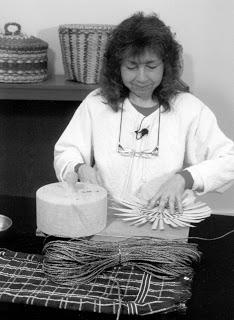
Not only have these talented women shared the tradition of ash and sweetgrass basketmaking with sisters and daughters, five of the women served as masters in the Maine Arts Commission Traditional Arts Apprenticeship program, teaching many more new apprentice basketmakers the art form. Mary’s daughter Deborah worked with the Abbe Museum to make a film documenting the process of making an ash and sweetgrass sewing basket from beginning to end. The legacy of this family of remarkable women will be felt for a long time to come in the Wabanaki basketmaking community.
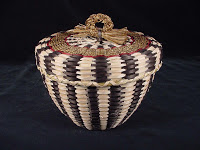
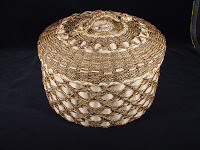
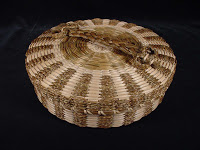


Deborah Gabriel Brooks’s web site:
http://sweetgrassbasketry.org/index.html
Two films about the Gabriel women and basketmaking:
“Basket Weaving: Deborah Gabriel Brooks” was produced for the Abbe by Dobbs Productions of Bar Harbor.
“Gabriel Women: Passamaquoddy Basketmakers” focuses on the work of Mary, Sylvia and Clare Gabriel. It was produced by the Center for the Study of Lives at the University of Southern Maine.
Image 2. Debbie Brooks
Image 3. Clare Gabriel, 1996
Image 4. Sylvia Gabriel, 1998
Image 5. Debbie Brooks, 2002.
Image 6. Mary Gabriel,1994.
Image 7. Mary Gabriel, 1993.
Rhonda Frey: A Gift Remembered
By Raney Bench, Curator of Education
As the Abbe Museum celebrates women’s history month by highlighting some influential Wabanaki women, I can’t help but think of my friend, Rhonda Frey, and the work we did together for the Abbe.
I met Rhonda early in 2007, during an interview she did about the Museum for her monthly radio program, Indigenous Voices, on WERU. A few months later, Rhonda came to an event at the Abbe. As we sat and visited, she shared her excitement at having just come from a meeting in Stockton Springs where she succeeded in getting the town to change the name of Squaw Point Rd. to something less offensive; a battle that she had been engaged in for the past year. As Rhonda talked about this process, it occurred to me that we needed to record what happened to her, because most people think racism on the level she experienced no longer persists in Maine. Rhonda was very excited to write this story down and work with me to transform it into a lesson for students.
Rhonda began to write, and as she did, she found that she could not separate her experience in Stockton Springs with those she had growing up on Indian Island during the times leading up to the Settlement Act. So, she wrote a second lesson for students, this one a personal biography of what it’s like to grow up in the face of stereotypes. Both narratives are excellent, and Rhonda presented her work with Stockton Springs to teachers and students around the state, as well as listing it on the Abbe’s website as a free lesson for teachers to download. She was hesitant to release her personal story, knowing how exposed it would make her feel, so we put that project on hold.
I was scheduled to meet with Rhonda about the lessons in February 2009 when I got a call telling me she had passed on unexpectedly. It has been such a loss for her family, the Native community, and for me personally. I’ve been fortunate to get to know her son, Jim Lolar, and he gave the Abbe permission to use the second narrative, Rhonda’s personal story, with teachers, knowing his mom would have wanted that. The two lessons are now on-line and being used in classrooms throughout the state.
Rhonda has left her mark in many places, and in many ways. She was an active member of her church and the Native community, she sang in choirs, spoke to the general public, and was a passionate advocate for Native people and rights. She was also a caring mother, grandmother, and friend, and she is sorely missed by many. I am thankful that the Abbe can carry her work forward, and her words can influence and educate future generations for years to come.
To see the lessons written by Rhonda, scroll to the bottom of the page:
http://www.abbemuseum.org/pages/education/educator-online-curriculum.html
Abbe Museum Women: Mary Cabot Wheelwright and Fannie Hardy Eckstorm
By Julia Clark, Curator of Collections
Women who were passionate about Native American art, culture and traditions were drawn to the Abbe Museum over the years. Mary Cabot Wheelwright and Fannie Hardy Eckstorm are two who really stand out. Not only did each woman make important contributions in her own right, but their friendship and working relationship add another dimension to their story.
Mary Cabot Wheelwright (1878-1958) was born in Boston, the daughter of a wealthy upper class family. She had no formal anthropological education, but had a life-long interest in Native American religion and arts. In 1926, Wheelwright met Hastiin Klah, a Navajo religious leader or “singer,” and worked with him for several years to record ceremonial narratives, prayers and chants. In 1937, Wheelwright was encouraged by David Rockefeller, Sr. to found what is now the Wheelwright Museum of the American Indian in Santa Fe.
Miss Wheelwright also had homes in Northeast Harbor and on Sutton Island. Her interest in Native American arts and culture extended to the Maine tribes, as well, and she became involved with the Abbe Museum’s early efforts to collect and interpret Maine Native culture. Miss Wheelwright’s involvement with the Abbe Museum was long. She was a trustee of the Museum from 1953 until her death in 1958. Before that, she was an important donor to the Museum’s expanding ethnographic collections. In 1931, she donated 62 Maine Indian baskets to the Abbe; over the next 25 years, other, unique and important objects were acquired for the Museum.
Fannie Hardy Eckstorm (1 865-1946) was born in Brewer, Maine. In contrast to Wheelwright’s upper class background, she was the daughter of fur trader and naturalist Manly Hardy. It was from her father that Eckstorm acquired a deep interest in Maine Native Americans, history and nature. Educated in the public schools of Brewer, Eckstorm eventually earned a degree from Smith College. She married the Reverend Jacob Eckstorm in 1893 and had two children. After her husband’s death in 1899, Eckstorm took up research on Maine Native languages, history and culture, and Maine history and folklore. She published numerous books and papers in scholarly journals on topics as diverse as Maine Indian place names, Maine game laws, and ballads of the Penobscot River log drivers.
By 1930, Wheelwright and Eckstorm began corresponding. Initially, their letters are professional and formal. Eckstorm located an important collection of trade silver that Wheelwright was interested in purchasing. Later, Eckstorm collected stories and legends from Passamaquoddy elder Lewey Mitchell for Wheelwright. It appears that Wheelwright financially supported much of Eckstorm’s research after 1930. Wheelwright sent Eckstorm on buying expeditions to the Passamaquoddy reservations in eastern Maine, paid Passamaquoddy informants for legends and songs; and purchased objects that came available on the Indian art market. Eventually, the two women became close friends.
When Wheelwright donated her collection of Wabanaki and other New England Native American baskets to the Abbe Museum in 1931, Eckstorm was hired to document and catalog it. That work, Handicrafts of the Modern Indians of Maine, is still a classic on the ethnographic material culture of Maine’s Wabanaki tribes. The Mary Cabot Wheelwright Collection contains some of the oldest and finest examples of Maine Indian basketry in the Abbe’s collection. Eckstorm also donated several pieces from her personal collection to the Abbe over the years.

Learn more about Fannie Hardy Eckstorm:
http://umaine.edu/folklife/exhibits/women-folklorists/fanny-hardy-eckstorm/
Learn more about the Wheelwright Museum of the American Indian:
http://www.wheelwright.org/about.html
Image 1. Photo of Mary Cabot Wheelwright in the library of her family's home in Northeast Harbor, Maine, 1912. Photography by Florence Maynard. Courtesy of the Wheelwright Museum of the American Indian.Image 2. Photo of Fannie Hardy Eckstorm courtesy of the Maine Folklife Center.
Image 3. Fancy basket made by Molly Molasses, ca. 1862, collected by Fannie Hardy Eckstorm, and given to the Abbe Museum by Mary Cabot Wheelwright in 1931.
Celebrating 10 Years Downtown continues with Women's History Month
 Don't forget to stop by the Abbe Museum this month to visit Aunt Lu: The Story of Princess Watahwaso, on exhibit until April 4, 2011. AND to celebrate other exceptional Wabanaki Women, visit the Abbe Shop for special discounts! We're offering 10% off titles such as Women of the Dawn and Molly Spotted Elk by Bunny McBride, Princess Watahwaso: Bright Star of the Penobscot, and In the Shadow of the Eagle by Donna M. Loring. And you can enjoy 15% off art created by select Wabanaki women artists, such as Rose Anne Bernard, Donna Sanipass, Sarah Sockbeson, and Joyce Tomah. Stop in or call for more details.
2011 marks the 10th Anniversary of the Abbe Museum's Downtown Bar Harbor location, and to celebrate this important milestone we've planned a little something special for each month. Here's a peek at our upcoming themes and promotions:
April
Community --- 25% OFF all Abbe Logo souvenirs
May
Abbe Collections --- Free copy of Handicrafts of the Modern Indians of Maine with a $50 purchase ($15 value!)
June
Young & Emerging Artists --- Discounts on Select Artists
July
Abbe Traditions --- Free copy of the Abbe Museum Publications CD, 1928-2003 with a $75 purchase ($19.95 value!)
August
Birch Bark --- Discounts on Birchbark Art & Products
September
Back to School --- Discounts on Books; Tea, Popovers,
& Archaeology Contest
October
Maine Archaeology Month --- Discounts on Select Items
November
Native American Heritage Month --- Pajama Day & other Discounts
December
Abbe intern reflects on her work
When I started volunteering at the Abbe a year ago, I didn’t really know what I was getting myself into. Who knew that I would be interning here, helping out with the education program, and helping to expand an exhibit! It’s been a really valuable learning experience, and I know that I have gained some important skills and knowledge.
I have had the chance to learn about museums across the country that are also dedicated to the Native people of this land, many of which are creatively reaching out to their communities to help further their mission. During the majority of my lifetime, I have associated museums with fine art, hushed rooms, and un-touchable collections. I know now that this is not the case in all museums. There is a wide world of institutions that invite people to learn by asking, feeling, smelling, and creating. This tactile approach encourages active engagement and memorable visits. I am inspired to visit some of these museums I researched (the Bishop Museum in Hawaii jumps to mind…) and learn more about how to get people excited about learning something new, and to continue learning along the way myself.
It is also great to know that my involvement with the Abbe will continue past this internship. The Abbe is an important part of the MDI community, and I am lucky to be part of it. I am really looking forward to sharing what I have learned and accomplished here with friends and family. I am also looking forward to seeing where this experience will take me!
New Exhibit Case Up In "Layers of Time"
 By Zach Whalen, College of the Atlantic intern
 On March 9th we installed a new case to the Layers of Time exhibit hall. This case is the culmination of a six week project by fellow intern Rachel Heasly and myself. We have been working with the collection of artifacts from the Ewing-Bragdon site digs from 2008 and 2009. The new case shows some of the most resent finds in the Abbe collection and illustrates how modern archeological methods can find more information about a site by looking at everything, including the smallest fish bones, to create a complete picture.
As the collections intern, I got to go through all the boxes of material found at the site and pick out what needed to go in the case for display. Having washed and cataloged a lot of the material beforehand gave me a sense of what was at the site and what story it told. I spent quite some time working with pottery from the site and refitting pieces to form a larger portion of the vessel. I also got to look at the more mundane items, like a pile of fish and bird bones that were blackened from being charred or stark white as the result of being cooked at high temperature. Learning more about the whole process of taking artifacts from the ground – cleaning them, cataloging them, and finally picking out a few to put on display – has been a wonderful experience.
We also got to design the poster that go with the case, finding pictures from the digs and writing about the site and what we have found from digging there. Getting the format just right and making sure to include all the information was a challenge but a good one that expanded the way I look at museum exhibits. The biggest challenge for me was to outline a profile of Feature One, which is shown in the side panel for the exhibit, so that everyone can see how an archeologist sees the layers of soil and shell. Over all, this project has been very rewarding and I encourage everyone to come and check it out when you are at the museum.