
Birchbark canoe donation
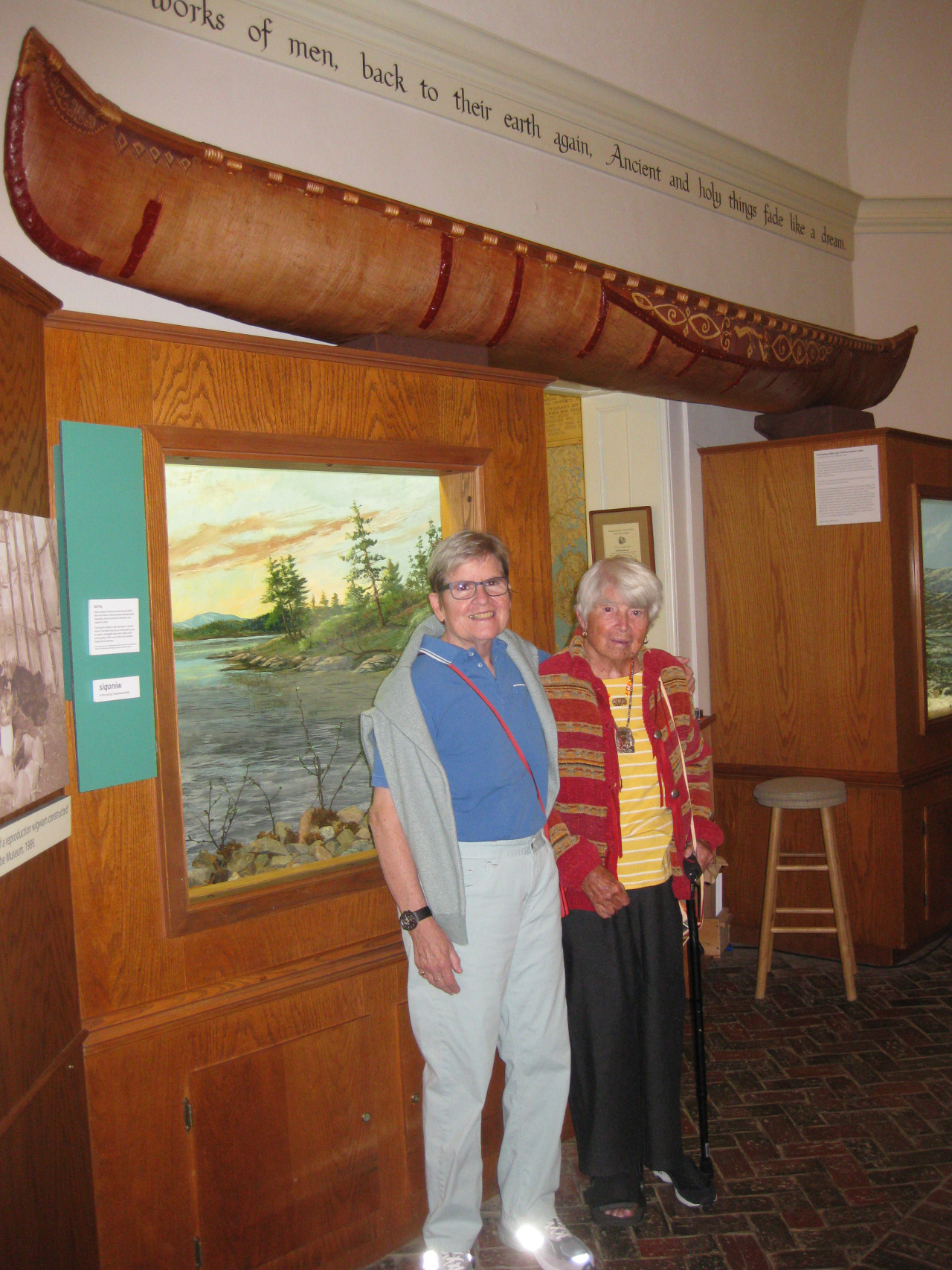
The Abbe Museum is excited to announce that this wonderful birchbark canoe has been donated to the museum. Marcy MacKinnon (left, with her mother Marcia MacKinnon) of Bar Harbor generously donated the traditional-style Abenaki canoe crafted by Abenaki artist Aaron York in 2004. The 16-foot canoe is now on display at the Abbe Museum at Sieur de Monts Spring. Stop by anytime to visit it, and other artifacts. Photo by Hannah Whalen.
Attending The Annual Native American Festival and Basketmakers Market In Bar Harbor, Maine - The Martha Stewart Blog
Martha Stewart recently visited the Native American Festival and Basketmakers Market that we help to put on every year!
Abbe Museum takes greening seriously
The Abbe Museum tells visitors about the culture and history of the native American peoples of Maine.
So it made sense to launch “Greening the Abbe,” a project designed to make the small museum – just a few minutes drive from Acadia National Park along Maine’s rugged and beautiful coastline – as environmentally conscious and energy efficient as possible.
“We have this place for learning, and it just made sense to be doing it responsibly all the way through,” says Cinnamon Catlin-Legutko, the president and chief executive officer of the Abbe Museum. “We recognized that something had to be done.”.
Currently at the Abbe Museum
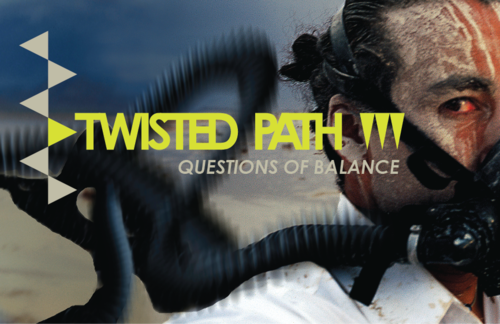
Twisted Path III: Questions of Balance, invites audiences to consider Native American concerns about the environment through the medium of contemporary art. Artists’ works express emotional and cultural reflections on the status of our planet—both comfort from a sense of place and connections to the land, and the conflicts inherent in cultural genocide and pollution of sacred spaces.
Many of Twisted Path III’s artists have work available for purchase in the Abbe Shop, such as raw silk, handpainted scarves by Patricia Michaels; silver jewelry by Shane Perley Dutcher; baskets by Gabriel Frey, and twine baskets by Vera Longtoe Sheehan.
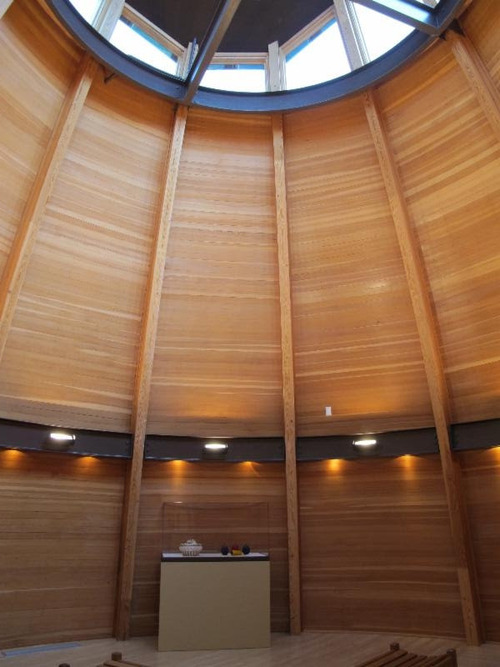
Four Directions of Wabanaki Basketry, located in our unique Circle of the Four Directions, offers a place of quiet reflection for visitors to the Museum.
The exhibit features a basket from each of the Wabanaki tribal communities: the eastern basket made by a Maliseet child, the southern baskets made by Passamaquoddy women, the western basket made by a Penobscot man, and the northern basket by a Micmac elder. Visitors will also hear the creation story of Koluskap and the Ash Tree in the Penobscot, Passamaquoddy/Maliseet, and Micmac languages.
Made possible through the generosity of John and Ruth Overton.
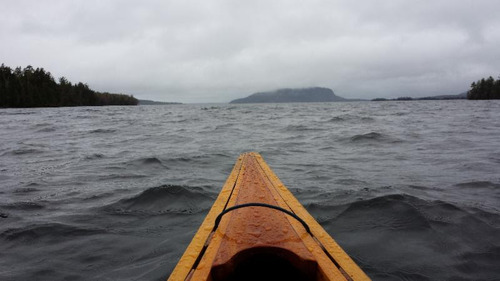
150th Thoreau-Wabanaki Anniversary Canoe Tour. During May 2014, an epic journey took place commemorating the travels of Henry David Thoreau and his Wabanaki Guide, Joe Polis, through the Maine Woods in July of 1857. The Abbe Museum is hosting a photo exhibit that describes a modern-day recreation of Thoreau and Polis’ journey. Curated by Chris Sockalexis, Penobscot Tribal Historic Preservation Officer.
Photo credit, Chris Sockalexis
An Abbe Museum collections mystery SOLVED!
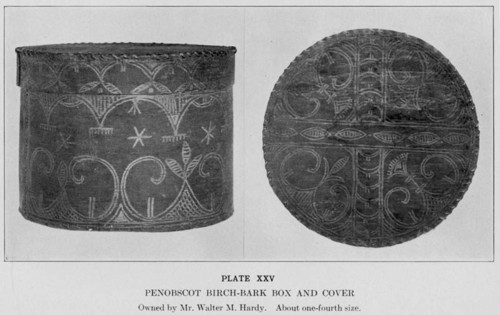
Way back in 1932, Maine folklorist Fannie Hardy Eckstorm published The Handicrafts of the Modern Indians of Maine, Abbe Museum Bulletin III (actually, in 1932 we were still the Lafayette National Park Museum, but that is another story…). In this book she included a photo of a stunning birchbark box from the collection of Walter M. Hardy (her brother).
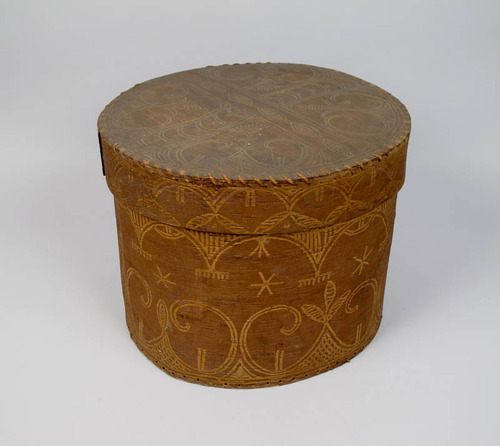
Decades later in 2003 the Abbe reprinted Eckstorm’s book. We set out to get updated color photos of the pieces featured, but were unable to find this particular piece at the museums with similar collections we contacted. Another decade passed, and in 2012 we got an email from the Farnsworth Art Museum in Rockland, asking if we could tell them anything about a birchbark box they had in there collection, with a photo attached. It was the missing box! Which it turns out had not really been missing, but in the fine care of the Farnsworth since 1952. Another year passes, and we receive a letter from the Farnsworth, informing us that they had decided to deaccession the box (along with another, smaller but as lovely) and transfer them to the Abbe. In May 2014, the transfer happened, and the boxes are now in their new permanent home at the Abbe. The box is thought to be Penobscot, and dates to sometime before 1840.
Time Travel on the Maine Coast
Click here for details about the 2014 Archaeological Field School and a link to the registration form.
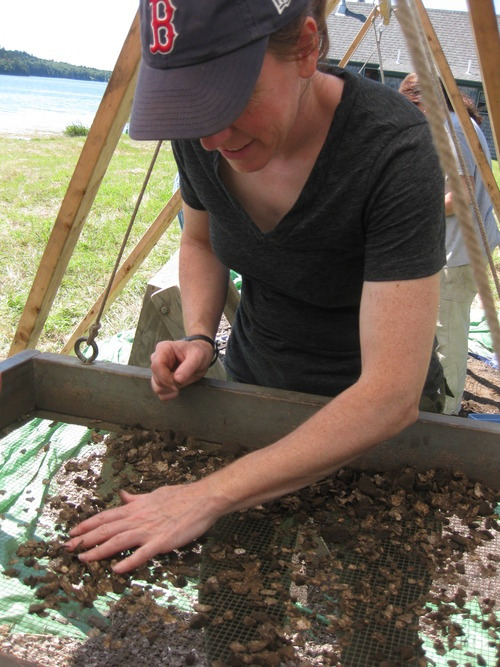
No matter your age or experience, the Field School offers the chance to get your hands dirty and uncover evidence of Wabanaki people living on Frenchman Bay over the past several thousand years. Participants learn how to carefully excavate a shell midden site, how to identify the types of artifacts that are uncovered, and how archaeologists analyze the results of excavation. But more than that, you will also spend time learning from Wabanaki scholars and cultural specialists about everything from how to make stone tools, to traditional music, and the importance of language preservation. The Abbe Museum also places a strong emphasis on bringing multiple ways of knowing to understanding Wabanaki history, with archaeology complimented by traditional knowledge, oral traditions, language, and the natural sciences.
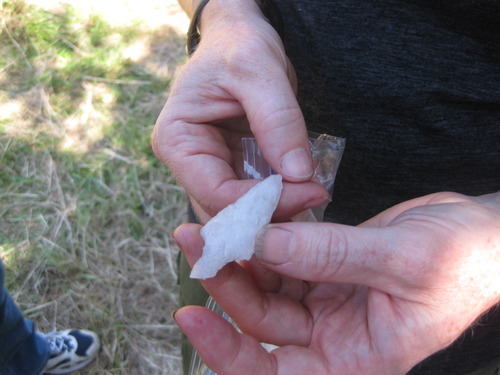
The Abbe Museum’s archaeology field School gave me access to Native and non-Native perspectives on past Indigenous settlements and lifeways, enriched by hands-on learning during a week-long excavation on the coast of Maine. I learned more during my week in the field with the Abbe Museum than I could have imagined possible! - Ani St. Amand, 2013 Field School Participant
As a participant in the Field School, you will also contribute to the understanding of a type of archaeological site that is seriously threatened by climate change and rising sea levels. Coastal shell middens like the site excavated during the Field School, may be destroyed by a combination of sea level rise and increasingly powerful storms. Your work is part of an effort to salvage the information contained within these sites before they are gone.

The 2014 Archaeological Field School returns to the Tranquility Farm Site in Gouldsboro, Maine. The site was first excavated by a crew from the Abbe Museum during the 1930s. While these early archaeologists collected lots and lots of cool artifacts, they were not using very advanced excavation techniques, and apparently keeping very few records. This means that the detailed information that could have been gained from a large area of the site was lost, but we do have an idea of what went on at Tranquility Farm based on the types of artifacts recovered.
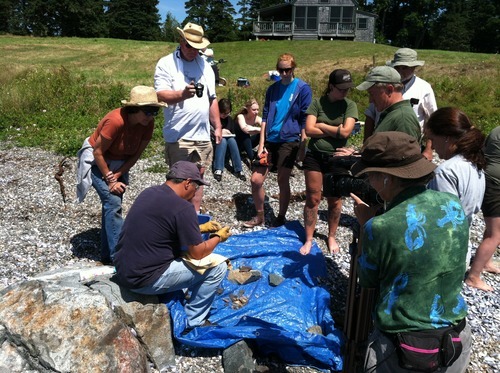
In the 1990s, the Abbe field school returned to Tranquility Farm, this time applying the great advances in archaeology made during the intervening decades. A small area of the site was carefully excavated. Evidence of wigwams on the site was uncovered, as distinct patterns in the color, texture and contents of the soil layers. Animal bones left over from food production and burned plant remains from fire hearths were used to begin to reconstruct the diet and subsistence activities of the occupants of the site. Radiocarbon dates on charcoal from fire hearths provided a date of approximately 1,200 years ago, and pottery decorations suggest that the site was used over a period of more than 1000 years. And a couple of small glass beads, which the Wabanaki would have acquired through trade with Europeans, tell us that Native people were living at Tranquility Farm when Europeans first arrived in the region.
In 2010, the Field School again returned to Tranquility Farm, and we have been back every summer since, making gradual progress with one week of excavation each year. The current excavations are looking at an area adjacent to the 1990s excavations. Archaeologists have found in the last couple of decades that the area around the edges of many shell middens on the coast of Maine provide the most detailed insight into the lives of the Wabanaki occupants over the millennia. Relatively undisturbed by the destructive early 20th century digs, the perimeters show evidence of houses, fire pits, food storage pits, and other remnants of daily life. Uncovering and recording these complex features in the soil takes time and patience, but is very rewarding.
Some of our exciting finds over the past few years have included:
- Pottery fragments with decorations that suggest long-term use of the site.
- Stone tools made from both locally available stones and from material that would have been traded from as far away as Nova Scotia.
- Bone harpoon heads used to spear large fish, seals, or even small whales.
- Soil patterns including post holes indicating at least two different structures, and several fire hearths.
- Animal bones including bear, moose, deer, beaver, and a wide range of fish and birds, and lots and lots of clams.
Ever wonder how a river, mountain, or town got its name?
Wabanaki Place: Language and Landscape
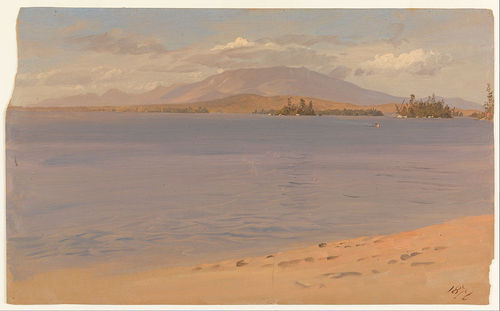
Join us on Sunday, June 1, 6 - 8 PM to learn about Mount Desert Island and Downeast regional names from the perspective of its earliest inhabitants. James E. Francis, Penobscot Nation’s Cultural and Historic Preservation director and member of the USET Culture & Heritage Committee, will share stories about the origin and meaning of geographic place names from a Wabanaki perspective.Place names are part of language preservation which is an important part of Penobscot culture. Recently, the Penobscot Nation was awarded a $339,000 grant from the National Science Foundation to the Folk Life Center which will provide resources and linguistic training to the Penobscot Nation’s language revitalization efforts and the publication of a comprehensive dictionary.
As part of the United South and Eastern Tribes (USET) 2014 Semi-Annual Meeting in Bar Harbor, this is a unique opportunity to learn more about Native cultural place and belonging. As a special addition, the presentation will be accompanied by a performance by the Alamoosic Drummers.
Today, USET has grown to become an inter-tribal organization with 26 federally-recognized Tribal Nation members. While defined as a regional organization, USET has developed into a nationally prominent and respected organization due to its broad policy platform and influence
on the most important and critical issues facing all of Indian Country. Supporting all of its issue specific advocacy is a foundation built upon the goals of promoting and protecting the inherent sovereignty rights of all Tribal Nations, pursuing opportunities that enhance Tribal Nation rebuilding, and working to ensure that the United States upholds its sacred trust responsibilities to Indian Country.
USET represents and promotes the interests of its member Tribes through conferences, associations, work groups, partnerships, etc. Additionally, it serves as a forum for the exchange of ideas, works on behalf of its membership to create an improved quality of life for American Indians through increased Health, Education, Social Services, Housing, Economic Development, Transportation, and Justice opportunities, and works to promote Indian leadership to ensure Indian Country’s continued growth, development, and prosperity as Tribal Nations.
The USET Conference will meet in Bar Harbor from June 2-4, 2014.
Sunday, June 1, 2014
6:00-8:00 pm
Abbe Museum, Downtown
Contemporary Issues Panel: Kci Kikuwosson Skitkomiq: Our Mother, the Earth
Please join us on May 20 at 6:00 PM for a panel discussion featuring Wabanaki tribal members. Wabanaki people are among the very few populations of indigenous peoples that have not been forced off of their traditional homelands. The Wabanaki have had an uninterrupted presence in Maine for over 12,000 years. A representative from each of the five Wabanaki communities will form the panel, providing museum visitors with the unique opportunity to receive first-hand information on the modern issues that Wabanaki people face. As a compliment toTwisted Path III, this panel will focus on issues surrounding sacred spaces, land ownership, land conservation and restoration, and resource management within the four tribes in Maine.
Free and open to the public.
Tuesday, May 20
6:00 PM - 8:00 PM
At the Abbe Museum Downtown
Other News & Events: History in birchbark
A new exhibition at the Peabody Museum of Archaeology and Ethnology at Harvard University opens a revealing window on Wabanaki history through the changing design of their signature canoes and current efforts to preserve their identity by building them in the old ways.
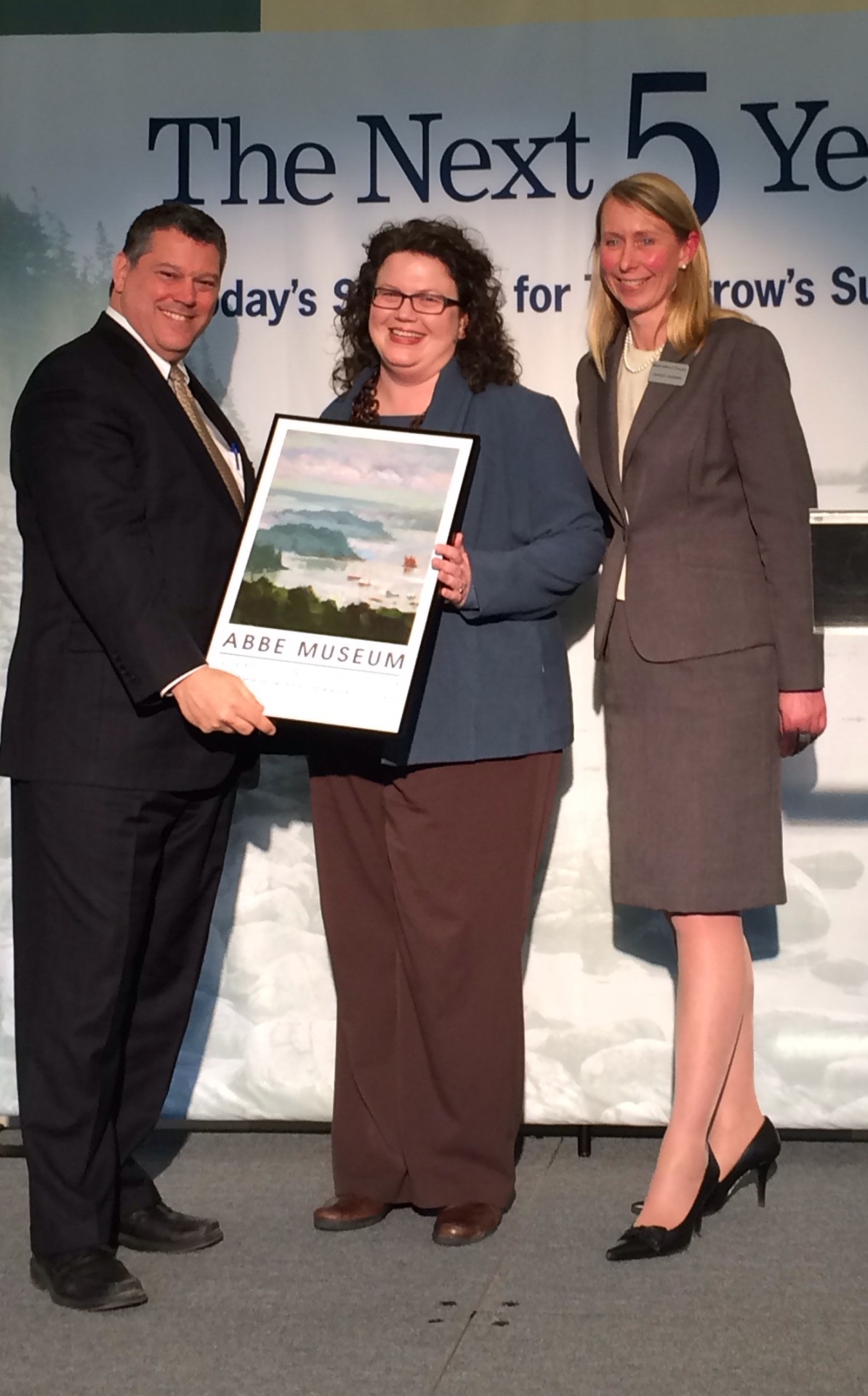
Abbe receives the 2014 Leadership & Growth Award
Children's Mandala Workshop with Twisted Path III Artist Gabriel Frey
Mandala’s are found in cultures across the globe, and typically feature a circular motif that is filled with symbolism meant to invoke specific imagery during meditation. In this workshop, Gabriel Frey, Passamaquoddy, will not only speak about the mandala he created using Wabanaki symbolism for the Twisted Path III: Questions of Balance exhibit, but guide students through the process of creating their own mandala.
Free and open to the public, registration required. All ages welcome, but priority is given to children. Contact Museum Educator George Neptune to make a reservation, george@abbemuseum.org or (207)288-3519.
Location: Abbe Museum Downtown
Welcome Eli!
The Abbe is thrilled to welcome Eli Mellen to the staff as our new Office and Database Manager. Eli grew up in Washington D.C. and moved to Mount Desert Island to attend the College of the Atlantic, where he received both his Bachelors and Masters degrees in Human Ecology. His senior and graduate theses both explored the design of systems that cultivate and encourage connection and communication with a focus on building community. He bring experience working on MDI by way of College of the Atlantic, the Naturalist’s Notebook and A&B Naturals and also works as a freelance designer. Eli was recently named a Treehouse Fellow and presented at TEDx Dirigo as a part of this fellowship.

“I’m thrilled to be part of the Abbe’s team, I love community and sharing. Working at the Abbe, I’ll be able to help share new learning about the Wabanaki community and its culture with the others.”
Eli will be taking over many of Johannah’s former responsibilities along with some of John Brown’s as he shapes this new position and offers his many talents and areas of expertise to the museum. Welcome Eli!
High School Student Completes Independent Study at the Abbe
For the past three weeks, the Abbe welcomed George Stevens Academy junior, Leah Tallent, who completed an independent study at the museum. Leah had expressed interest in conducting her independent study at the museum with the goal of learning more about the behind-the-scenes operation of museums. Over the course of her work here, Leah catalogued 18 boxes of books in our library and assisted the Curator of Education with the development of a new staff training binder. She was invaluable to us and we are sorry to see her go! Leah joined a long line of high school students who have turned to the Abbe as a resource for independent studies. For more information on such opportunities, please contact Curator of Education, Jennifer Pictou, at jennifer@abbemuseum.org
2014 Winter Gathering
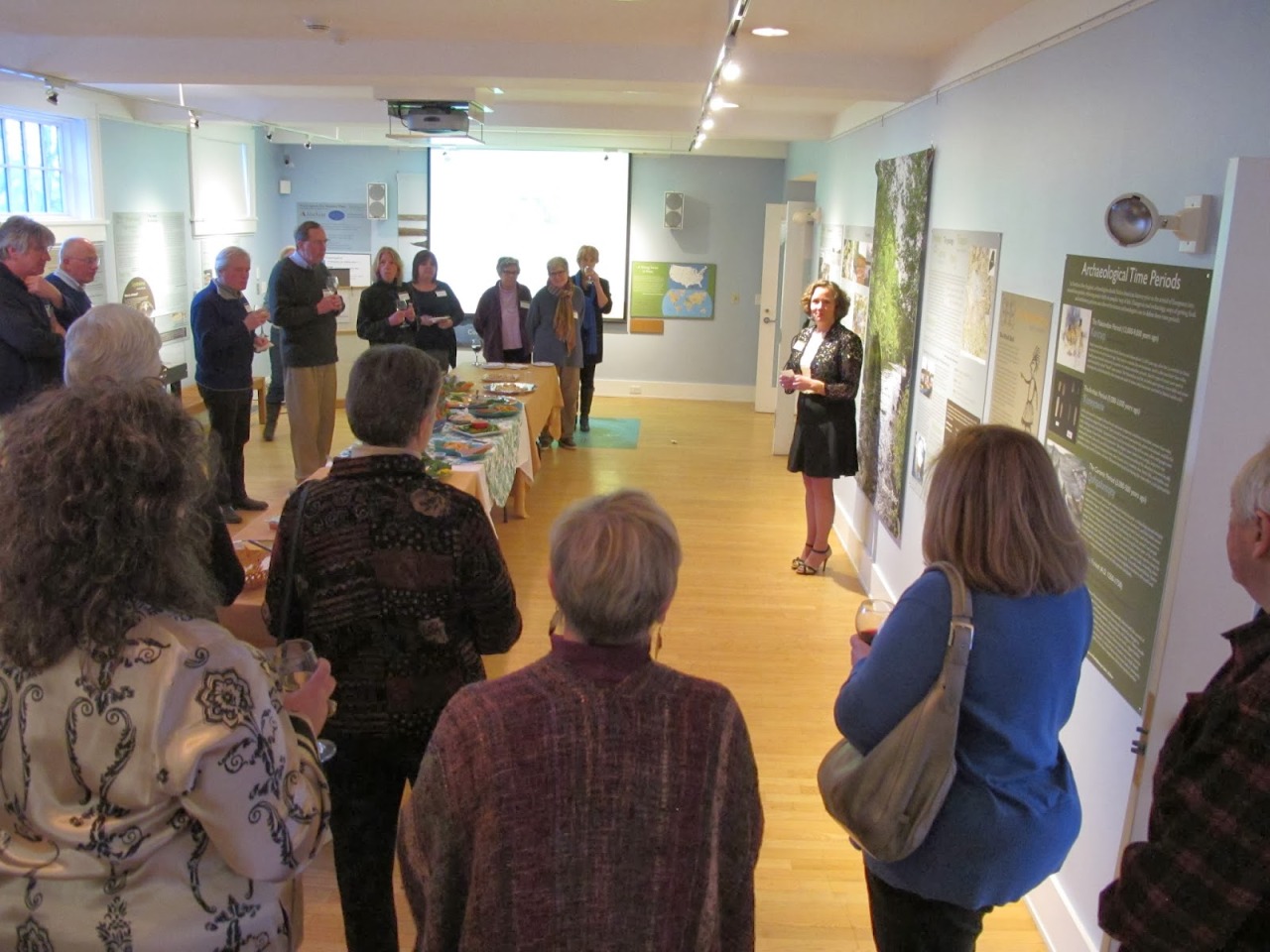
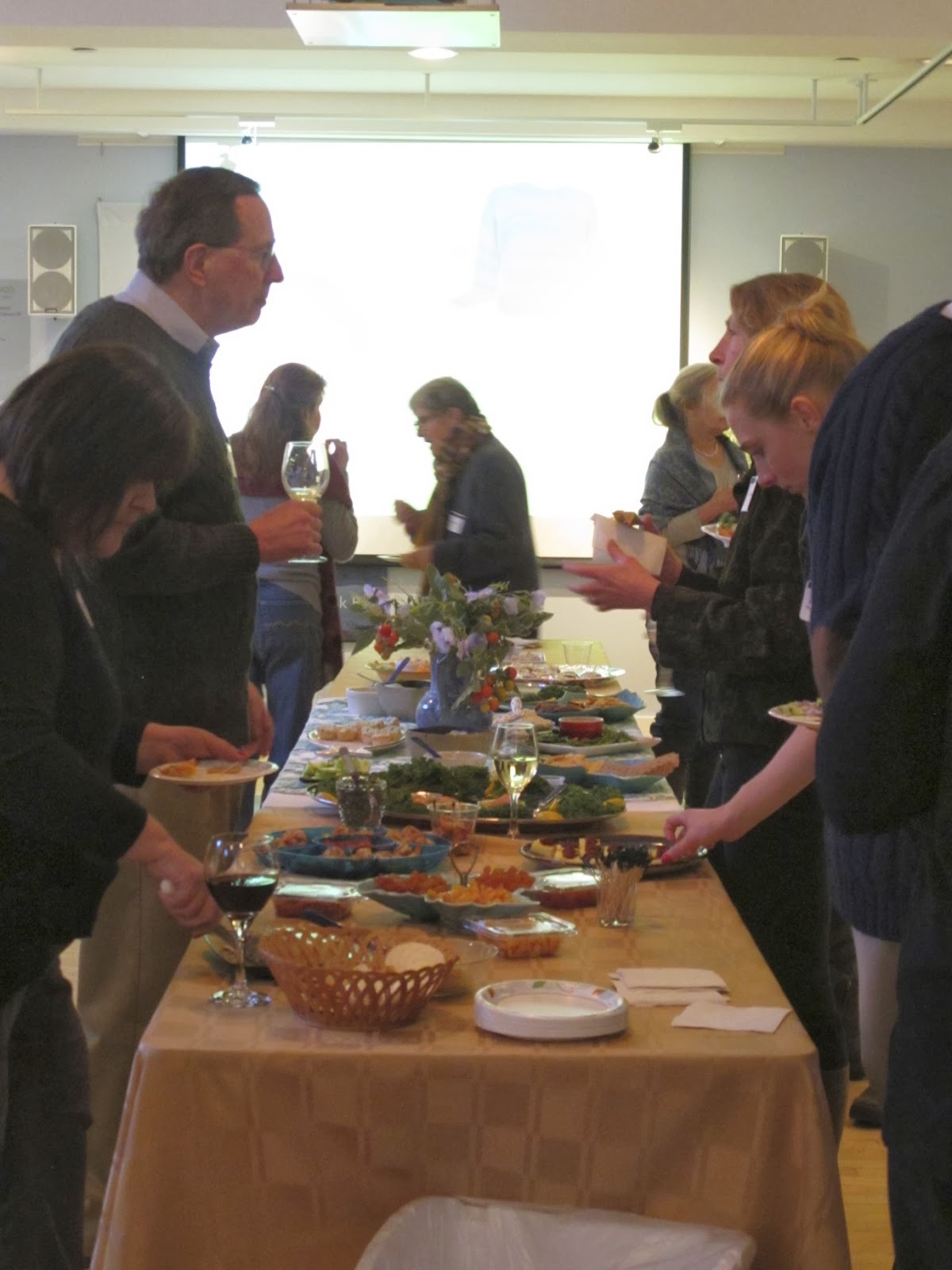
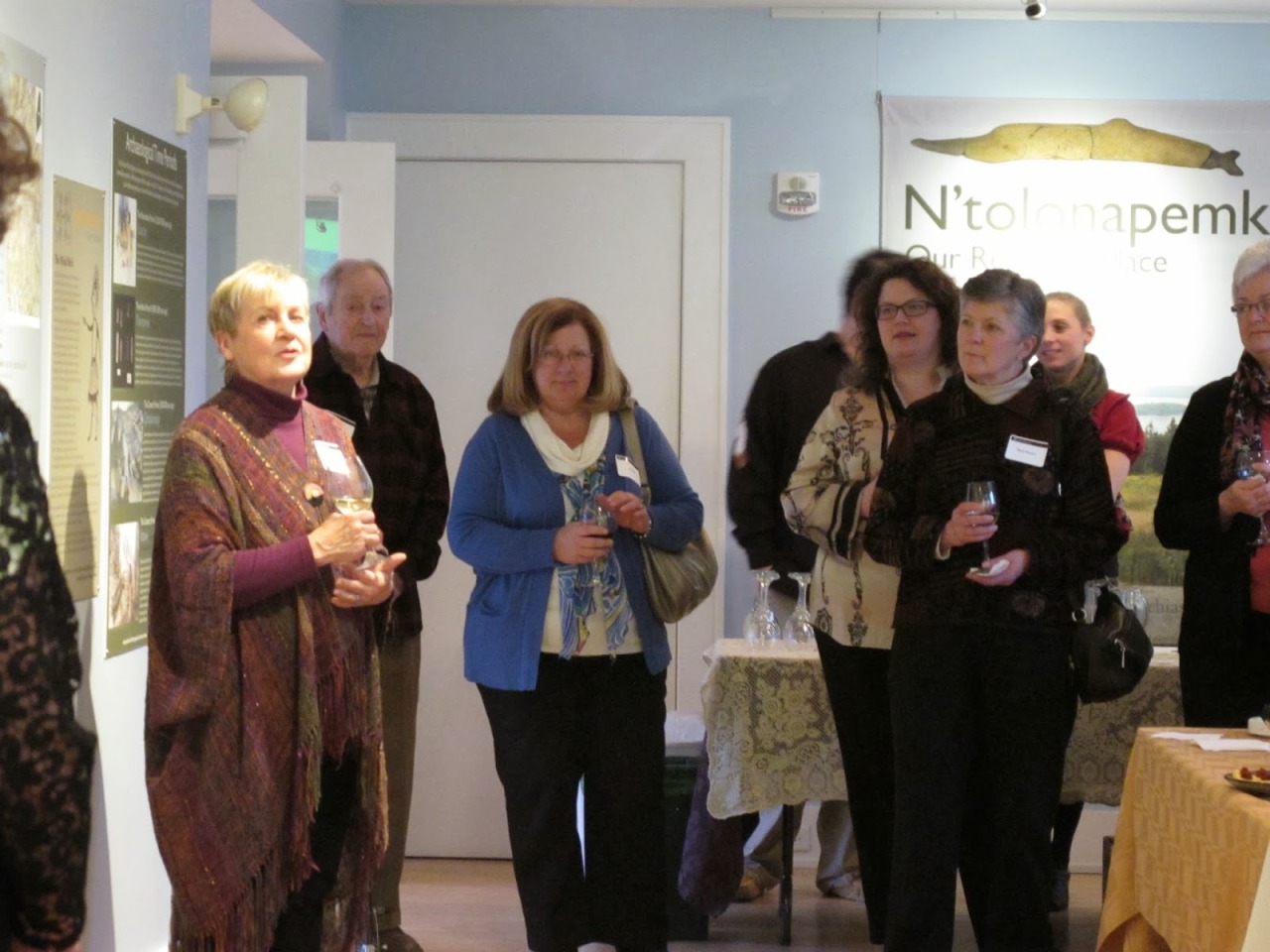
The fourth annual Winter Gathering was held on February 28 at the Abbe. A number of our Gathering Gala guests, volunteers, sponsors and auction donors joined us for savory treats made by members of the gala committee, as well as an assortment of beautiful smoked seafood donated by Sullivan Harbor Farm. This event is a way for us to thank our generous Gala supporters in the “off-season” and enjoy some one on one conversations in a relaxed atmosphere. Guests also had a chance to enjoy the new exhibit, Twisted Path III and to see the new lighting fixture changes in our Main Gallery that are a result of the Greening the Abbe Initiative, which was launched during our first paddle raise at the 2012 Gala.
The 2014 Gathering Gala will be held on Wednesday, July 30, 2014. Please SAVE THE DATE and plan to join us for another fabulous event to support Abbe exhibits, projects and programs.
March Brown Bag Lunch with Gabe Frey

Twisted Path III is the third incarnation in a series of exhibits that feature contemporary Native American art. This year’s exhibit theme, Questions of Balance, focuses on indigenous perspectives on environmental impact and conservation, and invites visitors to consider Native American concerns about the environment through the lens of contemporary art. Gabriel Frey works in many mediums, focusing on painting/drawing and basketry. Known for his superior quality utility baskets, Gabriel strives to create traditional, functional pieces with a decorative, contemporary twist. This program is free and open to the public.
 Grandfather (oil on canvas painting) and pack basket by Gabe Frey, both part of Twisted Path III
Twisted Path III: Questions of Balance opening
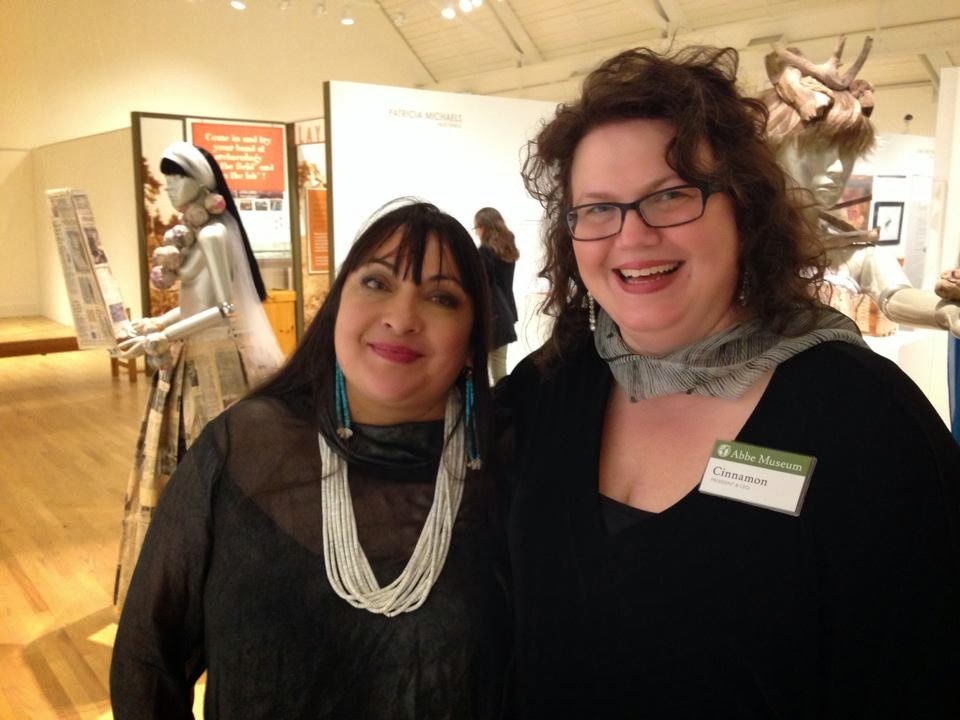
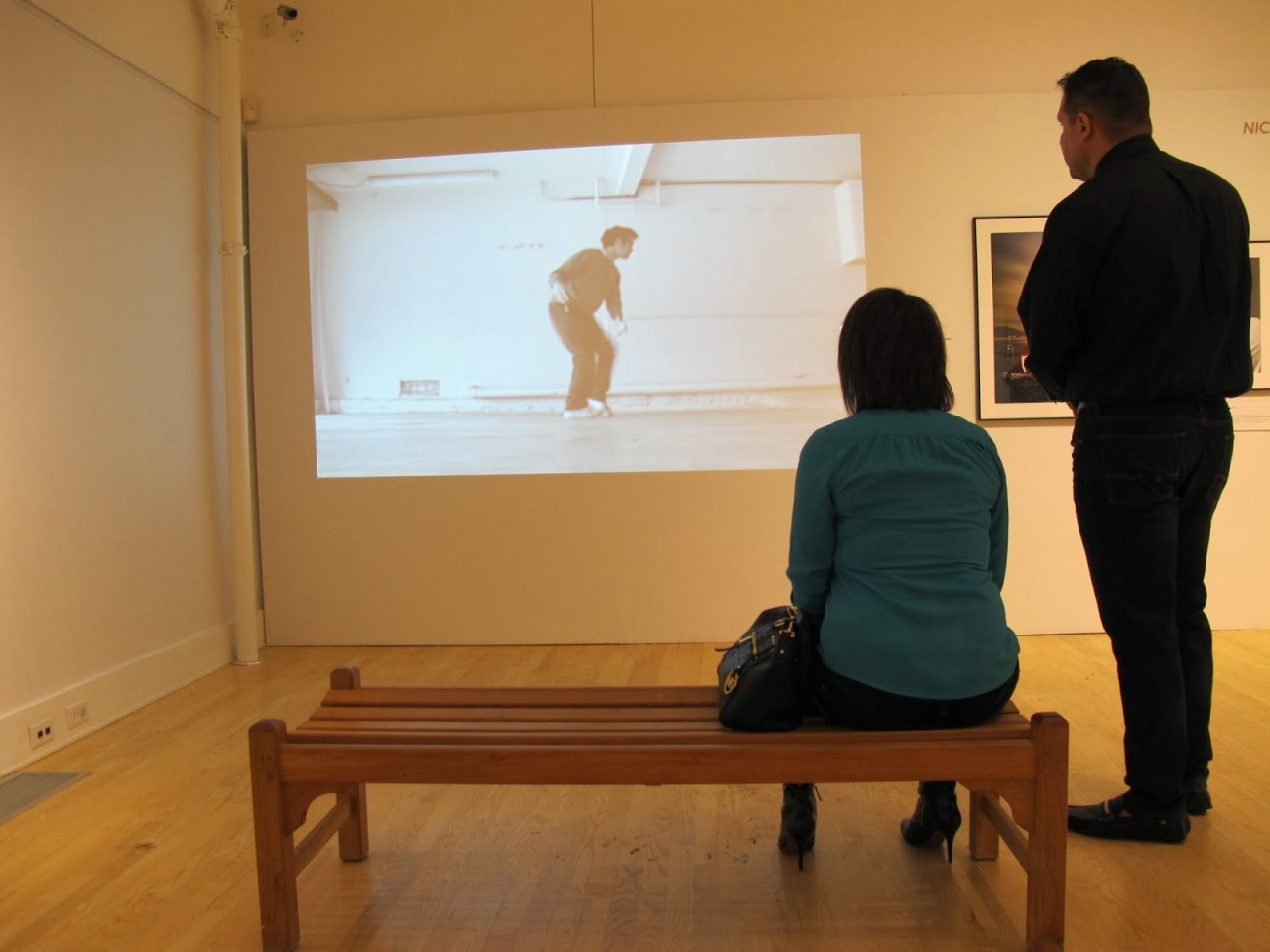
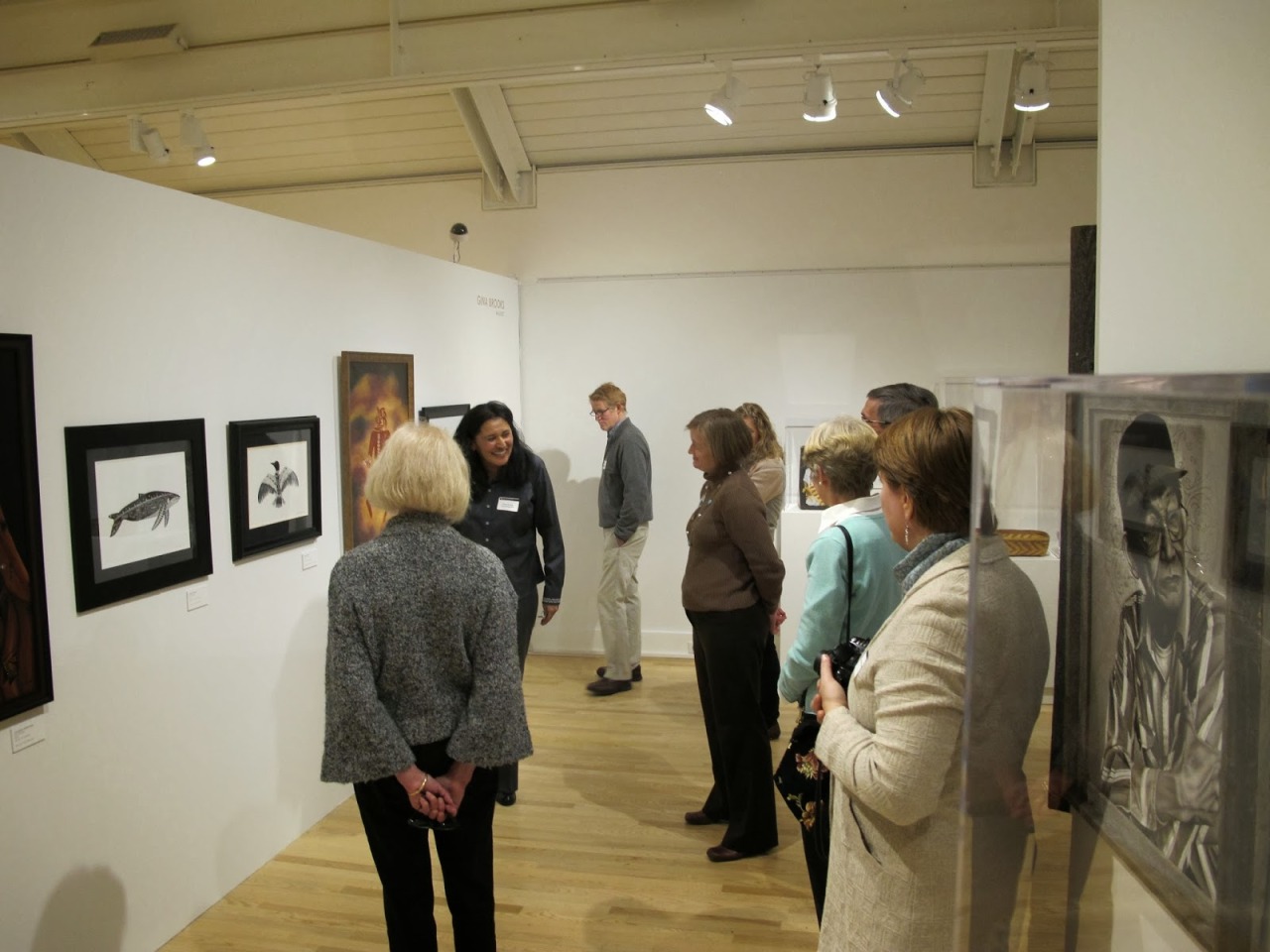
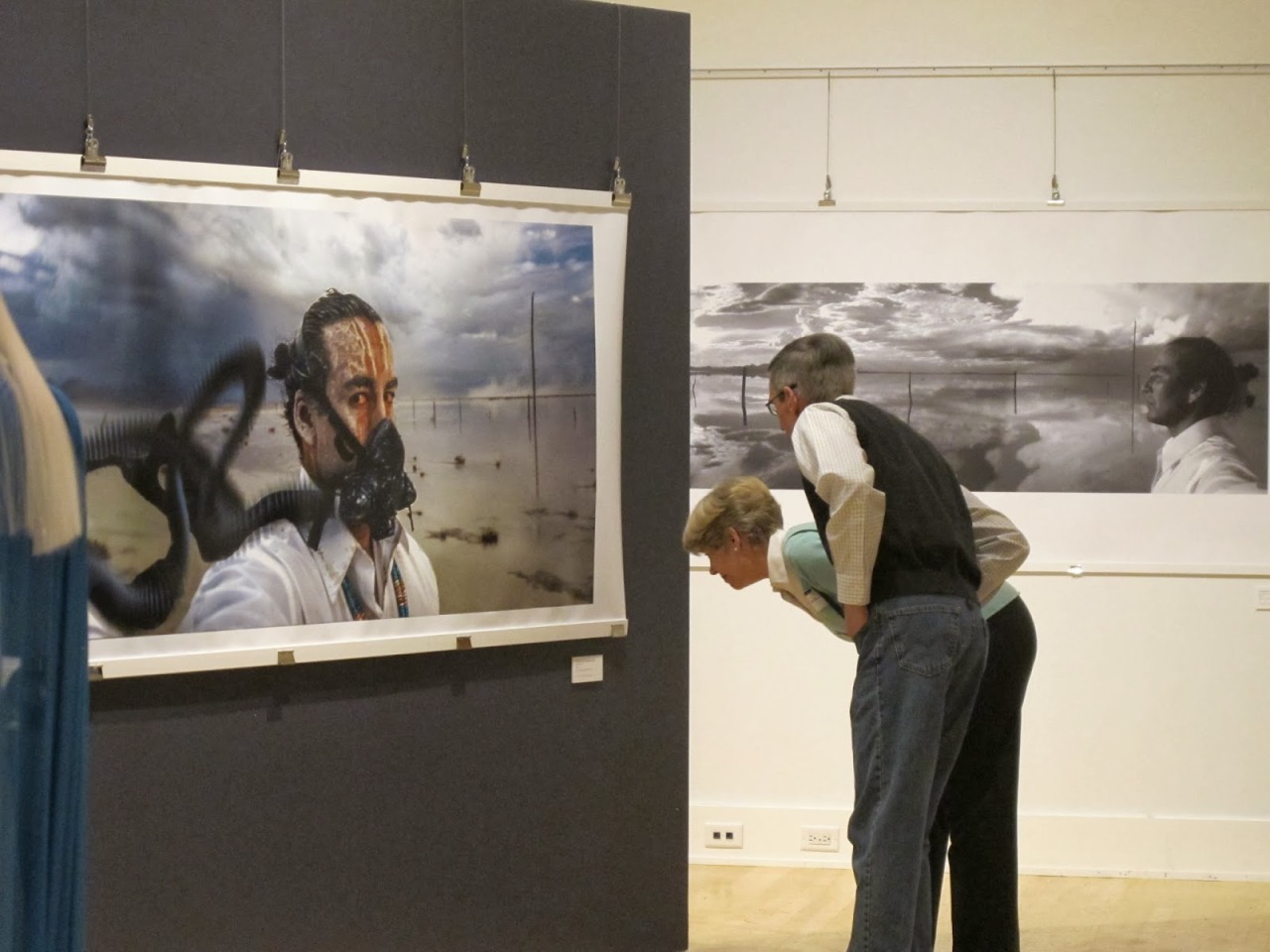
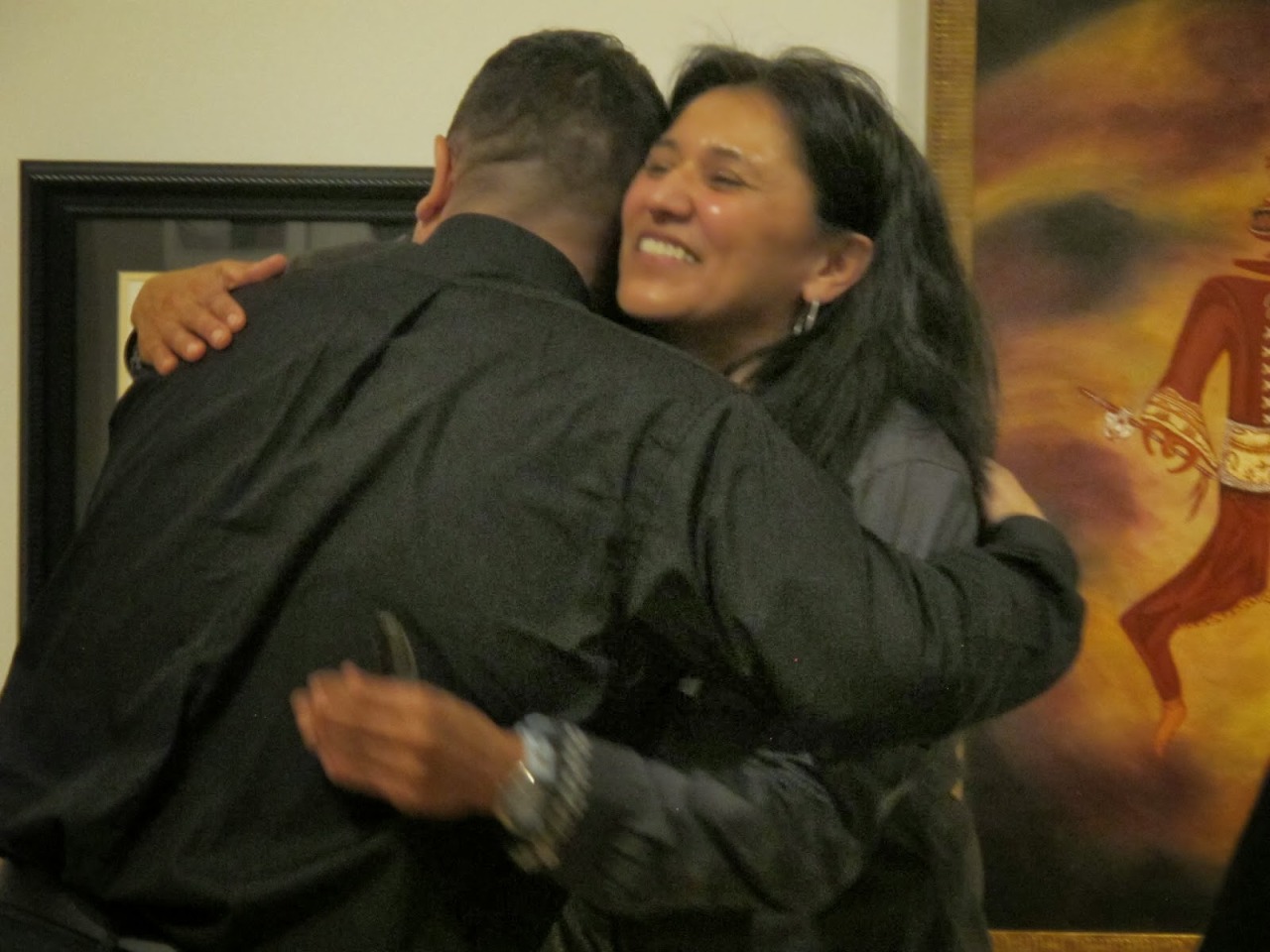
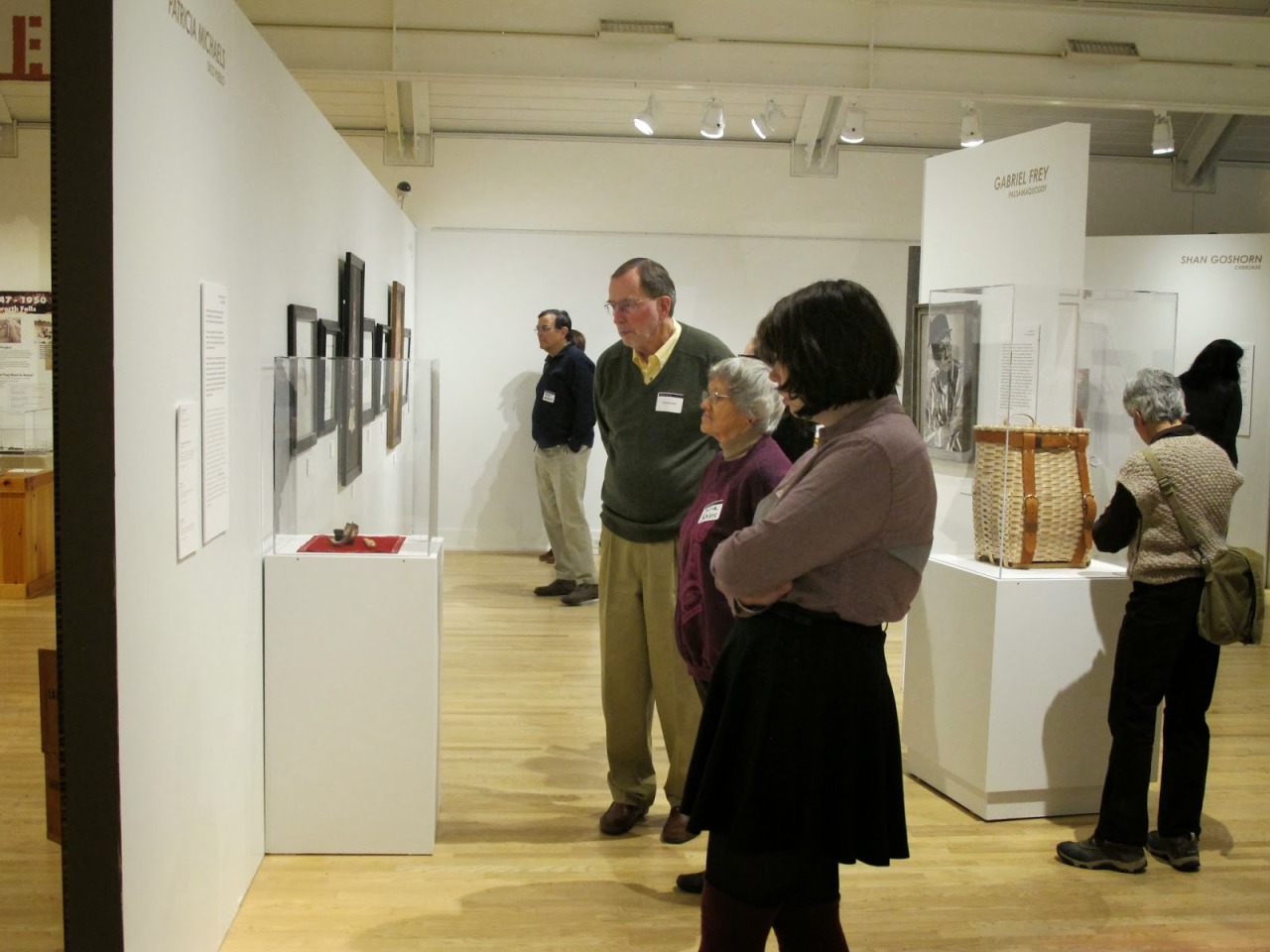
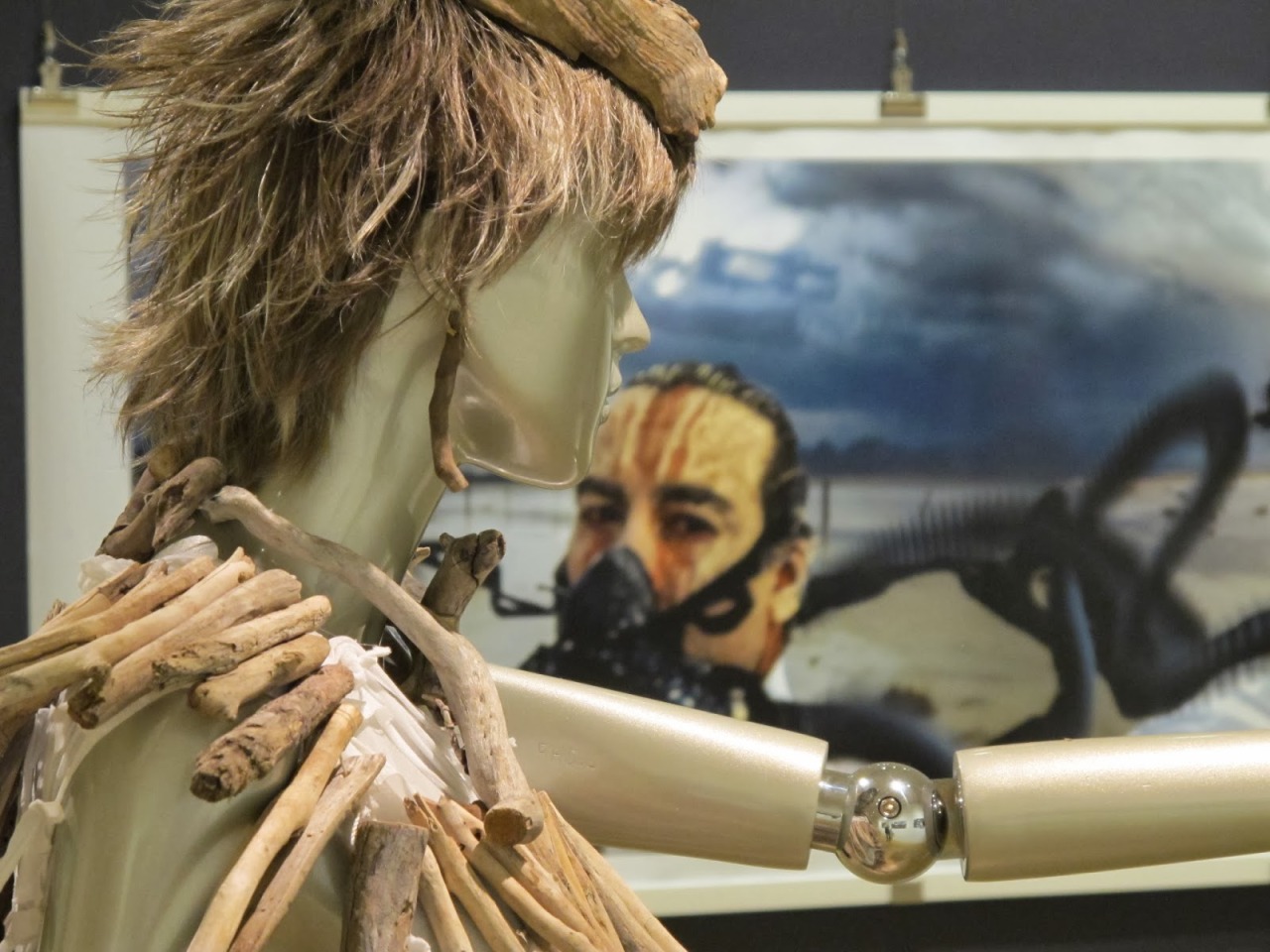
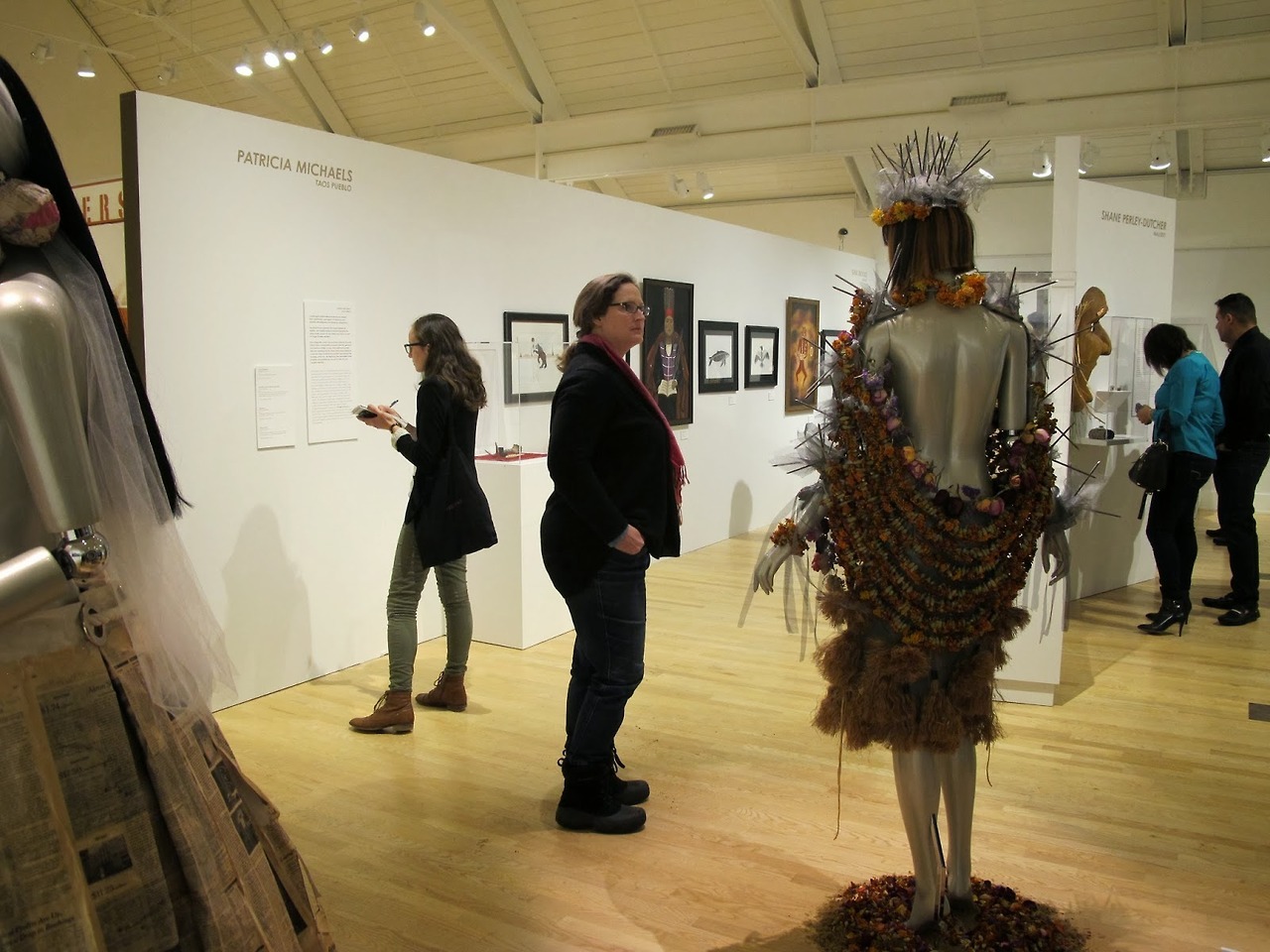
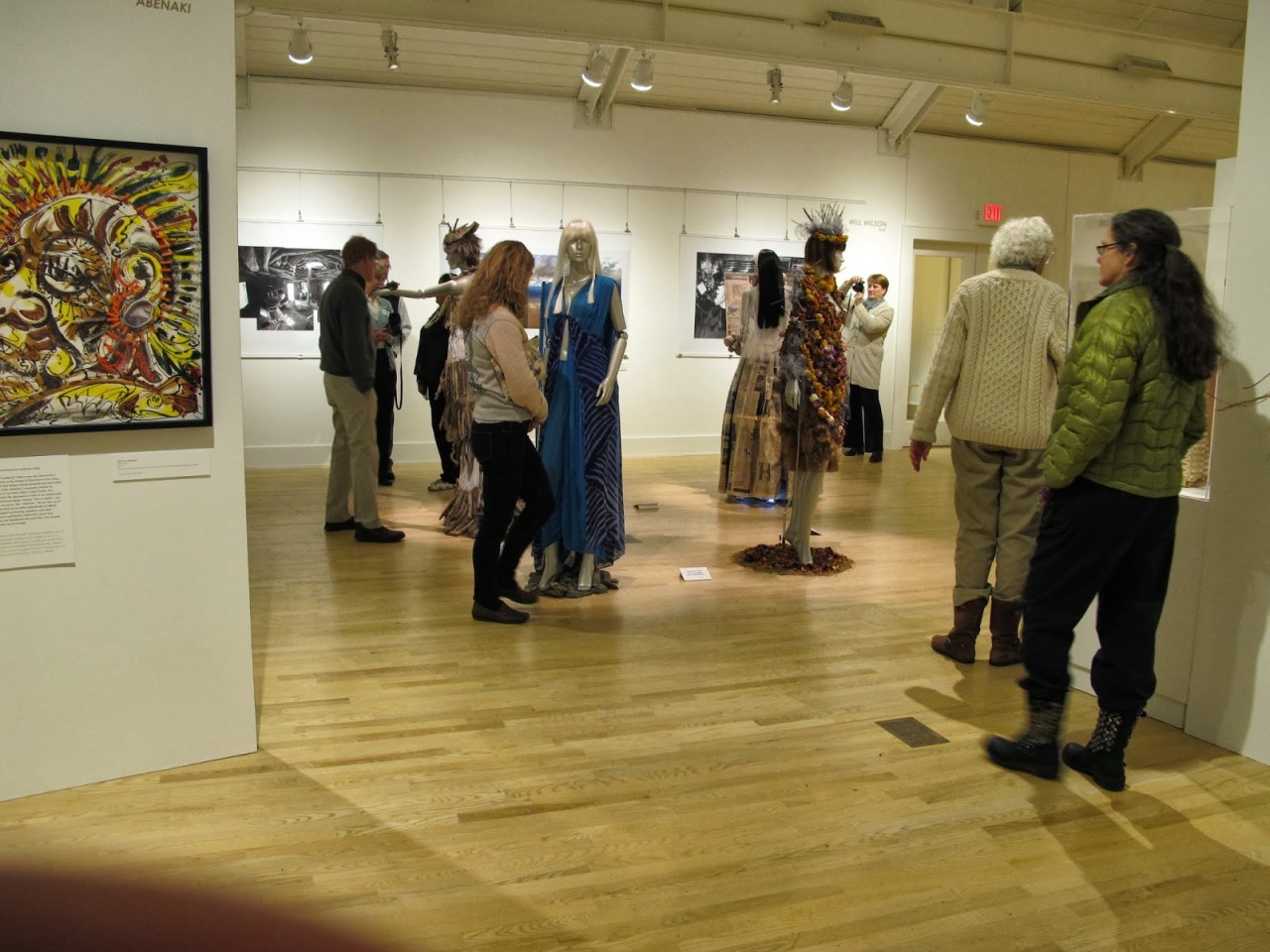
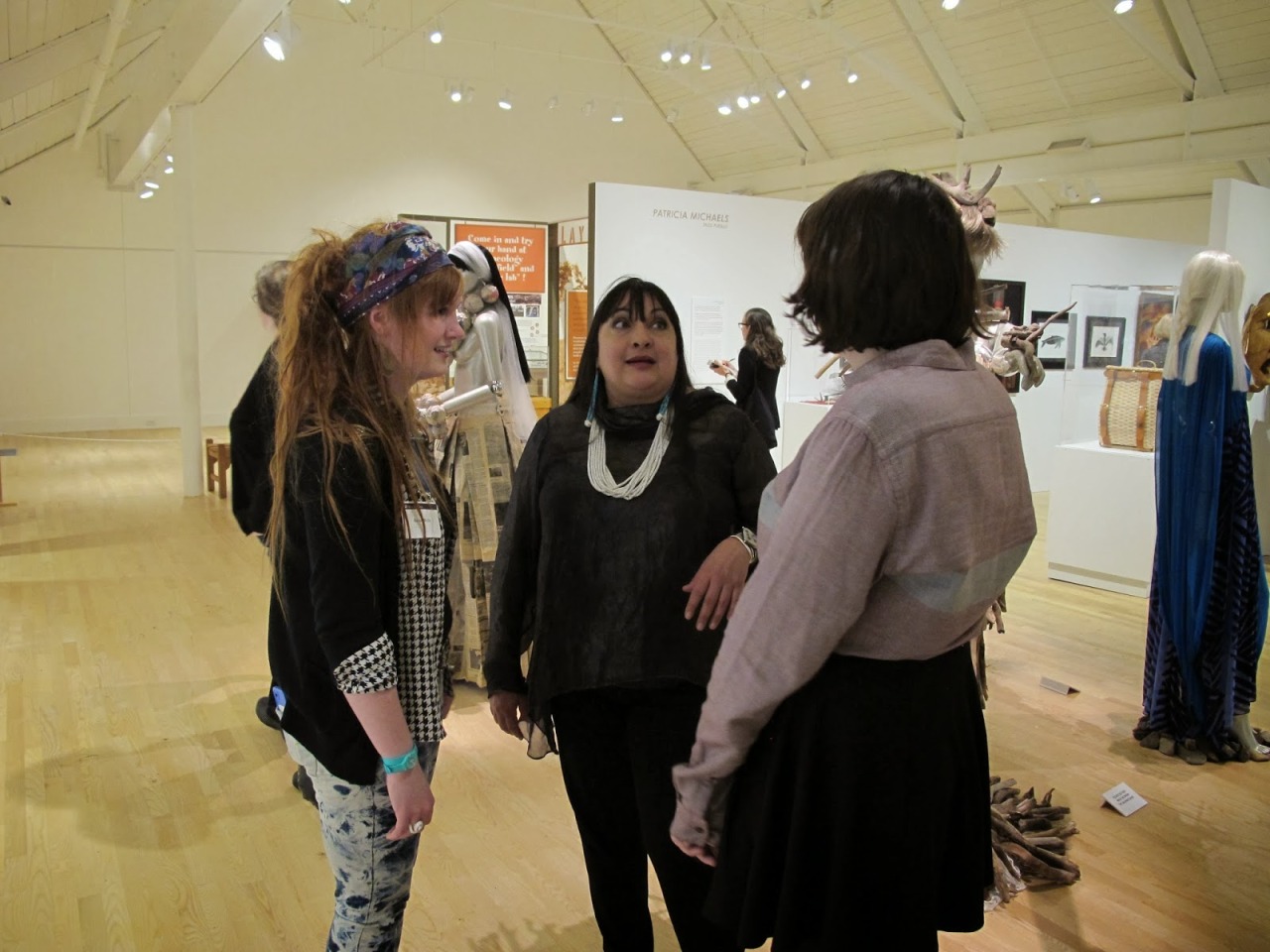
On Thursday, February 6, the Abbe opened the doors to the new feature exhibit, Twisted Path III: Questions of Balance, and that evening the hallways of the museum were flooded with excitement as guests poured in to celebrate the new exhibit. Several of the artists were in attendance, and partygoers had the opportunity to hear them speak about their artistic works. It was truly an exceptional evening, with remarks given by Cinnamon Catlin-Legutko, President and CEO, Rick Hunt, Guest Curator and Twisted Path creator and artists, and Patricia Michaels, fashion designer from the Taos Pueblo and finalist on Project Runway, Season 11. Delicious food graciously prepared by the Abbe’s Culinary Arts Committee capped-off the evening. Thank you to everyone who attended! The new exhibit could not have received a more enthusiastic reception.
This exhibit is made possible thanks to support from the Sharpe Family Foundation/Douglas & Ann Sharpe, an Anonymous Foundation, the Fisher Charitable Foundation, and the Hattie A. & Fred C. Lynam Trust. Corporate sponsorship comes from The First Bank, with additional support from the Maine Arts Commission, Bar Harbor Bank & Trust, MPBN, and the Bangor Daily News.
Patricia Michaels visits the Abbe
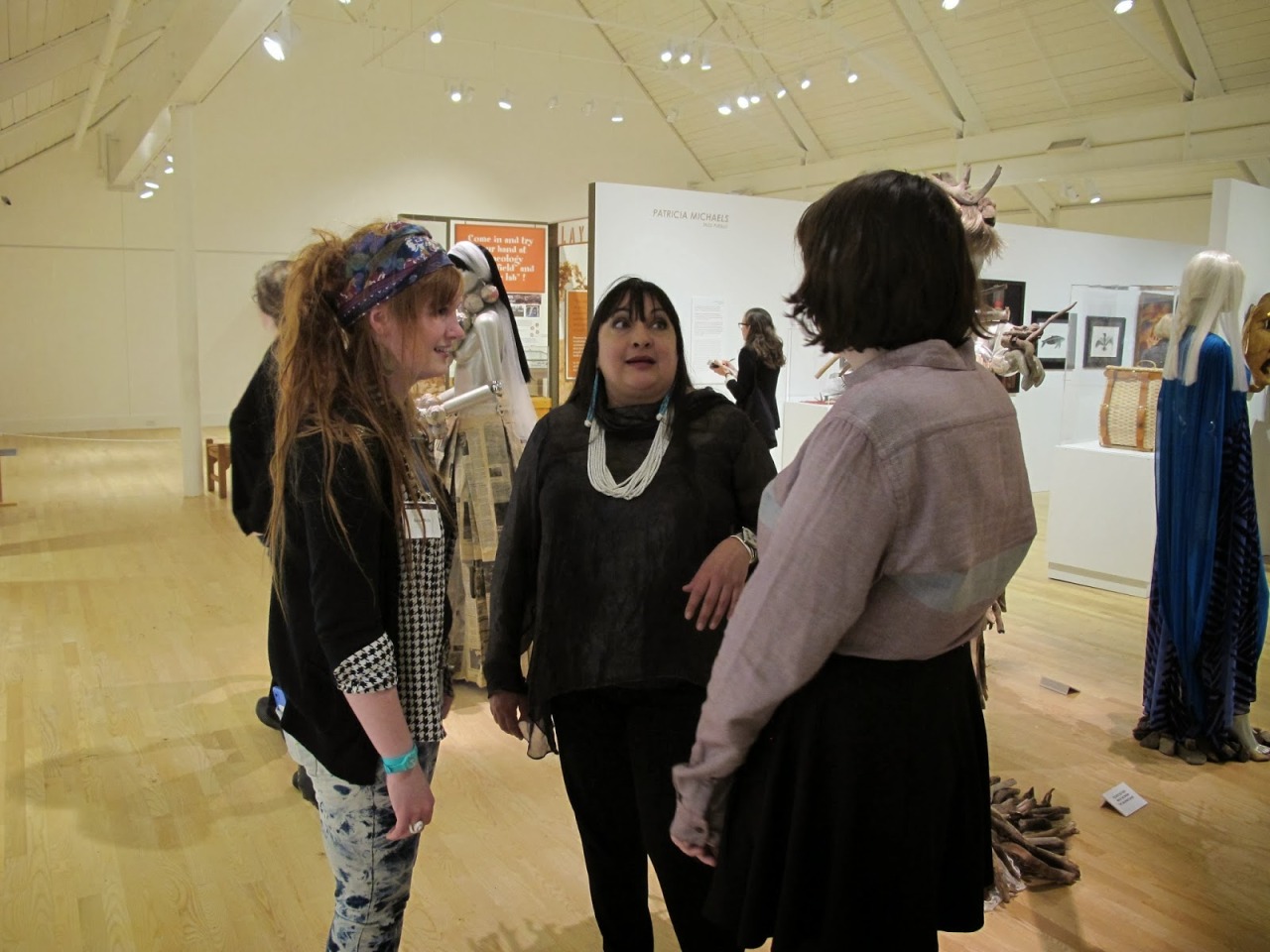
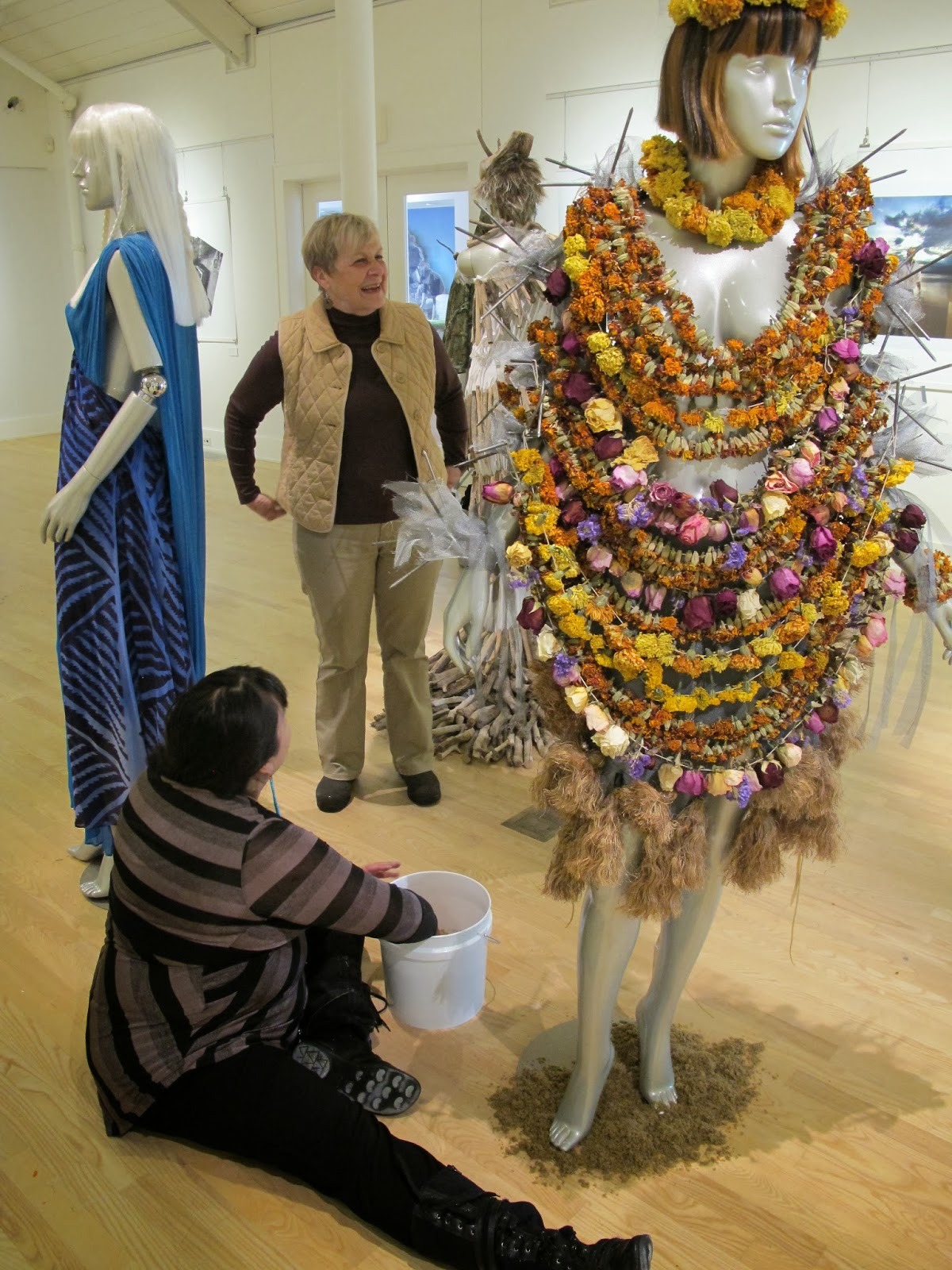
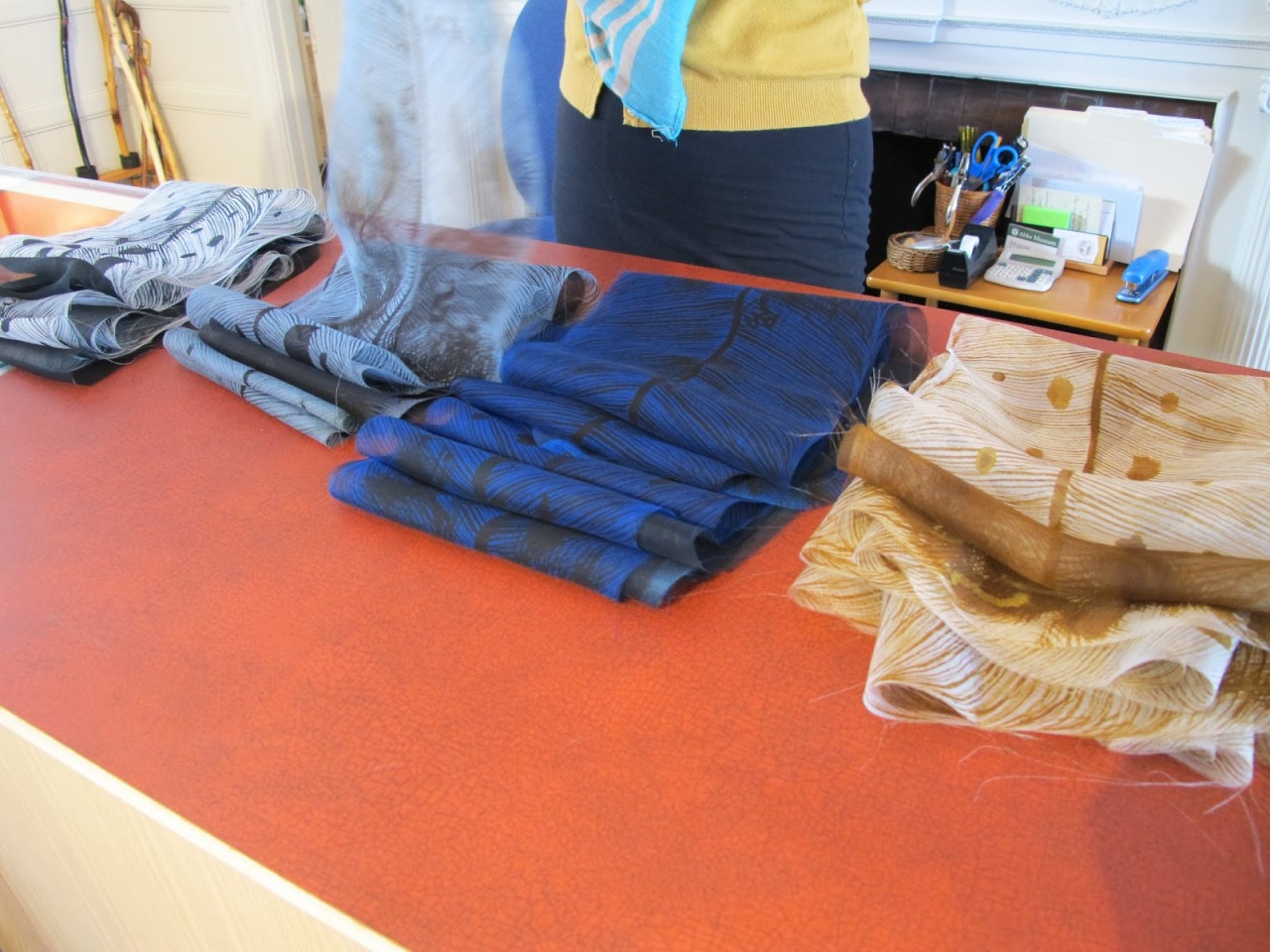
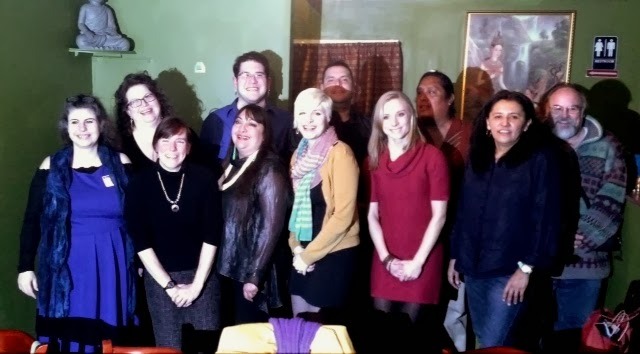
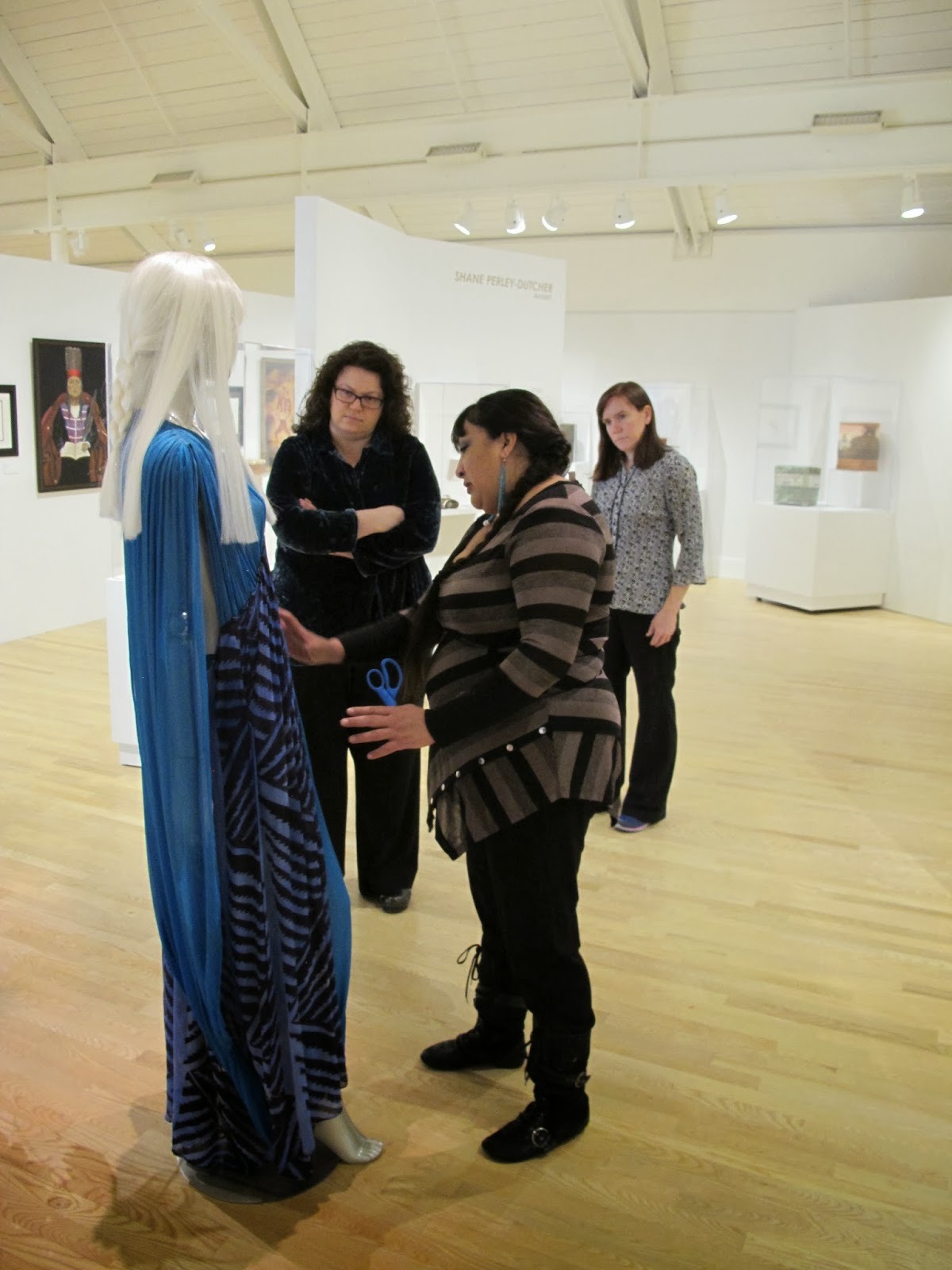
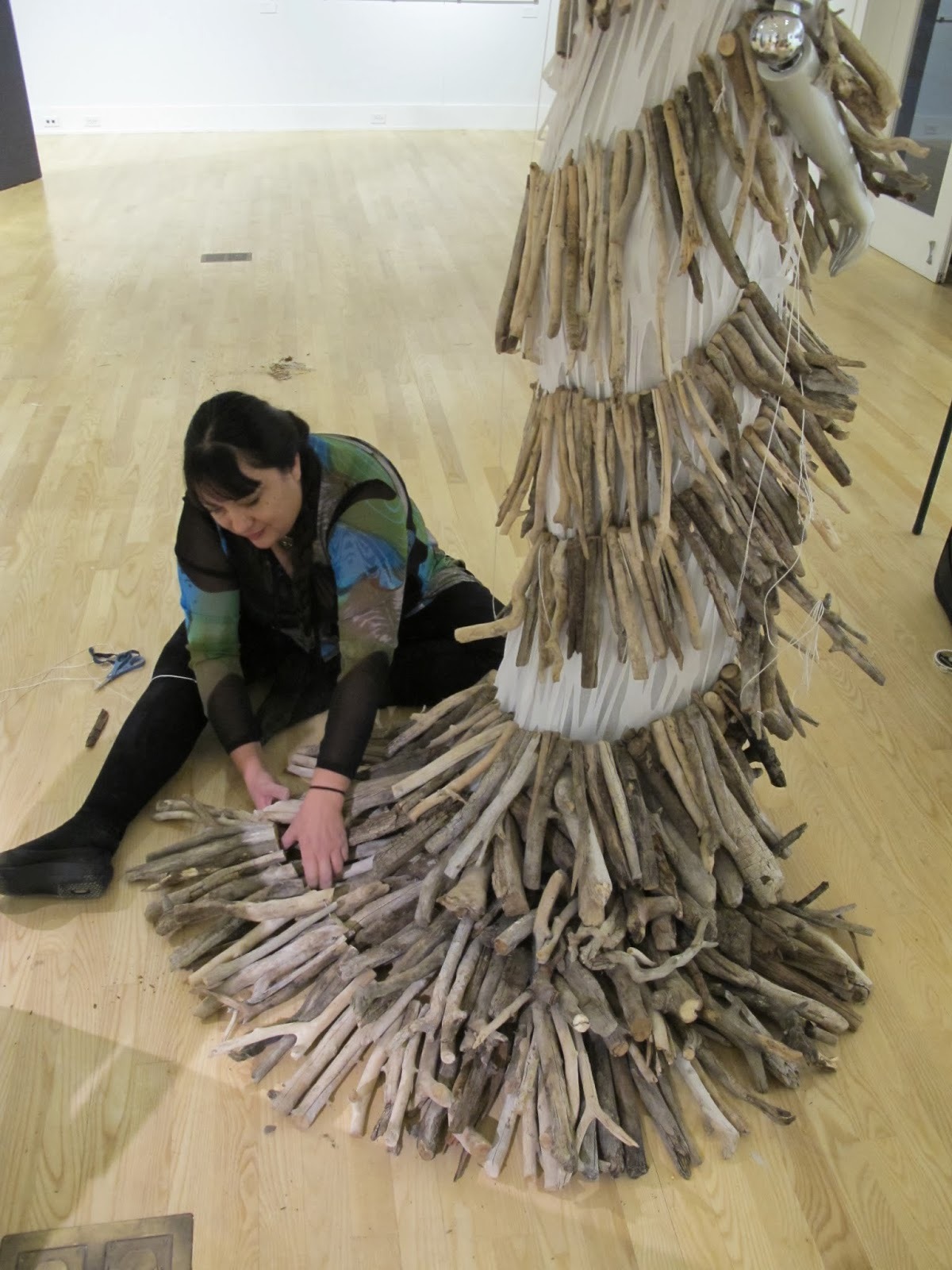
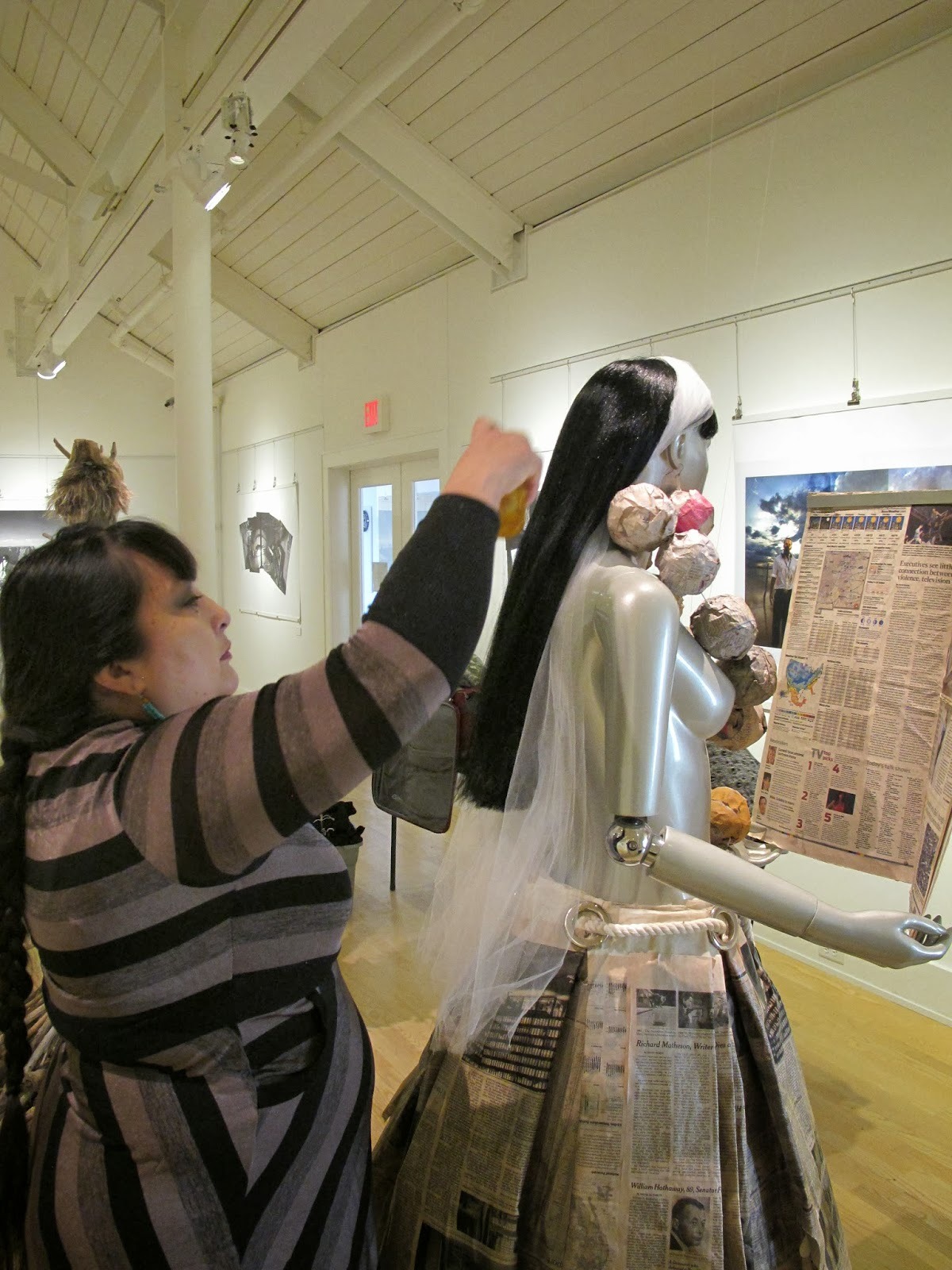
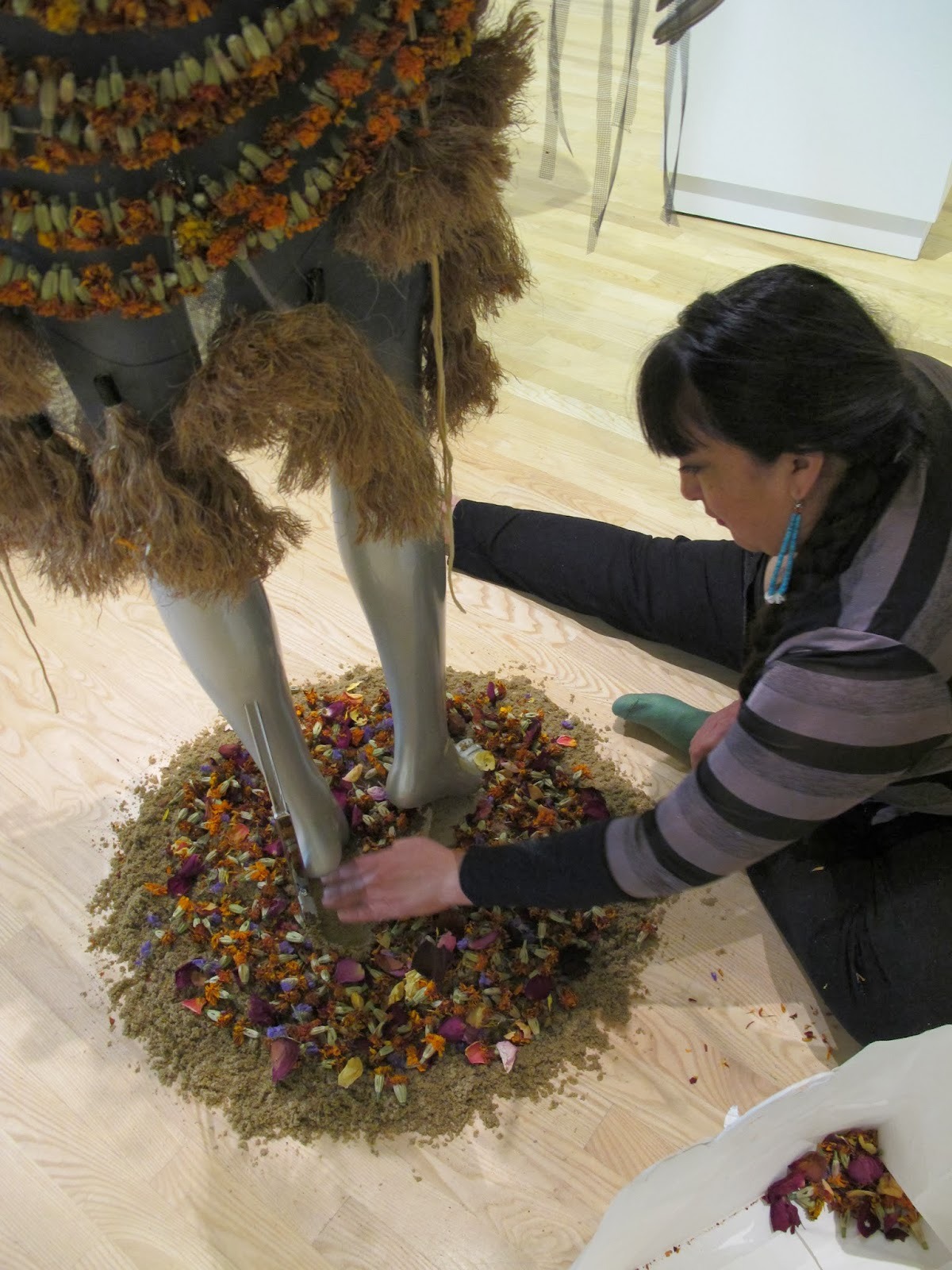
Last week, the Abbe Museum welcomed Patricia Michaels, fashion designer from Taos Pueblo and finalist on Project Runway, Season 11 to Bar Harbor. Patricia arrived on Wednesday as snow flurried down and instantly set to work installing her pieces for Twisted Path III. Her laughter and stories filled the exhibit hall and it was an honor to watch her work.
On Thursday, Patricia entertained attendees at the first Brown Bag Lunch with the many colorful stories from her life. Patricia and her companion, James, both joined us for the exhibit’s opening, during which she graciously spent a great deal of time in the exhibit with attendees, sharing insight on her four pieces.
We are grateful to both Patricia and James for making the trip all the way to Maine and we hope to welcome them back before too long! In the meanwhile, come see Patricia’s designs in the exhibit and peruse her scarves and other items in the Abbe Museum Shop.
Keep up with the Abbe's Collections
The Abbe Museum’s collections comprise more than 50,000 objects representing 10,000 years of Native American culture and history in Maine, including the present. And additions are made each year, under the expert supervision of Curator of Collections, Julia Clark. Each new piece in collections is photographed and shared on our Flickr page; a wonderful way to keep up with new acquisitions. These acquisitions are made possible through two funds, the Diane Kopec fund and the Friends of the Collection Fund. If you’d like to make a gift to one of these funds, please contact Director of Development, Hannah Whalen at hannah@abbemuseum.org or by calling 207-288-3519.
A few recent collections additions:
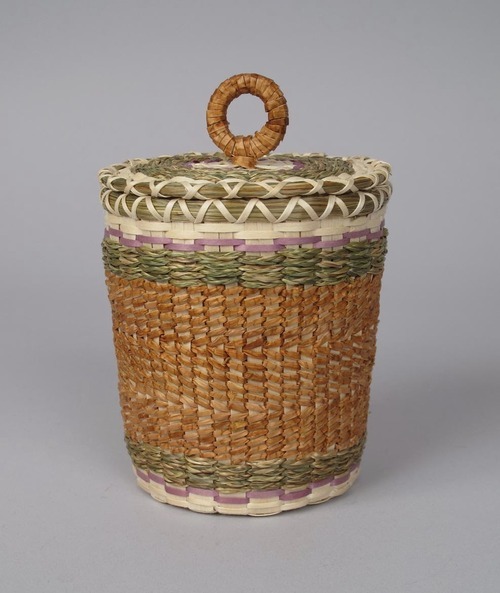
Basket by Theresa Secord, Penobscot
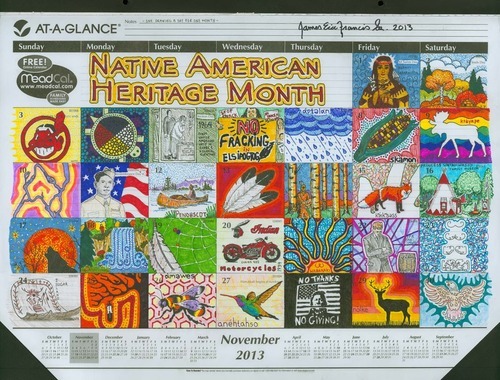
“One Drawing a Day for One Month,” desk calendar, James Eric Francis, Sr., Penobscot, November 2013
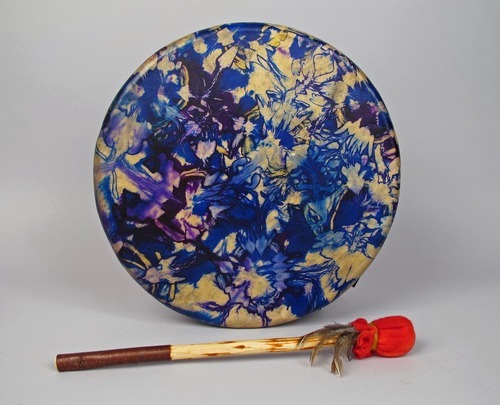
“One Drawing a Day for One Month,” desk calendar, James Eric Francis, Sr., Penobscot, November 2013
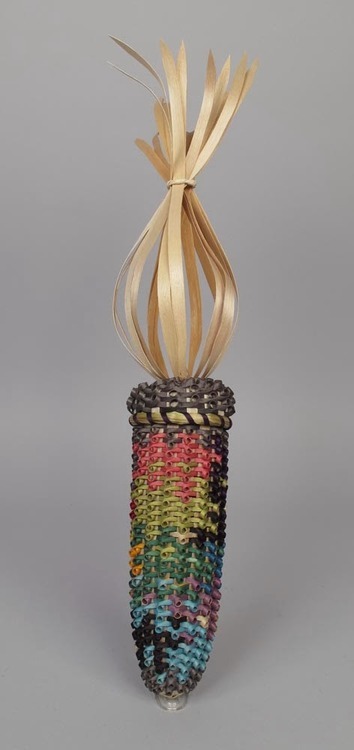
Corn basket by George Neptune, Passamaquoddy, 2013. Brown ash and sweetgrass
February Vacation Programming
February vacation is next week, and the Abbe invites you to come on down to the museum for a couple of programs specially designed for children by Museum Educator, George Neptune. All programs and museum admission are free and open to all! Please note that registration is required for the Wampum Belt workshop. See details below.
Tuesday, February 18, 10:00 am - 12:00 pm
Winter in the Dawnland: Wabanaki Stories and Craft Activity
In Wabanaki culture, the winter season was traditionally a time of quiet introspection and, most importantly, a time to share traditional stories. In this new program series designed for children, each month will feature a different traditional story from the Wabanaki tribes and a craft activity that relates to the story. This month, hear stories about Polawec and his magical wikuwam, the girl with the Invisible Husband, and the Pine Marten’s magical birchbark dish—then, make your own imitation birchbark basket or peaked cap to decorate and take home with you!
Wednesday, February 19, 10:00 am - 3:00 pm
Wampum of the Wabanaki: Children’s Wampum Belt workshop
In this workshop, designed for families, learn some of the ways the Wabanaki used wampum, or the polished shell of a quahog clam. Wampum belts were used to keep records—is there something in your life that you would like to commemorate? After learning about traditional Wabanaki wampum belts, design your own belt to be woven out of imitation shell beads to symbolize a life event that has significant meaning for you and your family.
Free and open to the public. Registration required, contact George at george@abbemuseum.org or call (207)288-3519.