Abbe Museum archaeological field school at Tranquility Farm

The Abbe Museum archaeological field school at Tranquility Farm was a great success again this year. A terrific group of 14 students and volunteers ranging in age from 18 to 70 spent the week carefully excavating five meter-square units, learning about good record keeping and artifact identification, and so much more.

Some of this year’s exciting finds included two large clusters of pottery, a large amount of animal bone, including fish, deer, moose, bear, and dog, and a small number of bone and stone tools. Students took their time as they encountered complicated stratigraphy representing several thousand years of periodic occupation of the site by the Wabanaki. Cultural features uncovered included a fire hearth and some kind of pit/trench feature, as well as stratigraphy we think is associated with the floor of a wigwam structure.

In addition to the field work, this year’s participants experienced the Abbe’s goal to present the first-person voice and perspective of Wabanaki people in all that we do. Evening and lunchtime programs included a presentation on the Machias Bay petroglyphs by Donald Soctomah, Passamaquoddy tribal historic preservation officer, a flint-knapping demonstration by Chris Sockalexis, Penobscot tribal historic preservation officer, a pottery analysis program with an emphasis on agency and indigenous archaeologies with Bonnie Newsom, Penobscot, and a tradition music performance by George Neptune, Abbe Museum educator and Passamaquoddy artist. Students also learned more about freshwater fish in Maine, the identification and analysis of animal bones, and archaeology being done in other parts of North America from other presenters.

This wonderful week of learning would not be possible without the leadership of Dr. Arthur Spiess, senior archaeologist for the state of Maine and Abbe trustee, and Dee Lustusky, long-time Abbe field school participant and stellar volunteer. We also were joined this year by one of our 2013 summer interns, Mark Agostini, who was able to assist folks new to archaeology and continue his own learning in the field. And of course we are incredibly thankful for the support and interest of the extended Tranquility Farm family, especially Boots Liddle, Mary Cox Golden, and Abbe board chair Ann Cox Halkett.

Friends of the Collection Fund purchases

Sarah Sockbeson

Jason Brown

Penobscot basketmaker Sarah Sockbeson is known for her fine, detailed weaving, and beautiful use of color in her fancy baskets. This basket was “an experiment,” she told us when we purchased it. She used iridescent lacquer, painted onto the prepared ash splints, to create a basket that sparkles in blues, purples, and golds in the light. One of the things we look for when selecting pieces for the Abbe’s permanent collection is innovation-basketmakers and other artists trying something new blended with tradition, often to outstanding results, as can be seen in this little masterpiece.

Jason Brown’s childhood passion of making and selling jewelry has developed into a full-blown passion for jewelry design. While attending the Institute of American Indian Arts in Santa Fe, NM, he learned the basics of metalsmithing and jewelry making. His path led him to a career in marketing, working with fine jewelry companies to promote and sell high end and designer items. His experience in the fine jewelry industry has blended with his passion to hand-create his own line of jewelry and from this, jbrown designs was created. This stunning necklace, titled Wabanaki Elegance is hand forged from copper and represents the fundamental element of Wabanaki design known as the double curve.

Both of these were museum purchases, made possible by the Friends of the Collection Fund.

Kci woliwon ciw miluwakonok-Many thanks for your gifts

When I think back to when I traveled to Bar Harbor as a child, I honestly cannot remember the first time I visited the Abbe Museum. I have many memories of visiting Sieur de Monts for demonstrations with my grandmother, and how the first thing I always did upon arrival was enter the museum and look to the right of the display case where my grandmother’s strawberry and acorn baskets were proudly displayed. Eventually, as collections grew and the downtown facility was built, one of my own baskets joined those of my grandmother’s behind the glass display.


George Neptune, courtesy Rogier van Bakel, Eager Eye Photography

The Abbe Museum has been collaborating with Wabanaki artists for generations to create quality programs and exhibits that feature Native voices as the primary perspectives. My great grandmother, Irene Dana, frequently worked with the Abbe in both demonstrations and workshop formats; her daughter and my grandmother, Molly Neptune Parker, continued that tradition. Now the Museum Educator, I am proud to be part of an organization that, before I was even born, invested in my future as a Master Basketmaker.

At this year’s Gathering Gala, I asked those in attendance to support the presence of Native voice as the primary voice at the Abbe Museum. With support from many Native artists and performances by the Burnurwurbskek Singers, this year’s Gala not only highlighted the Wabanaki perspective, but was perhaps our most successful Gala so far. Through the generosity of those that support our mission, we exceeded our fundraising goals.

By supporting the Abbe Museum, you are supporting a groundbreaking organization that not only works to preserve Wabanaki traditions for future generations, but allows Wabanaki people to decide what should be kept.

Through the Abbe Museum, we as Wabanaki people have an opportunity to tell a story that is so frequently forgotten, ignored, or pushed aside: Our story.

Kci woliwon ciw miluwakonok—Many thanks for your gifts.

George Neptune, Passamaquoddy
Museum Educator

Birchbark canoe donation


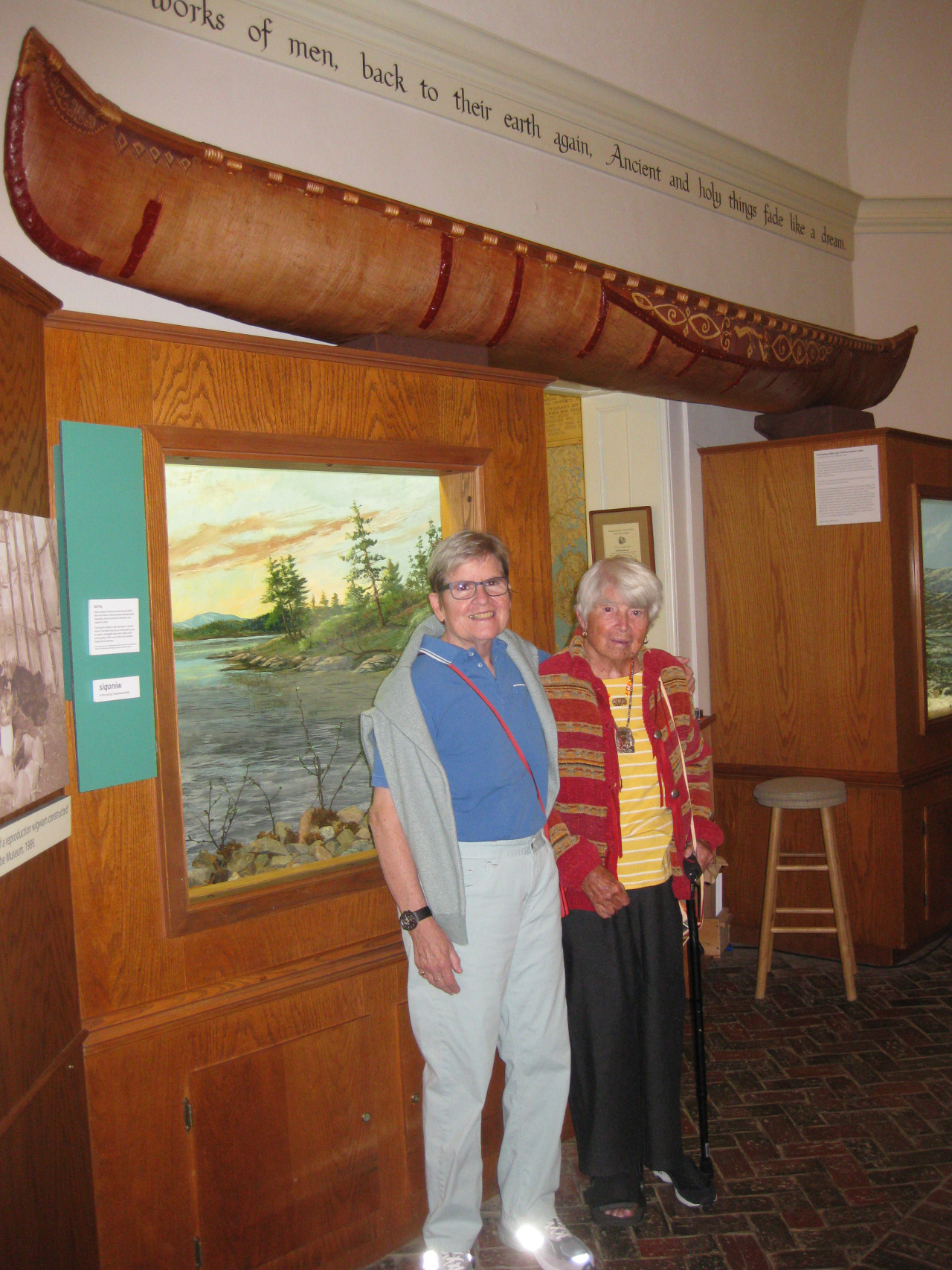
The Abbe Museum is excited to announce that this wonderful birchbark canoe has been donated to the museum. Marcy MacKinnon (left, with her mother Marcia MacKinnon) of Bar Harbor generously donated the traditional-style Abenaki canoe crafted by Abenaki artist Aaron York in 2004. The 16-foot canoe is now on display at the Abbe Museum at Sieur de Monts Spring. Stop by anytime to visit it, and other artifacts. Photo by Hannah Whalen.

Abbe Museum takes greening seriously

Link: Abbe Museum takes 'greening' seriously

Currently at the Abbe Museum


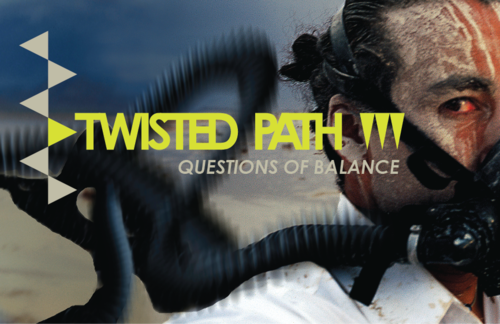
Twisted Path III: Questions of Balance, invites audiences to consider Native American concerns about the environment through the medium of contemporary art. Artists’ works express emotional and cultural reflections on the status of our planet—both comfort from a sense of place and connections to the land, and the conflicts inherent in cultural genocide and pollution of sacred spaces.

Many of Twisted Path III’s artists have work available for purchase in the Abbe Shop, such as raw silk, handpainted scarves by Patricia Michaels; silver jewelry by Shane Perley Dutcher; baskets by Gabriel Frey, and twine baskets by Vera Longtoe Sheehan.


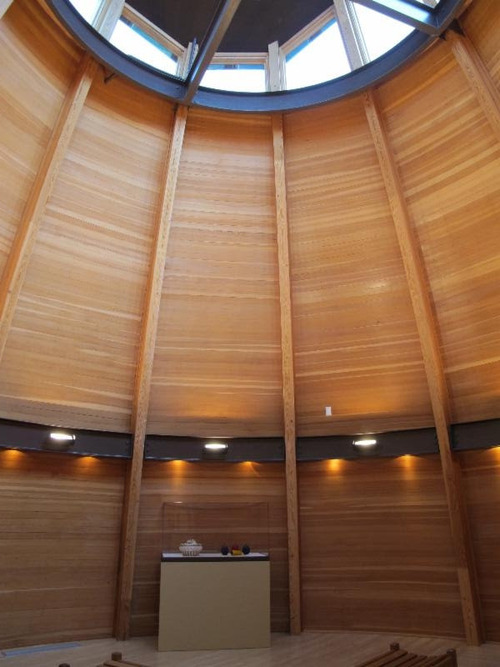
Four Directions of Wabanaki Basketry, located in our unique Circle of the Four Directions, offers a place of quiet reflection for visitors to the Museum.

The exhibit features a basket from each of the Wabanaki tribal communities: the eastern basket made by a Maliseet child, the southern baskets made by Passamaquoddy women, the western basket made by a Penobscot man, and the northern basket by a Micmac elder. Visitors will also hear the creation story of Koluskap and the Ash Tree in the Penobscot, Passamaquoddy/Maliseet, and Micmac languages.

Made possible through the generosity of John and Ruth Overton.


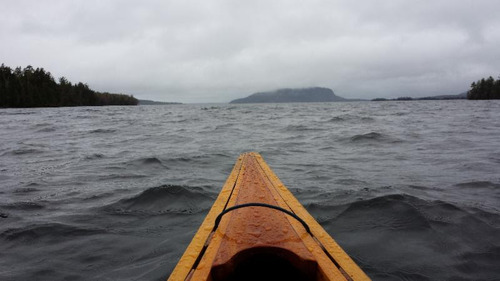
150th Thoreau-Wabanaki Anniversary Canoe Tour. During May 2014, an epic journey took place commemorating the travels of Henry David Thoreau and his Wabanaki Guide, Joe Polis, through the Maine Woods in July of 1857. The Abbe Museum is hosting a photo exhibit that describes a modern-day recreation of Thoreau and Polis’ journey. Curated by Chris Sockalexis, Penobscot Tribal Historic Preservation Officer.

Photo credit, Chris Sockalexis

An Abbe Museum collections mystery SOLVED!


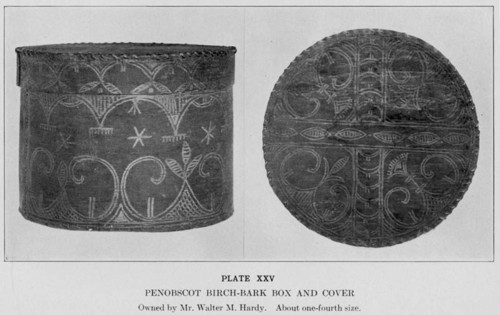
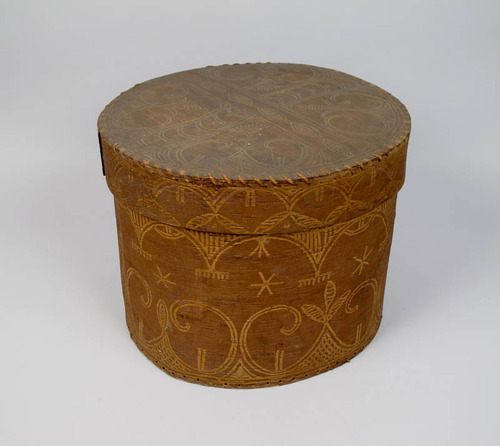
Way back in 1932, Maine folklorist Fannie Hardy Eckstorm published The Handicrafts of the Modern Indians of Maine, Abbe Museum Bulletin III (actually, in 1932 we were still the Lafayette National Park Museum, but that is another story…). In this book she included a photo of a stunning birchbark box from the collection of Walter M. Hardy (her brother).


Decades later in 2003 the Abbe reprinted Eckstorm’s book. We set out to get updated color photos of the pieces featured, but were unable to find this particular piece at the museums with similar collections we contacted. Another decade passed, and in 2012 we got an email from the Farnsworth Art Museum in Rockland, asking if we could tell them anything about a birchbark box they had in there collection, with a photo attached. It was the missing box! Which it turns out had not really been missing, but in the fine care of the Farnsworth since 1952. Another year passes, and we receive a letter from the Farnsworth, informing us that they had decided to deaccession the box (along with another, smaller but as lovely) and transfer them to the Abbe. In May 2014, the transfer happened, and the boxes are now in their new permanent home at the Abbe. The box is thought to be Penobscot, and dates to sometime before 1840.

Time Travel on the Maine Coast

Have you ever wanted to travel back in time, and get a glimpse of Wabanaki life on the coast of Maine thousands of years ago? The Abbe Museum Archaeological Field School gives you the opportunity to do just that. And there are still a few spots left for the 2014 program, so act now or miss out on a truly unique and inspiring experience.

Click here for details about the 2014 Archaeological Field School and a link to the registration form.
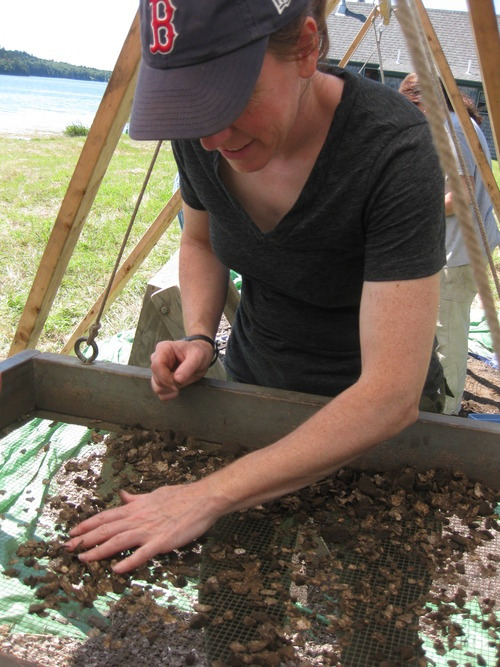


No matter your age or experience, the Field School offers the chance to get your hands dirty and uncover evidence of Wabanaki people living on Frenchman Bay over the past several thousand years. Participants learn how to carefully excavate a shell midden site, how to identify the types of artifacts that are uncovered, and how archaeologists analyze the results of excavation. But more than that, you will also spend time learning from Wabanaki scholars and cultural specialists about everything from how to make stone tools, to traditional music, and the importance of language preservation. The Abbe Museum also places a strong emphasis on bringing multiple ways of knowing to understanding Wabanaki history, with archaeology complimented by traditional knowledge, oral traditions, language, and the natural sciences.
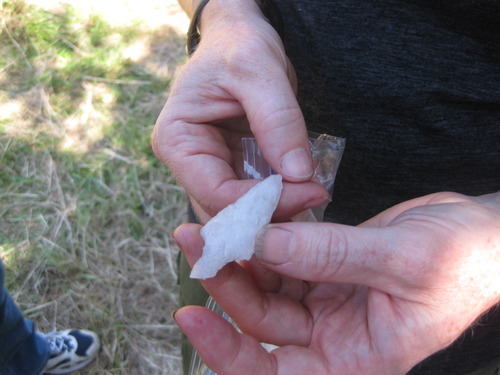


The Abbe Museum’s archaeology field School gave me access to Native and non-Native perspectives on past Indigenous settlements and lifeways, enriched by hands-on learning during a week-long excavation on the coast of Maine. I learned more during my week in the field with the Abbe Museum than I could have imagined possible! - Ani St. Amand, 2013 Field School Participant

As a participant in the Field School, you will also contribute to the understanding of a type of archaeological site that is seriously threatened by climate change and rising sea levels. Coastal shell middens like the site excavated during the Field School, may be destroyed by a combination of sea level rise and increasingly powerful storms. Your work is part of an effort to salvage the information contained within these sites before they are gone.


The 2014 Archaeological Field School returns to the Tranquility Farm Site in Gouldsboro, Maine. The site was first excavated by a crew from the Abbe Museum during the 1930s. While these early archaeologists collected lots and lots of cool artifacts, they were not using very advanced excavation techniques, and apparently keeping very few records. This means that the detailed information that could have been gained from a large area of the site was lost, but we do have an idea of what went on at Tranquility Farm based on the types of artifacts recovered.
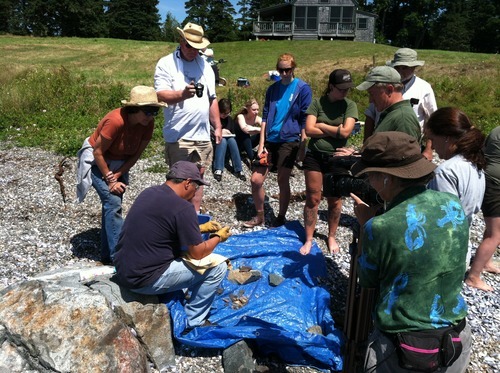


In the 1990s, the Abbe field school returned to Tranquility Farm, this time applying the great advances in archaeology made during the intervening decades. A small area of the site was carefully excavated. Evidence of wigwams on the site was uncovered, as distinct patterns in the color, texture and contents of the soil layers. Animal bones left over from food production and burned plant remains from fire hearths were used to begin to reconstruct the diet and subsistence activities of the occupants of the site. Radiocarbon dates on charcoal from fire hearths provided a date of approximately 1,200 years ago, and pottery decorations suggest that the site was used over a period of more than 1000 years. And a couple of small glass beads, which the Wabanaki would have acquired through trade with Europeans, tell us that Native people were living at Tranquility Farm when Europeans first arrived in the region.

In 2010, the Field School again returned to Tranquility Farm, and we have been back every summer since, making gradual progress with one week of excavation each year. The current excavations are looking at an area adjacent to the 1990s excavations. Archaeologists have found in the last couple of decades that the area around the edges of many shell middens on the coast of Maine provide the most detailed insight into the lives of the Wabanaki occupants over the millennia. Relatively undisturbed by the destructive early 20th century digs, the perimeters show evidence of houses, fire pits, food storage pits, and other remnants of daily life. Uncovering and recording these complex features in the soil takes time and patience, but is very rewarding.

Some of our exciting finds over the past few years have included:
  • Pottery fragments with decorations that suggest long-term use of the site.

  • Stone tools made from both locally available stones and from material that would have been traded from as far away as Nova Scotia.

  • Bone harpoon heads used to spear large fish, seals, or even small whales.

  • Soil patterns including post holes indicating at least two different structures, and several fire hearths.

  • Animal bones including bear, moose, deer, beaver, and a wide range of fish and birds, and lots and lots of clams.
If you have a fascination with archaeology, and are inspired to learn more about Wabanaki history going back thousands of years, the Archaeological Field School is a terrific way to have a firsthand experience, while contributing to our knowledge. From the excitement of uncovering a stunning artifact, to the satisfaction that comes from oh-so-carefully uncovering the traces of a wigwam floor, to learning how to tell the bones of a fish, or a bird, or a bear, apart, and hearing the Passamaquoddy language and songs return to this place after several centuries of absence, the field school is a participatory learning experience you will not want to miss!

Ever wonder how a river, mountain, or town got its name?


Wabanaki Place: Language and Landscape

Join us on Sunday, June 1, 6 - 8 PM to learn about Mount Desert Island and Downeast regional names from the perspective of its earliest inhabitants. James E. Francis, Penobscot Nation’s Cultural and Historic Preservation director and member of the USET Culture & Heritage Committee, will share stories about the origin and meaning of geographic place names from a Wabanaki perspective.

Place names are part of language preservation which is an important part of Penobscot culture. Recently, the Penobscot Nation was awarded a $339,000 grant from the National Science Foundation to the Folk Life Center which will provide resources and linguistic training to the Penobscot Nation’s language revitalization efforts and the publication of a comprehensive dictionary.

As part of the United South and Eastern Tribes (USET) 2014 Semi-Annual Meeting in Bar Harbor, this is a unique opportunity to learn more about Native cultural place and belonging. As a special addition, the presentation will be accompanied by a performance by the Alamoosic Drummers.

Today, USET has grown to become an inter-tribal organization with 26 federally-recognized Tribal Nation members. While defined as a regional organization, USET has developed into a nationally prominent and respected organization due to its broad policy platform and influence
on the most important and critical issues facing all of Indian Country. Supporting all of its issue specific advocacy is a foundation built upon the goals of promoting and protecting the inherent sovereignty rights of all Tribal Nations, pursuing opportunities that enhance Tribal Nation rebuilding, and working to ensure that the United States upholds its sacred trust responsibilities to Indian Country.

USET represents and promotes the interests of its member Tribes through conferences, associations, work groups, partnerships, etc. Additionally, it serves as a forum for the exchange of ideas, works on behalf of its membership to create an improved quality of life for American Indians through increased Health, Education, Social Services, Housing, Economic Development, Transportation, and Justice opportunities, and works to promote Indian leadership to ensure Indian Country’s continued growth, development, and prosperity as Tribal Nations.

The USET Conference will meet in Bar Harbor from June 2-4, 2014.

Sunday, June 1, 2014

6:00-8:00 pm

Abbe Museum, Downtown

Contemporary Issues Panel: Kci Kikuwosson Skitkomiq: Our Mother, the Earth

Please join us on May 20 at 6:00 PM for a panel discussion featuring Wabanaki tribal members. Wabanaki people are among the very few populations of indigenous peoples that have not been forced off of their traditional homelands. The Wabanaki have had an uninterrupted presence in Maine for over 12,000 years. A representative from each of the five Wabanaki communities will form the panel, providing museum visitors with the unique opportunity to receive first-hand information on the modern issues that Wabanaki people face. As a compliment toTwisted Path III, this panel will focus on issues surrounding sacred spaces, land ownership, land conservation and restoration, and resource management within the four tribes in Maine.


Free and open to the public.
Tuesday, May 20
6:00 PM - 8:00 PM
At the Abbe Museum Downtown

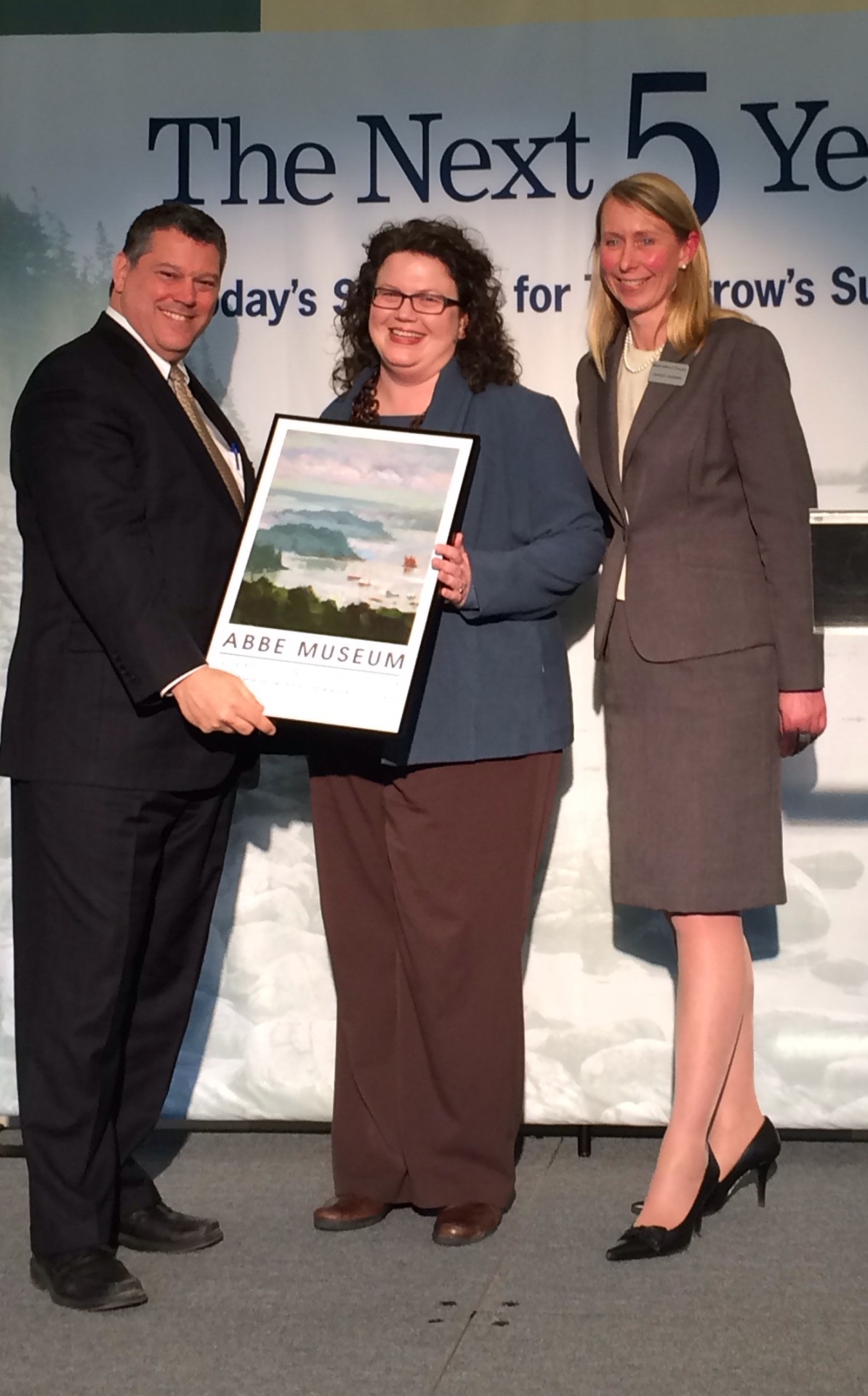
Abbe receives the 2014 Leadership & Growth Award


In March, at the 2014 Maine Governor’s Conference on Tourism, the Abbe Museum received the Maine Office of Tourism’s (MOT) Leadership and Growth Award. This is an annual award given out by the MOT. The Abbe was one of seven recipients who received various awards for their contributions to raise the visibility of Maine as a tourist destination and by adding to the quality of life in our state. Cinnamon and Hannah attended the conference along with 450 prominent members of Maine’s tourism industry. The conference’s theme was, “The Next 5 Years: Today’s Strategy for Tomorrow’s Success.”

Children's Mandala Workshop with Twisted Path III Artist Gabriel Frey

Saturday May 3, Noon - 3:00 PM


Mandala’s are found in cultures across the globe, and typically feature a circular motif that is filled with symbolism meant to invoke specific imagery during meditation. In this workshop, Gabriel Frey, Passamaquoddy, will not only speak about the mandala he created using Wabanaki symbolism for the Twisted Path III: Questions of Balance exhibit, but guide students through the process of creating their own mandala.

Free and open to the public, registration required. All ages welcome, but priority is given to children. Contact Museum Educator George Neptune to make a reservation, george@abbemuseum.org or (207)288-3519.
Location: Abbe Museum Downtown

Welcome Eli!

The Abbe is thrilled to welcome Eli Mellen to the staff as our new Office and Database Manager. Eli grew up in Washington D.C. and moved to Mount Desert Island to attend the College of the Atlantic, where he received both his Bachelors and Masters degrees in Human Ecology. His senior and graduate theses both explored the design of systems that cultivate and encourage connection and communication with a focus on building community. He bring experience working on MDI by way of College of the Atlantic, the Naturalist’s Notebook and A&B Naturals and also works as a freelance designer. Eli was recently named a Treehouse Fellow and presented at TEDx Dirigo as a part of this fellowship.


“I’m thrilled to be part of the Abbe’s team, I love community and sharing. Working at the Abbe, I’ll be able to help share new learning about the Wabanaki community and its culture with the others.”


Eli will be taking over many of Johannah’s former responsibilities along with some of John Brown’s as he shapes this new position and offers his many talents and areas of expertise to the museum. Welcome Eli!

High School Student Completes Independent Study at the Abbe

For the past three weeks, the Abbe welcomed George Stevens Academy junior, Leah Tallent, who completed an independent study at the museum. Leah had expressed interest in conducting her independent study at the museum with the goal of learning more about the behind-the-scenes operation of museums. Over the course of her work here, Leah catalogued 18 boxes of books in our library and assisted the Curator of Education with the development of a new staff training binder. She was invaluable to us and we are sorry to see her go! Leah joined a long line of high school students who have turned to the Abbe as a resource for independent studies. For more information on such opportunities, please contact Curator of Education, Jennifer Pictou, at jennifer@abbemuseum.org

2014 Winter Gathering

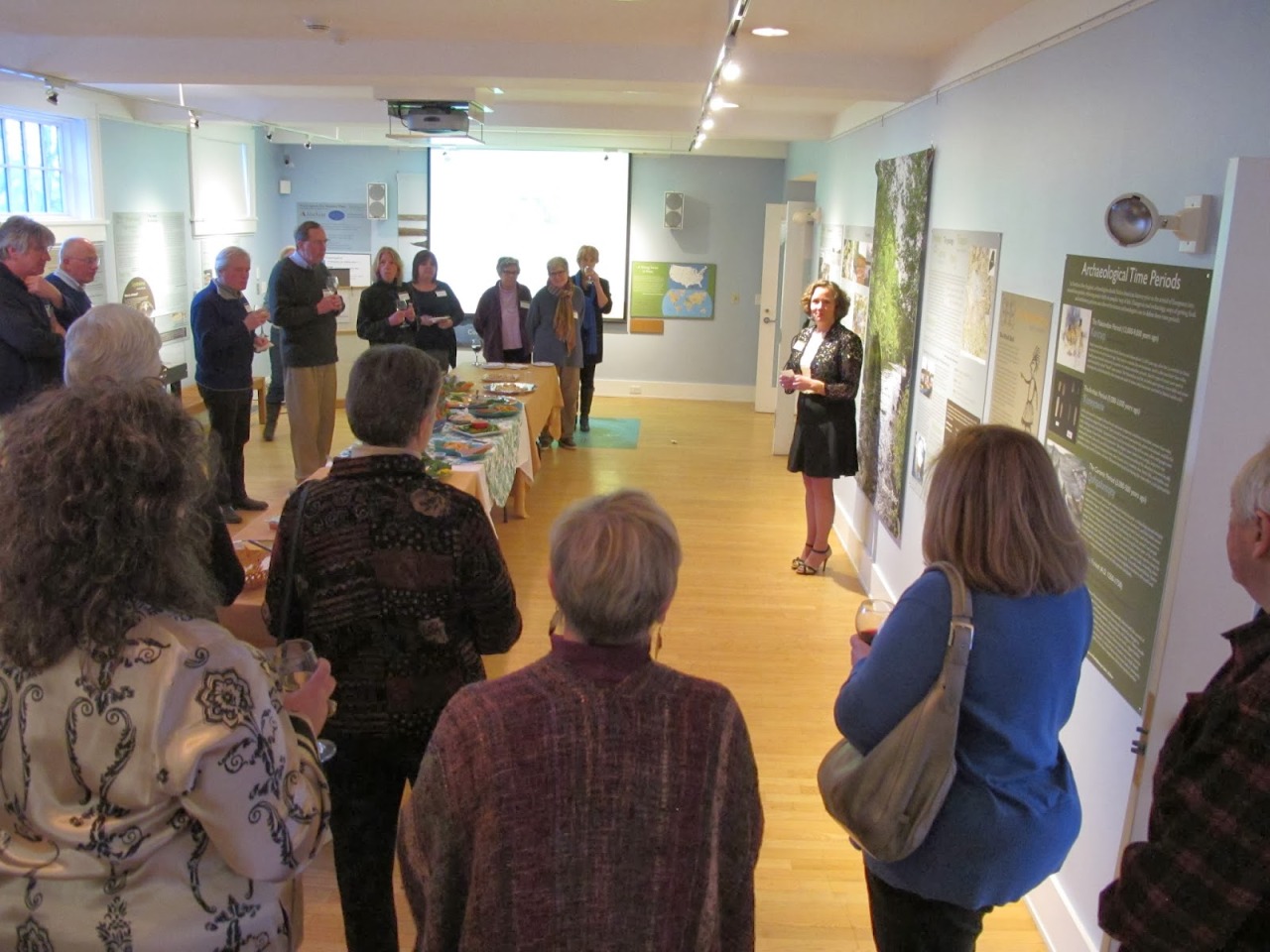
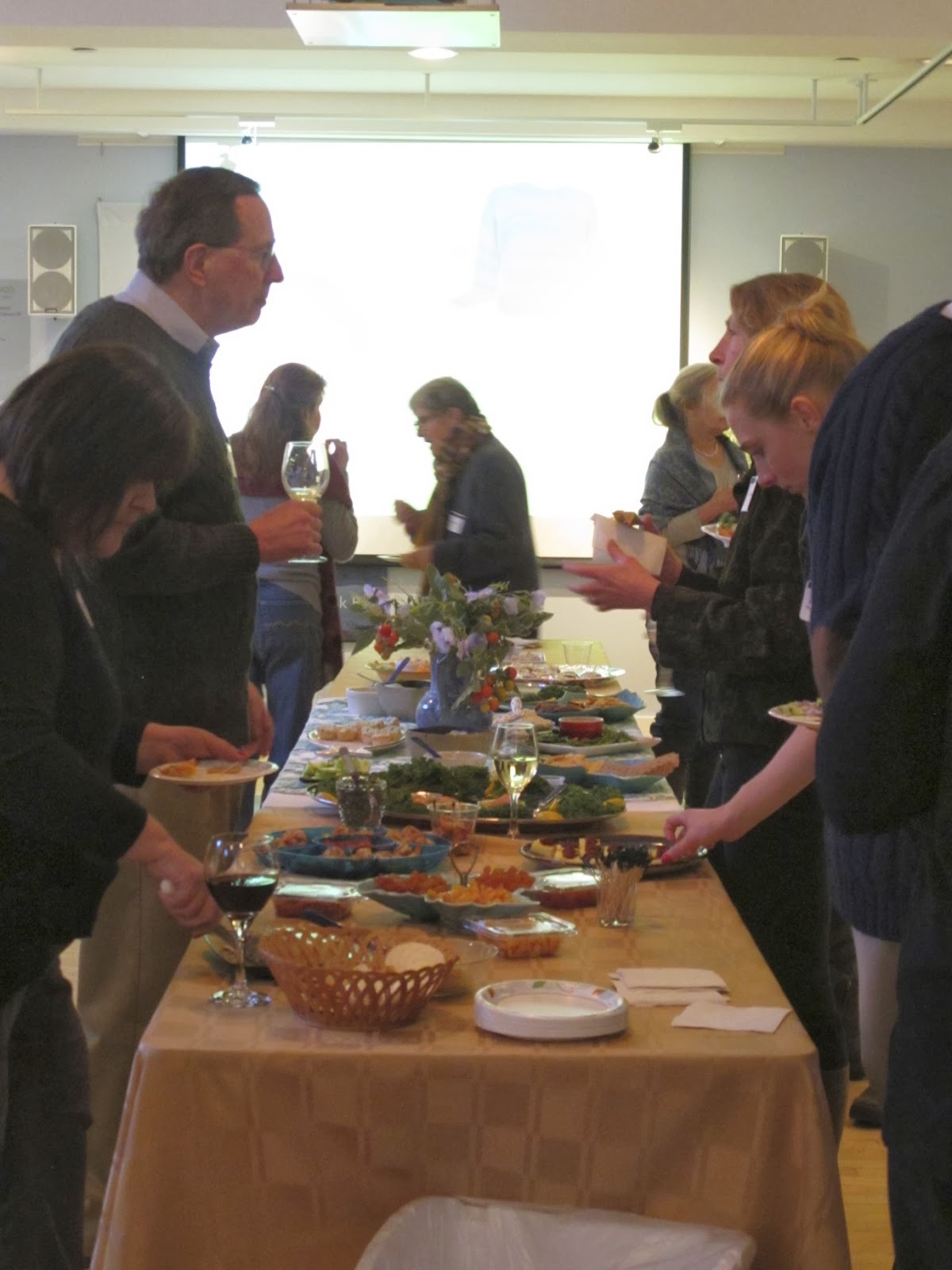
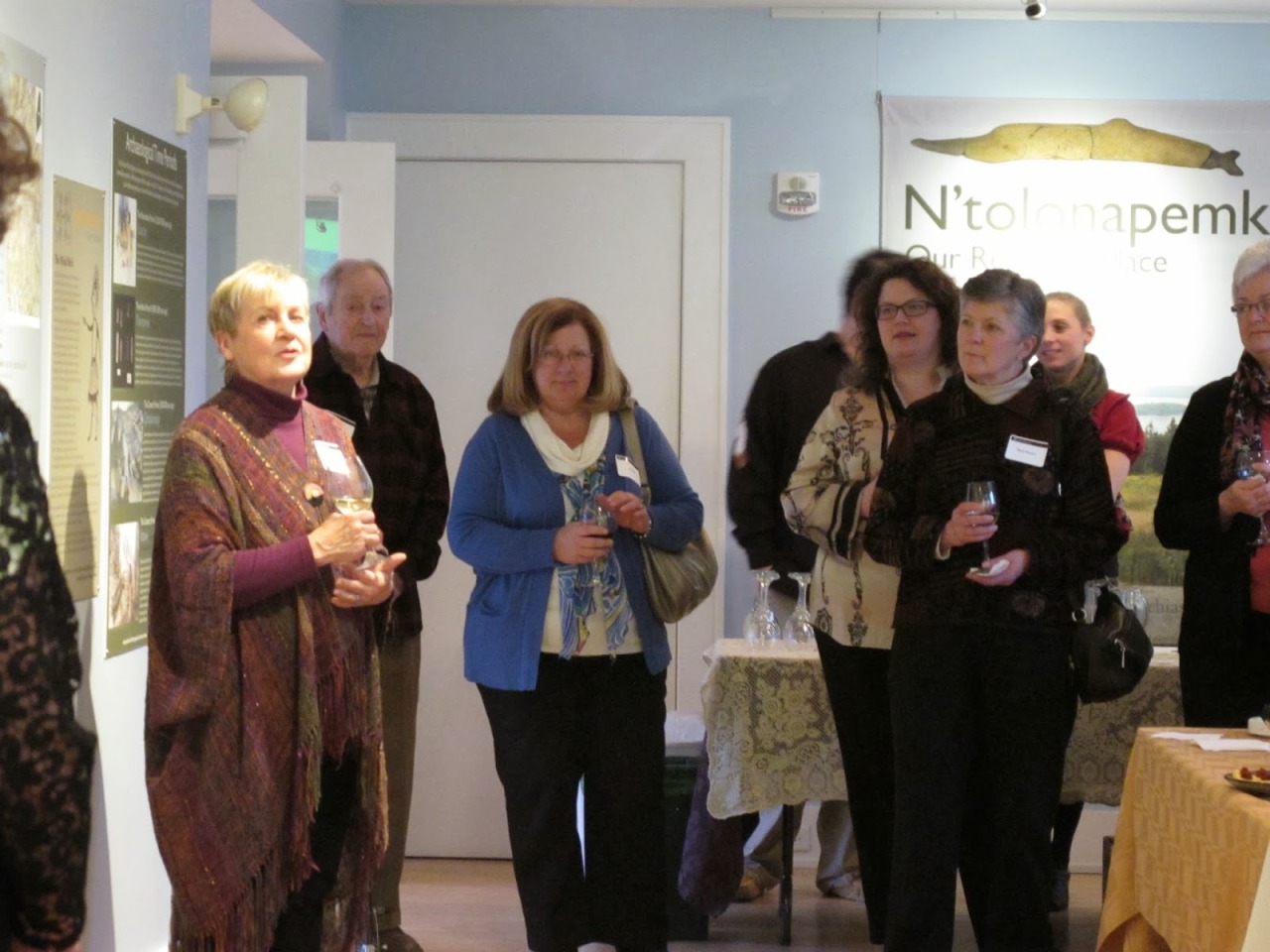
The fourth annual Winter Gathering was held on February 28 at the Abbe. A number of our Gathering Gala guests, volunteers, sponsors and auction donors joined us for savory treats made by members of the gala committee, as well as an assortment of beautiful smoked seafood donated by Sullivan Harbor Farm. This event is a way for us to thank our generous Gala supporters in the “off-season” and enjoy some one on one conversations in a relaxed atmosphere. Guests also had a chance to enjoy the new exhibit, Twisted Path III and to see the new lighting fixture changes in our Main Gallery that are a result of the Greening the Abbe Initiative, which was launched during our first paddle raise at the 2012 Gala.

The 2014 Gathering Gala will be held on Wednesday, July 30, 2014. Please SAVE THE DATE and plan to join us for another fabulous event to support Abbe exhibits, projects and programs.

March Brown Bag Lunch with Gabe Frey


Twisted Path III is the third incarnation in a series of exhibits that feature contemporary Native American art. This year’s exhibit theme, Questions of Balance, focuses on indigenous perspectives on environmental impact and conservation, and invites visitors to consider Native American concerns about the environment through the lens of contemporary art. Gabriel Frey works in many mediums, focusing on painting/drawing and basketry. Known for his superior quality utility baskets, Gabriel strives to create traditional, functional pieces with a decorative, contemporary twist. This program is free and open to the public.


Grandfather (oil on canvas painting) and pack basket by Gabe Frey, both part of Twisted Path III