
Introducing the Abbe Membership Lounge!
 John Brown, Director of Finance & Administration, has been leading an exciting project over the past few months. As we wrap up the final stages, we would like to take this opportunity to introduce you to the Abbe Membership Lounge!
Here is JB’s latest update on the Lounge:
The Membership Lounge is opening soon; we are currently obtaining furniture. The lounge is adjacent to the shop and offers members, volunteers, and friends a place to meet or relax. There is free WiFi available and complimentary coffee and tea. We will be adding display space for selected items from the Abbe's permanent collection. Books and videos will be available to enjoy while at the Museum. Members may reserve the room in advance for a quiet meeting place in downtown Bar Harbor. We value our dedicated members and hope this will provide another benefit for their vital support.
We hope that members of the Abbe Community will enjoy this new addition to the Abbe Museum. Please stop by, enjoy the new Lounge, and let us know what you think! Please check in with Guest Services for a copy of the Room Use Guidelines. The Lounge is open to all Abbe Members, Staff, Volunteers, and special guests of the Abbe Museum, which include the guests of Members, Staff, and Volunteers. The Lounge is available for use during regular open hours.
Image 1: Sneak peek of the Abbe Membership Lounge, which is still awaiting furniture, books, and other finishing touches.
College of the Atlantic Interns Enhance Layers of Time Exhibit
The winter term for College of the Atlantic brought the Abbe Museum two talented interns, Rachel Heasly and Zach Whalen. Rachel worked with me in Education where she conducted a survey of similar sized and focused museums and compared the educational offerings and fees to what the Abbe has to offer. She then conducted a similar survey of Maine museums, so we could better understand where the Abbe stands in relation to other museums in the region. This was the first step in a multiple year process of evaluating, revising, and releasing a new series of programs in connection with the change to National Common Core education standards, which will be happening in Maine over the next several years.
Zach worked with Julia Clark, Curator of Collections, processing archaeological artifacts from field school. Zach also helped to photograph objects and turned out to be very helpful on several projects with his knowledge of computer graphic programs.
Zach and Rachel worked together to bring the Layers of Time exhibit up-to-date. The exhibit focuses on various archaeological excavations the Abbe has conducted since our founding in 1928, looking at the science of archaeology, what questions were being researched, and summarizing key discoveries from each location. The exhibit ended with an excavation from the Tranquility Farm site dating from 1995-1998, however the Abbe has continued to lead annual field school excavations.
Zach and Rachel worked with data recorded during the 2008-2009 field school excavation of the Ewing-Bragdon site, summarizing what questions the archaeologists were looking to answer, what was found, and highlighting certain key features and artifacts discovered. Zach’s skills and experience with graphic software allowed him to create exhibit panels that match the older panels in design and font, so the new panels are seamless with the older panels. Zach was also able to create a legend explaining the stratigraphy of a possible trash pit uncovered. Rachel helped to write the labels, and both chose the objects they wanted to put on display.
Through this project, the interns learned how to write an exhibit label, how to work with objects, and Julia taught them how to print, mount, and cut out the labels. Zach and Rachel both blogged about their experiences working with the Abbe Museum, which can be found in the blog archives from January, February, and March.
Image 1: Pot sherds from the Ewing-Bragdon site, photo taken by Zach Whalen.
Celebrating 10 Years Downtown Continues this April as we celebrate Community!

Throughout April the Abbe Museum has focused on community, and we’d like to thank all of you who are a special part of that community. As you’ve read in the articles above, the Abbe Museum has been very busy. I want to take a moment to celebrate and highlight some of the community-orientated activities the Abbe has been able to provide over the past month.
On April 9th, David Moses Bridges hosted a birch bark workshop for children in which he taught children aged 6-12 how to etch birch bark using traditional Passamaquoddy designs, while sharing traditional Passamaquoddy stories and talking about the Passamaquoddy language. The work shop was a huge success and was attended by 58 children! Thank you to David for sharing such a wonderful experience with these young learners.
For the past three months Raney Bench, Curator of Education has been hosting a brown bag lunch series. The series of discussions complements the Abbe’s groundbreaking exhibit, Headline News: Wabanaki Sovereignty in the 21st Century which will be on exhibit for about another month—so make sure to check it out if you haven’t done so already. Afterward, it will be available as an online exhibit. The brown bag lunch series provided a casual opportunity to discuss sovereignty in relation to the eight themes presented in Headline News: language, identity, hunting and fishing rights, gaming, environmental management, the emerald ash borer beetle, veterans, and international borders. The series has been a great success, with many interested participants at each lunch. For any one who has missed the first three lectures in the series, I encourage you to attend the concluding presentation this Thursday evening, April 21st from 7:00-9:00 for a PowerPoint and discussion of Federal Indian Policy in which Raney will summarize several key treaties, acts of congress, court cases, and federal laws that define Indian policy today.
Other community events hosted this past month included the popular March on Mt. Desert Community Progressive Dinner, attended by over 100 members of the MDI community, and the popular teacher workshops that Raney Bench has led throughout this winter. We have also welcomed a number of school groups, and it is wonderful to give those children the opportunity to learn at the Abbe Museum. And later this month you can find Raney Bench, Curator of Education, and Zach Whalen, COA Intern, guiding fun and interactive activities as part of Jr. Ranger Day.
On April 21st, the 2011 Waponahki Student Art Show will open in the Abbe Museum’s Community Gallery. The annual Waponahki Student Art Show is a collaboration between Maine Indian Education and the Abbe Museum to celebrate the exceptional talent of the young artists growing up in the Penobscot and Passamaquoddy communities of Indian Island, Pleasant Point, and Indian Township. A huge thank you goes to K.A. McDonald Picture Framing in Bar Harbor for donating the framing of these lovely artworks, which will return home with the young artists after delighting visitors for the next few months.
Next month and throughout the summer there are a number of exciting events coming up—please visit our calendar for the complete and ever-growing list. Coming up in May is the Maine Archaeological Society Spring Meeting. The meeting is free and open to the public and all are encouraged to attend the lectures. For all those of you interested in archaeology, here is the schedule for the meeting:
10:00-11:00 Coffee and Displays, Galleries & Museum Shop open
11:00 The Archaeology of Northern Norway and the Multi-room House Project
Colin Amundsen, Independent Researcher in archaeology & zooarchaeology
11:30 Cultural Heritage Resources in Acadia National Park,
Rebecca Cole-Will, Cultural Resources Program Manager, ANP
noon-1:00 Lunch Break, Galleries & Museum Shop open
1:15 MAS business announcements
1:30 Recent Archaeology at the Abbe Museum
Julia Clark, Curator of Collections, Abbe Museum
Also in May is a fancy basket workshop led by Sarah Sockbeson. Make sure you reserve a spot soon if you are interested in attending.
Throughout May we will be focusing on the Abbe Collections as part of our celebration of 10 Years Downtown, and so we’ll be giving away a free copy of Handicrafts of the Modern Indians of Maine by Fanny Hardy Eckstrom with every purchase of $50 or more. If you’d like to revisit our monthly themes for 2011, you can find them right here.
We hope you enjoy a lovely spring, and we look forward to seeing you soon at the Abbe Museum!
Image 1: A selection of Abbe Museum Logo Items. All merchandise sporting the Abbe Museum logo is 25% OFF throughout April.
The Gabriel Women: A Family Tradition
By Julia Clark, Curator of Collections
The Passamaquoddy communities of eastern Maine are the home of some of the finest Wabanaki basketmakers, and the tradition is often carried on by women in extended families. Six women of the Mitchell and Gabriel families from Indian Township have shared and passed along these traditions. Perhaps the best known basketmaker in the family was Mary Mitchell Gabriel (1908-2004), who was first Maine Native American to receive the prestigious National Heritage Fellowship from the National Endowment for the Arts, in 1994. The Abbe Museum has more than 30 of Mary’s baskets in out permanent collection.

Mary Gabriel was born in 1908 on the Passamaquoddy Reservation in Indian Township, and learned to make baskets at age seven from her grandmother. The family tradition of basketmaking also was passed along to Mary Gabriel’s sisters Doris Chapman and the late Delia Mitchell (1916-2009).
Mrs. Gabriel taught h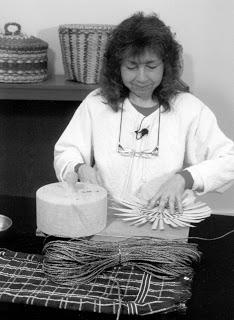
Not only have these talented women shared the tradition of ash and sweetgrass basketmaking with sisters and daughters, five of the women served as masters in the Maine Arts Commission Traditional Arts Apprenticeship program, teaching many more new apprentice basketmakers the art form. Mary’s daughter Deborah worked with the Abbe Museum to make a film documenting the process of making an ash and sweetgrass sewing basket from beginning to end. The legacy of this family of remarkable women will be felt for a long time to come in the Wabanaki basketmaking community.
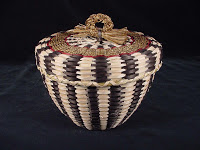
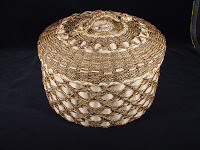
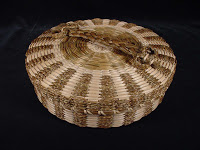


Deborah Gabriel Brooks’s web site:
http://sweetgrassbasketry.org/index.html
Two films about the Gabriel women and basketmaking:
“Basket Weaving: Deborah Gabriel Brooks” was produced for the Abbe by Dobbs Productions of Bar Harbor.
“Gabriel Women: Passamaquoddy Basketmakers” focuses on the work of Mary, Sylvia and Clare Gabriel. It was produced by the Center for the Study of Lives at the University of Southern Maine.
Image 2. Debbie Brooks
Image 3. Clare Gabriel, 1996
Image 4. Sylvia Gabriel, 1998
Image 5. Debbie Brooks, 2002.
Image 6. Mary Gabriel,1994.
Image 7. Mary Gabriel, 1993.
Rhonda Frey: A Gift Remembered
By Raney Bench, Curator of Education
As the Abbe Museum celebrates women’s history month by highlighting some influential Wabanaki women, I can’t help but think of my friend, Rhonda Frey, and the work we did together for the Abbe.
I met Rhonda early in 2007, during an interview she did about the Museum for her monthly radio program, Indigenous Voices, on WERU. A few months later, Rhonda came to an event at the Abbe. As we sat and visited, she shared her excitement at having just come from a meeting in Stockton Springs where she succeeded in getting the town to change the name of Squaw Point Rd. to something less offensive; a battle that she had been engaged in for the past year. As Rhonda talked about this process, it occurred to me that we needed to record what happened to her, because most people think racism on the level she experienced no longer persists in Maine. Rhonda was very excited to write this story down and work with me to transform it into a lesson for students.
Rhonda began to write, and as she did, she found that she could not separate her experience in Stockton Springs with those she had growing up on Indian Island during the times leading up to the Settlement Act. So, she wrote a second lesson for students, this one a personal biography of what it’s like to grow up in the face of stereotypes. Both narratives are excellent, and Rhonda presented her work with Stockton Springs to teachers and students around the state, as well as listing it on the Abbe’s website as a free lesson for teachers to download. She was hesitant to release her personal story, knowing how exposed it would make her feel, so we put that project on hold.
I was scheduled to meet with Rhonda about the lessons in February 2009 when I got a call telling me she had passed on unexpectedly. It has been such a loss for her family, the Native community, and for me personally. I’ve been fortunate to get to know her son, Jim Lolar, and he gave the Abbe permission to use the second narrative, Rhonda’s personal story, with teachers, knowing his mom would have wanted that. The two lessons are now on-line and being used in classrooms throughout the state.
Rhonda has left her mark in many places, and in many ways. She was an active member of her church and the Native community, she sang in choirs, spoke to the general public, and was a passionate advocate for Native people and rights. She was also a caring mother, grandmother, and friend, and she is sorely missed by many. I am thankful that the Abbe can carry her work forward, and her words can influence and educate future generations for years to come.
To see the lessons written by Rhonda, scroll to the bottom of the page:
http://www.abbemuseum.org/pages/education/educator-online-curriculum.html
Abbe Museum Women: Mary Cabot Wheelwright and Fannie Hardy Eckstorm
By Julia Clark, Curator of Collections
Women who were passionate about Native American art, culture and traditions were drawn to the Abbe Museum over the years. Mary Cabot Wheelwright and Fannie Hardy Eckstorm are two who really stand out. Not only did each woman make important contributions in her own right, but their friendship and working relationship add another dimension to their story.
Mary Cabot Wheelwright (1878-1958) was born in Boston, the daughter of a wealthy upper class family. She had no formal anthropological education, but had a life-long interest in Native American religion and arts. In 1926, Wheelwright met Hastiin Klah, a Navajo religious leader or “singer,” and worked with him for several years to record ceremonial narratives, prayers and chants. In 1937, Wheelwright was encouraged by David Rockefeller, Sr. to found what is now the Wheelwright Museum of the American Indian in Santa Fe.
Miss Wheelwright also had homes in Northeast Harbor and on Sutton Island. Her interest in Native American arts and culture extended to the Maine tribes, as well, and she became involved with the Abbe Museum’s early efforts to collect and interpret Maine Native culture. Miss Wheelwright’s involvement with the Abbe Museum was long. She was a trustee of the Museum from 1953 until her death in 1958. Before that, she was an important donor to the Museum’s expanding ethnographic collections. In 1931, she donated 62 Maine Indian baskets to the Abbe; over the next 25 years, other, unique and important objects were acquired for the Museum.
Fannie Hardy Eckstorm (1 865-1946) was born in Brewer, Maine. In contrast to Wheelwright’s upper class background, she was the daughter of fur trader and naturalist Manly Hardy. It was from her father that Eckstorm acquired a deep interest in Maine Native Americans, history and nature. Educated in the public schools of Brewer, Eckstorm eventually earned a degree from Smith College. She married the Reverend Jacob Eckstorm in 1893 and had two children. After her husband’s death in 1899, Eckstorm took up research on Maine Native languages, history and culture, and Maine history and folklore. She published numerous books and papers in scholarly journals on topics as diverse as Maine Indian place names, Maine game laws, and ballads of the Penobscot River log drivers.
By 1930, Wheelwright and Eckstorm began corresponding. Initially, their letters are professional and formal. Eckstorm located an important collection of trade silver that Wheelwright was interested in purchasing. Later, Eckstorm collected stories and legends from Passamaquoddy elder Lewey Mitchell for Wheelwright. It appears that Wheelwright financially supported much of Eckstorm’s research after 1930. Wheelwright sent Eckstorm on buying expeditions to the Passamaquoddy reservations in eastern Maine, paid Passamaquoddy informants for legends and songs; and purchased objects that came available on the Indian art market. Eventually, the two women became close friends.
When Wheelwright donated her collection of Wabanaki and other New England Native American baskets to the Abbe Museum in 1931, Eckstorm was hired to document and catalog it. That work, Handicrafts of the Modern Indians of Maine, is still a classic on the ethnographic material culture of Maine’s Wabanaki tribes. The Mary Cabot Wheelwright Collection contains some of the oldest and finest examples of Maine Indian basketry in the Abbe’s collection. Eckstorm also donated several pieces from her personal collection to the Abbe over the years.

Learn more about Fannie Hardy Eckstorm:
http://umaine.edu/folklife/exhibits/women-folklorists/fanny-hardy-eckstorm/
Learn more about the Wheelwright Museum of the American Indian:
http://www.wheelwright.org/about.html
Image 1. Photo of Mary Cabot Wheelwright in the library of her family's home in Northeast Harbor, Maine, 1912. Photography by Florence Maynard. Courtesy of the Wheelwright Museum of the American Indian.Image 2. Photo of Fannie Hardy Eckstorm courtesy of the Maine Folklife Center.
Image 3. Fancy basket made by Molly Molasses, ca. 1862, collected by Fannie Hardy Eckstorm, and given to the Abbe Museum by Mary Cabot Wheelwright in 1931.
Celebrating 10 Years Downtown continues with Women's History Month
 Don't forget to stop by the Abbe Museum this month to visit Aunt Lu: The Story of Princess Watahwaso, on exhibit until April 4, 2011. AND to celebrate other exceptional Wabanaki Women, visit the Abbe Shop for special discounts! We're offering 10% off titles such as Women of the Dawn and Molly Spotted Elk by Bunny McBride, Princess Watahwaso: Bright Star of the Penobscot, and In the Shadow of the Eagle by Donna M. Loring. And you can enjoy 15% off art created by select Wabanaki women artists, such as Rose Anne Bernard, Donna Sanipass, Sarah Sockbeson, and Joyce Tomah. Stop in or call for more details.
2011 marks the 10th Anniversary of the Abbe Museum's Downtown Bar Harbor location, and to celebrate this important milestone we've planned a little something special for each month. Here's a peek at our upcoming themes and promotions:
April
Community --- 25% OFF all Abbe Logo souvenirs
May
Abbe Collections --- Free copy of Handicrafts of the Modern Indians of Maine with a $50 purchase ($15 value!)
June
Young & Emerging Artists --- Discounts on Select Artists
July
Abbe Traditions --- Free copy of the Abbe Museum Publications CD, 1928-2003 with a $75 purchase ($19.95 value!)
August
Birch Bark --- Discounts on Birchbark Art & Products
September
Back to School --- Discounts on Books; Tea, Popovers,
& Archaeology Contest
October
Maine Archaeology Month --- Discounts on Select Items
November
Native American Heritage Month --- Pajama Day & other Discounts
December
Abbe intern reflects on her work
When I started volunteering at the Abbe a year ago, I didn’t really know what I was getting myself into. Who knew that I would be interning here, helping out with the education program, and helping to expand an exhibit! It’s been a really valuable learning experience, and I know that I have gained some important skills and knowledge.
I have had the chance to learn about museums across the country that are also dedicated to the Native people of this land, many of which are creatively reaching out to their communities to help further their mission. During the majority of my lifetime, I have associated museums with fine art, hushed rooms, and un-touchable collections. I know now that this is not the case in all museums. There is a wide world of institutions that invite people to learn by asking, feeling, smelling, and creating. This tactile approach encourages active engagement and memorable visits. I am inspired to visit some of these museums I researched (the Bishop Museum in Hawaii jumps to mind…) and learn more about how to get people excited about learning something new, and to continue learning along the way myself.
It is also great to know that my involvement with the Abbe will continue past this internship. The Abbe is an important part of the MDI community, and I am lucky to be part of it. I am really looking forward to sharing what I have learned and accomplished here with friends and family. I am also looking forward to seeing where this experience will take me!
New Exhibit Case Up In "Layers of Time"
 By Zach Whalen, College of the Atlantic intern
 On March 9th we installed a new case to the Layers of Time exhibit hall. This case is the culmination of a six week project by fellow intern Rachel Heasly and myself. We have been working with the collection of artifacts from the Ewing-Bragdon site digs from 2008 and 2009. The new case shows some of the most resent finds in the Abbe collection and illustrates how modern archeological methods can find more information about a site by looking at everything, including the smallest fish bones, to create a complete picture.
As the collections intern, I got to go through all the boxes of material found at the site and pick out what needed to go in the case for display. Having washed and cataloged a lot of the material beforehand gave me a sense of what was at the site and what story it told. I spent quite some time working with pottery from the site and refitting pieces to form a larger portion of the vessel. I also got to look at the more mundane items, like a pile of fish and bird bones that were blackened from being charred or stark white as the result of being cooked at high temperature. Learning more about the whole process of taking artifacts from the ground – cleaning them, cataloging them, and finally picking out a few to put on display – has been a wonderful experience.
We also got to design the poster that go with the case, finding pictures from the digs and writing about the site and what we have found from digging there. Getting the format just right and making sure to include all the information was a challenge but a good one that expanded the way I look at museum exhibits. The biggest challenge for me was to outline a profile of Feature One, which is shown in the side panel for the exhibit, so that everyone can see how an archeologist sees the layers of soil and shell. Over all, this project has been very rewarding and I encourage everyone to come and check it out when you are at the museum.
Updating "Layers of Time"
I just had the pleasure of meeting Dr. Arthur Spiess, PhD., Senior Archaeologist at the Maine Historic Preservation Commission who also works at the Abbe Field Schools. I have read many of his field notes while Zach and I have been planning our exhibit about the Ewing-Bragdon dig site, and I was looking forward to having the opportunity for him to look at the work we had done so far.
He is a friendly and enthusiastic guy, and he was able to offer some great feedback for the new addition to Layers of Time. Listening to him speak, I realized what a vast and expansive field archaeology is. It was only seventy years ago when Wendell Hadlock first excavated the Ewing-Bragdon site. At that time it was the bigger, easier to spot artifacts that they were searching for to answer questions about the past. Now, with advances in technology, we are able to use much more of what we find at sites to continue piecing together the history of the land.
By sifting through soil samples we are able to find things like shell beads, a piece of copper, and tiny bones. All of these were previously overlooked, but thankfully we got a second chance! The shell beads tell us there was free time for recreation. The copper indicates trade and metalworking. The bones clue us in to what was being hunted. Even the soil itself tells a story.
Archaeology brings us a little bit closer to our ancestors and helps keep the past connected to the future through the answers it provides. On the other hand, it is also interesting to think about the questions that can only be definitively answered by people who were alive thousands of years ago. Working on the Layers of Time exhibit and learning more about archaeology has been a great exercise in balancing science with mystery.
Recent Acquisition: Miniature Wigwam

In early January, I was perusing on-line antique and auction web sites when I came upon this little gem. I like to check out these sites periodically to see what types of Wabanaki material is on the market, and to help identify gaps in our collection. This wonderful piece jumped right out at me in that respect!
As many of you know, the Abbe Museum has over 1000 ash and sweetgrass baskets in our collection, but none like this 7 inch tall vignette. I have seen some of the individual parts, and I have seen similar scenes created with birchbark. I shared photos of this particular piece with other experts in the field. While we all agreed we had never seen anything quite like it, we also agreed that it was probably Passamaquoddy or Penobscot work from the early 20th century. I can envision a summer visitor purchasing this at a Wabanaki encampment on the coast of Maine to take home as a souvenir of their visit. And as Passamaquoddy historic preservation officer Donald Soctomah said, "What a nice weaving story."
With the generous support of trustee John Benson, the Abbe was able to acquire a new treasure for our permanent collection.
New Program Initiatives at the Abbe Museum

The 2011 calendar includes several new programs, themes, partnerships, and series, which have been really exciting to develop. We started the year with some in-house programs focused around our Headline News: Wabanaki Sovereignty in the 21st Century exhibit, which includes a brown bag lunch series and an evening lecture on federal Indian policy scheduled for April. This is a new focus for the Abbe, and the lunch series is a new winter program offering. The attendance for these programs has been wonderful, and this series, as well as other winter programs, will continue to be offered for our year-round residents.
The Abbe is partnering with Acadia National Park to present a series of Wednesday cultural demonstrations at various locations in the Park. The demonstrations include musical performances, ash pounding, and birch bark canoe demonstrations. Check the Abbe Museum on-line calendar for locations and details on these programs.
Thanks to the generous support of Bar Harbor Bank and Trust, the Abbe will be able to continue our summer demonstration series, this year focused on new and emerging Wabanaki artists. There are some very talented young artists working in basketmaking, carving, and beadworking, and it's our pleasure to bring them to the Abbe and support their work.
Over the summer we will continue our Rainy Days at the Abbe program. Launched in 2010, Abbe volunteers host games, crafts, or hands-on experiences for people of all ages on rainy days, offering an alternative for people who want to be inside on a rainy day.
In the fall we are planning our third annual film series. The Abbe has the opportunity to bring films by Native film makers, or about Native issues, to the museum for a free screening and discussion, making this series very popular.
Add all this to our regular schedule of workshops, lectures, family programs, and exhibits and there is always something going on at the Abbe! For up-to-date information, times, locations, and more events, check the Abbe's on-line calendar here.
Spend Some Time With Us
Many of the events here at the Abbe Museum are volunteer-powered, including our next two events Craft Day at the Abbe Museum and March on Mount Desert. Volunteers also make new program initiatives possible, such as Rainy Days at the Abbe. Last year volunteers logged over 1,000 hours at the Abbe Museum leading activities, greeting visitors in Guest Services, conducting tours and educational programs, inventorying the library, helping in the offices, working in the archaeology lab, writing artist biographies, preparing hors d'oeuvres, and acting as hosts and hostesses at events.
We would like to take this opportunity to thank all the dedicated volunteers who help to make the Abbe Museum such a special place. As we celebrate our 10th Year in Downtown Bar Harbor we are grateful for all the hard work that got us to where we are today. Thank you!
There is always something happening at the Abbe Museum, and there is always a way that you can help! If you are interested in learning more about volunteering at the Abbe, please visit here. Benefits of volunteering at the Abbe Museum include earning experience in the museums field, the opportunity to become involved more closely with a community-oriented non-profit, and, as a thank you, $1 in Abbe Bucks for every hour you volunteer with the Abbe (Abbe Bucks are redeemable in the Abbe Shop). Together we can find a way to match your skills and interests with our needs.
Abbe intern Rachel Heasly reports on a workshop
College of the Atlantic student Rachel Heasly is interning with Raney Bench this term, working on education projects and a small exhibit. Recently Rachel attended a teacher workshop in Bucksport, and filed this summary:
There is nothing particularly exciting about Bucksport in February (and I’m writing that as a Bar Harbor resident), but when you haven’t been off of MDI in weeks, the idea of leaving the island for a new town, even if it is just as quiet, is oddly appealing.
So when Raney told me she was going to be leading a teacher’s workshop in Bucksport, I jumped at the chance to tag along.
The workshop was attended by elementary school teachers from Bucksport, who taught Pre-K through fourth grade. This meant that Raney focused her presentation on more kid-friendly resources, such as CDs, sheet music, and picture books. However, she certainly did not stop there. All the resources covered ranged from totally kid friendly to more teacher and adult appropriate. She also went over four valuable websites that featured a lot of free content including lesson plans and curricula.
After the presentation, many of the teachers confessed that they had not begun teaching their students about the Wabanaki, and that they appreciated the opportunity to see just how easy it can be to jump in and start.
I cannot say I was surprised to hear that none of them had started teaching about the Wabanaki, despite the state requirement that all teachers must do so. I grew up in the Portland public school system, and not one lesson in any of my classes, from kindergarten through twelfth grade, even touched upon the Wabanaki. It was not until a class trip to the Abbe Museum while I was at College of the Atlantic that I even learned what the term “Wabanaki” meant.
During my time in Bar Harbor I have been privileged to learn more about the Native people of Maine by becoming involved with the Abbe. And now that I am an intern here, I am learning first-hand how important it is that all students in this state be educated about the 12,000 years of history the Wabanaki have here, as well as the very palpable presence they still have in this state.
The first time I came to the Abbe I immediately felt eager to learn about the four Native tribes of Maine. And it seemed to me that the teachers of Bucksport were feeling the same kind of excitement. With all the resources available to them, why wouldn’t they be? Perhaps a Wabanaki unit could be just the thing to brighten a student’s dull winter day.
Archeology: from an intern’s point of view
 Whalen, and I am a College of the Atlantic student who is interning at the Abbe this winter. I have been working with the archeological collection from the 2009 field school at the Ewing Bragdon site. The work so far as has consisted of lots of washing bags and bags of stone flakes, pottery shards, shells, and bones. Once a bag is cleaned, it is then cataloged; re-bagged, and put in file box to be accessed later.
Most of the work is cleaning garbage, albeit 1000 year old garbage, but still it’s the leftovers and scraps that were discarded as waste. Now it gives us a window into the way life was lived back then by seeing what was eaten, what was made, and what was discarded. By looking at the old bones, we can see what kind of animals were eaten or lived in the area. By looking at the temper in the pottery, we can see what resources they were using and date how long ago they were there. Looking at the stone flakes and broken tools, we can see the types of stone they had and methods that were used to make tools.
There is so much that can be learned from sorting through the trash, and it makes me think about what an archeologist will find in 1000 years when they look at our trash? But that question also worries me. The people who lived here before us lived with the land and used what was here to live their life, and it is only because of the shell middens’s preserving qualities that anything is left. Whereas, if you look at our landfills in a 1000 years’ time very little will have changed – the plastic, Styrofoam, and glass will all still be there waiting for the new archeology intern to wash and short it…
Celebrate 250! Community Dinner
- Concepts of land ownership are cultural. Wabanaki people practiced shared use of land and resources, and initially, they agreed to share these resources with Europeans. Europeans wanted individual title to land for exclusive use - thus conflict ensued. There are many other, and more complex reasons, why conflict over land occurred, but the realization that land ownership is cultural can help us understand history in new ways.
- We have archaeological evidence that Native people were living on the coast during the winter and the summer. Generally, people have believed that Native people were living on the coast in the summer and moving inland for the winter. This is certainly true after European contact, but evidence from the hinges of clam shells says otherwise. Clam shell hinges grow rings like trees, two each year, one in the summer and one in the winter. By looking at these rings, we can tell when the clams were harvested- and many were collected and processed in the winter.
- There are historic records that also indicate winter habitation by Wabanaki people on Mount Desert Island. In the 1840s, Adelma Somes wrote in her journals of Penobscot encampments on many of the fresh water ponds and lakes on the Island, and that in the winter the tribe put on performances for the residents that were well attended. Her diary, and more information about this relationship, will be explored in our new exhibit Indians and Rusticators which opens July 8, 2011.
Hope to see you all at the Abbe- our next program is Thursday January 20 from 12:00-1:00- a brown bag lunch and learn series on sovereignty- for more information go to our website calendar of events at www.abbemuseum.org.
New blog about this year's Field School!
Abbe Museum hosts 4th Annual Community Open House and Cultural Connections Program Series

Bar Harbor, ME - June 13, 2010 – The Abbe Museum is hosting our 4th annual Community Open House, a day that includes free admission to both our locations, and demonstrations, activities, and crafts at the museum in downtown Bar Harbor.
Whether looking for an opportunity to explore the museum and browse the newest exhibits, Headline News: Wabanaki Sovereignty in the 21st Century and the 2010 Waponahki Student Art Show, or looking for a Sunday outing the whole family can enjoy, make sure to mark the calendar for June 13th. Stay the whole day or plan a visit around any of the unique programs available at the downtown Bar Harbor location:
--From 10:00 to 12:00, nationally renowned drum group Rez Dog Singers will kick-off the fun with their spirited pow wow style music in the court yard of the museum. The group’s energetic performances always enliven the Abbe Museum, where they have performed multiple times. Rez Dog Singers musical group is comprised of young men from Native American communities throughout New England.
--From 1:00-5:00, as part of our Cultural Connections series, funded in part by Bar Harbor Bank and Trust, Butch Phillips, Penobscot, will be presenting the art of building a birch bark canoe with a video and canoe display. Butch Phillips will display both his finished canoe and examples of the materials he needed to construct it, and will be available to discuss the process with visitors in an informal manner. A video on the process of building a canoe will be presented as well, so visitors can see first hand how this ancient craft has been revitalized.
--From 1:00-3:00, museum volunteers will offer hands on activities to engage visitors of all ages, including crafts, artifact exploration, and storytelling.
Visitors are also welcome to explore the original Abbe Museum, located at Sieur de Monts Springs in Acadia National Park. This historic location has been welcoming visitors since 1928. For more information call Raney Bench at 288-3519.
The mission of the Abbe Museum is to inspire new learning about the Wabanaki Nations with every visit. The Abbe has a collection of over 50,000 archeological, historic and contemporary objects including stone and bone tools, pottery, beadwork, carved root clubs, birch bark canoes, and supporting collections of photographs, maps, and archival documents. It holds the largest and best-documented collection of Maine Native American basketry in any museum. Its collections conservation program is recognized nationally as a model for museums.
Contact Person: Raney Bench, Curator of Education
Abbe Museum
288-3519
educator@abbemuseum.org
26 Mount Desert St.
Bar Harbor, ME 04609
###
Enroll in the Abbe Museum Archaeology Field School Today!

The Abbe Museum, well known for conducting outstanding archaeology programs, is offering its annual archaeological field school the week of August 1-6, 2010. Participants will work with Maine State Archeologist Dr. Arthur Spiess on the Tranquility Farm coastal shell midden site in Gouldsboro, Maine. Field school participants will conduct excavations, practice mapping the site, and learn about the analysis of artifacts.
The 2010 excavation will build on previous discoveries at the site, including a house floor and hearth feature that date to about 1200 years ago. Burned plant remains from the hearth include raspberry, chenopodium, smartweed, wild rye and dewberry. A variety of pottery, stone tools and bone tools, as well as food bone remains, are plentiful at the Tranquility Farm site.
Fieldwork will be complimented by lab sessions and lectures to give participants a broad understanding of archaeology and Maine's Native American heritage.
Participation in the field school is open to the public and no previous archaeological experience is necessary, but enrollment is limited. The cost is $350 for Abbe Museum members and $400 for non-members. Participants will be responsible for their own lodging and food.
Scholarships are available to Maine Native Americans and high school or college students from Maine, with preference given to residents of Hancock, Washington, Penobscot and Aroostook Counties. The scholarship covers the cost of tuition and includes a stipend towards lodging and meals. Applications for the scholarship must be received by June 15, 2010.
Scholarship applications and registration information are available on the Abbe Museum’s web site at www.abbemuseum.org, or by calling the museum at (207) 288-3519. You must be 17 or older to participate.
CLICK HERE TO DOWNLOAD APPLICATION
Contact information:
Julia Clark, Curator of CollectionS
collections@abbemuseum.org
Abbe Museum
26 Mount Desert Street
Bar Harbor, ME 04609
(207) 288-3519
www.abbemuseum.org
Jackson Lab Family Fun Night at the Abbe Museum

The